Showing posts with label nissan. Show all posts

18 September 2022

More than an old car #200: Nissan Cedric H31

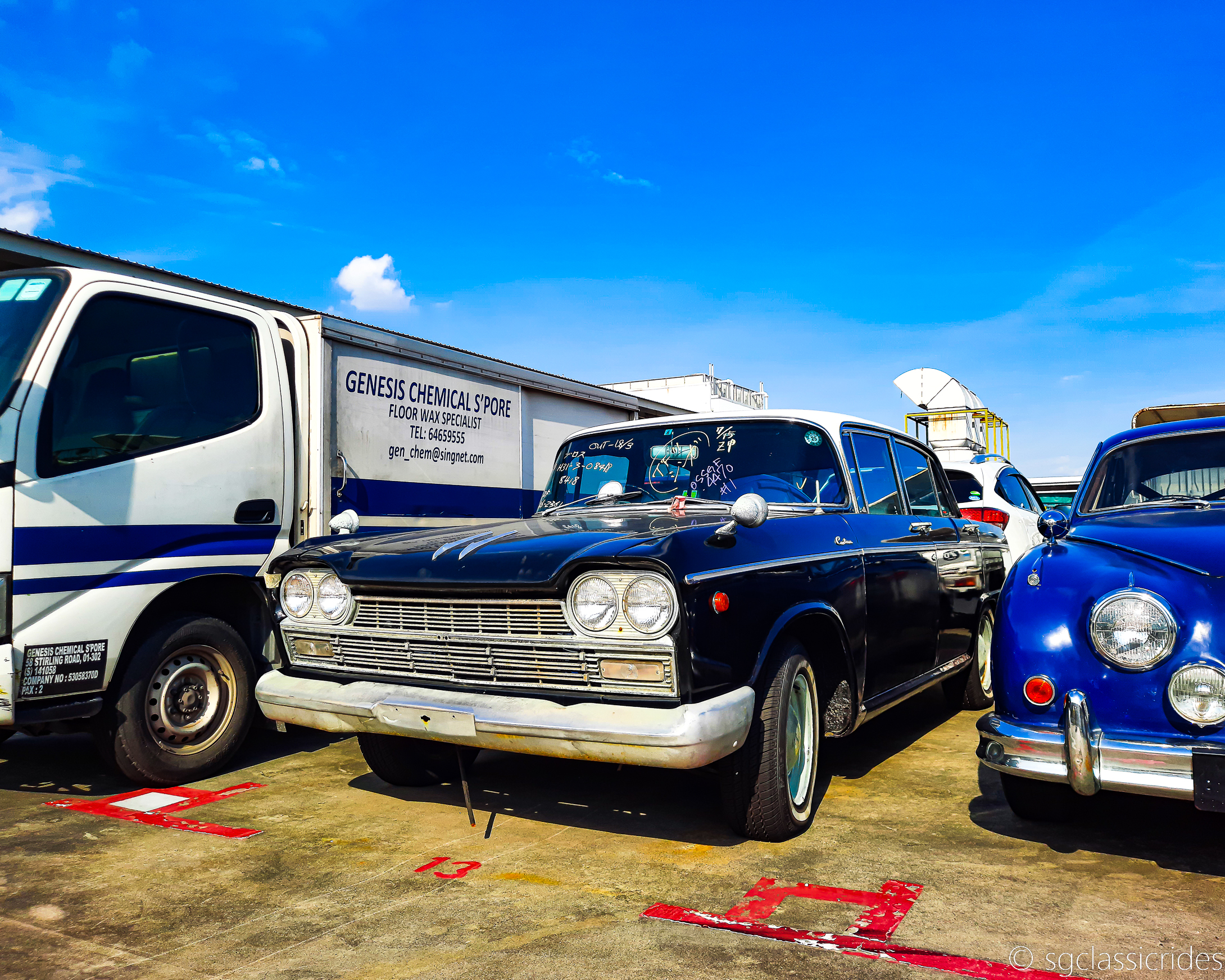
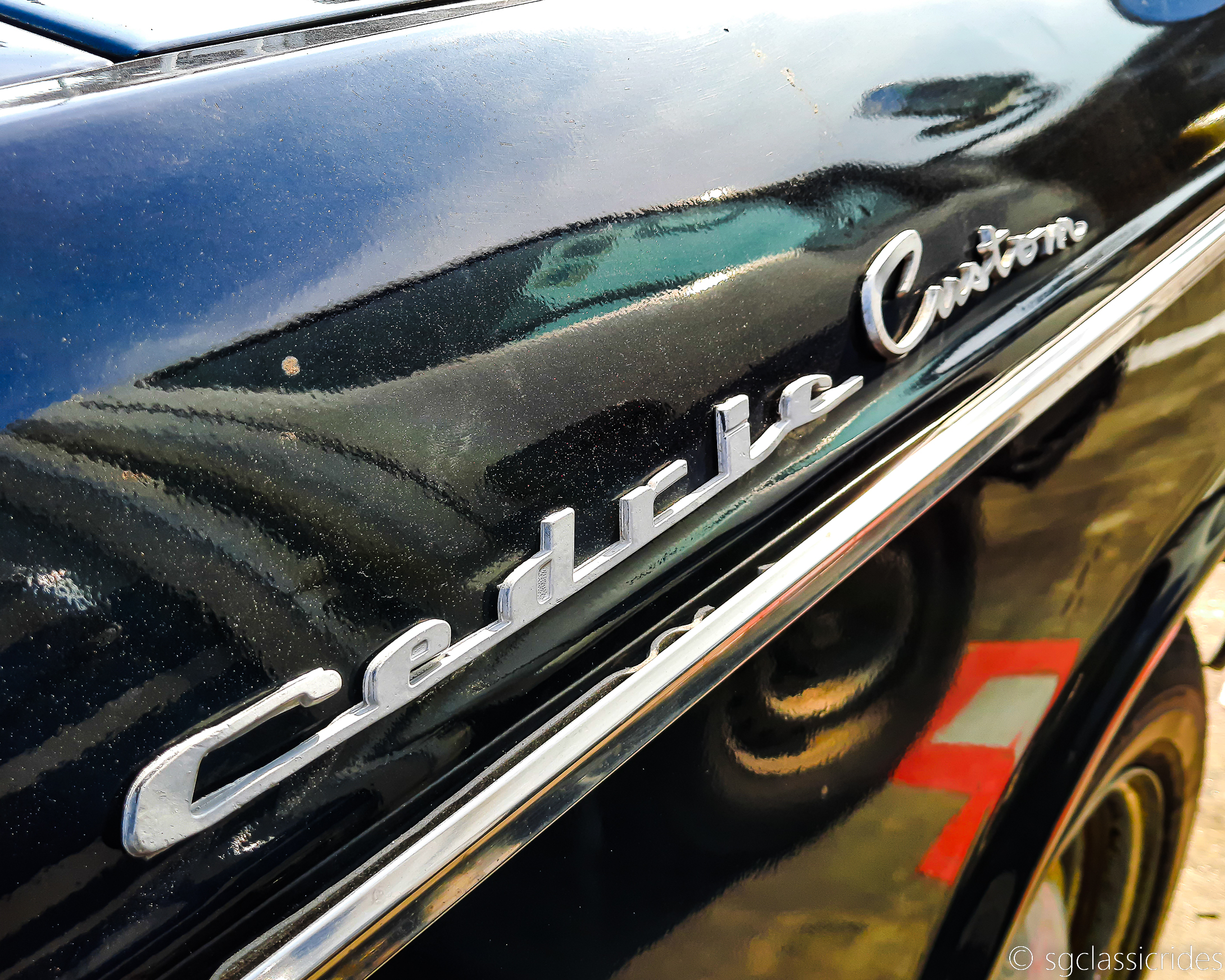
Many people tend to associate Japanese cars with high performance, being small-sized or quirky. However, they are more than just that, just like this 1964 Nissan Cedric Custom H31!

First introduced in 1960, the Cedric was developed as a purely domestic medium-size passenger car to replace the Austin A50 Cambridge, which Nissan had obtained licence to manufacture previously. It featured a style strongly influenced by American cars, such as a wraparound windscreen, forward-leaning A-pillar, vertical dual headlamps and tail fins.

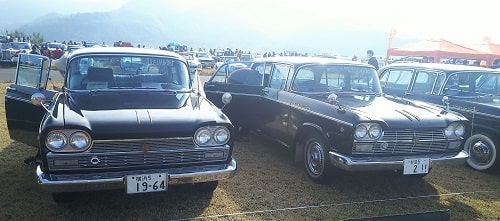
Initially, it was only available with a 1500 cc engine and came in either 4-door sedan or wagon version. A 1900 cc engine was later introduced: 2 separate trims were available, namely the 1900 DX and Custom. The Custom model was 1000 mm longer than the 1500 and 1900 DX. In October 1962, the vertical headlamps were now horizontal and the grille design was changed to a 1-piece version. The model number was also changed to H31 during this time. September 1963 saw a revised grille design: it was now split into 2 parts and the lower half had 7 vertical lines.


(Picture credits to: https://www.cutlass70.com/entry/2021/11/30_31Cedric)

The final facelift in September 1964 had the lower half with 4 vertical lines (i.e. this particular unit in the blog post). Furthermore, the taillights was also changed from 3 segments to 2 segments for the final facelift. A luxurious version known as the Cedric Special (type 50) was fitted with a 2800 cc engine, along with a number plate recess on the bumper. It was also longer than other Cedrics, coming in at 4850 mm.

Strictly speaking, the 'H31 Cedric' refers only to the Custom model but it has become a catch-all for the 1st-generation model. The H31 Cedric was powered by a 1883 cc Nissan H straight-4 engine, allowing it to reach a top speed of 140 km/h with an acceleration of 16.4 seconds [0-100 km/h]. and had dimensions of 4650 x 1690 x 1505 mm. It weighed 1260 kg and had a fuel consumption of 13.4 litres / 100 km.

Production of the 30/31 series ended in 1965, where it was succeeded by the 130 series. The H31 Cedric was first sold here in 1963 by Tan Chong & Sons Motor Co where it was retailing for $8,450. However, no original cars here have survived: this unit was imported from Japan a few years ago. It is noted that H31 Cedrics still have a large number that exist: even though Japanese cars from the 60s are not deemed collectible, it is a pleasant surprise to know that someone actually knew about this model's existence and decided to bring it here. While it is currently unregistered, I hope that someday you can get to see this rarity out and about on our roads!


13 January 2022

More than an old car #185: Nissan Serena


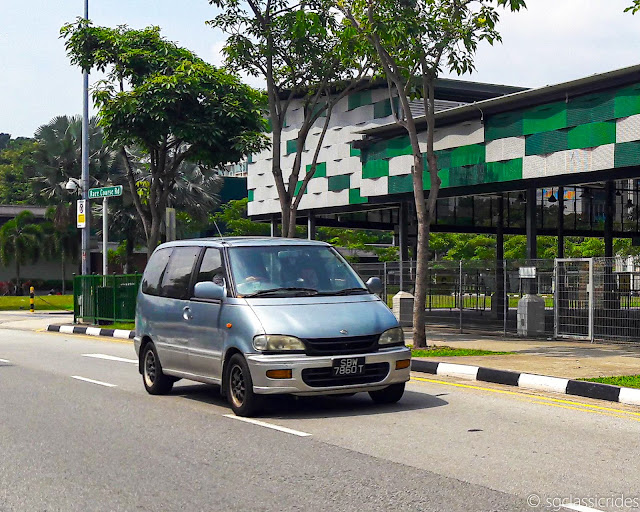
The 90s was an interesting period of flux: as the population grew, family needs also evolved and there was a greater need for people carriers to fit more inside them. At the same time, it had to be ideally affordable given the lower purchasing power during that time. This promoted the advent of multi-purpose vehicles (MPVs), and although car enthusiasts find them as exciting as watching paint dry, cars like this 1992 Nissan Serena C23 have cemented themselves as part of history whether people like it or not...

First introduced in 1991, it drew its roots from the Datsun Sunny/Cherry Cab back in 1969 and was launched as the fully remodeled version of the C22 Vanette, with internal designation of C23. Its name is derived from the Latin word 'serenus', and was intended to convey the image of a comfortable and enjoyable driving experience. Nissan's Aichi Manufacturing Division led the design and production: the vehicle has a semi-cabover structure with a small bonnet, but the engine was placed under the passenger seat. The shift lever was also mounted to the floor and it was also equipped with a combination sliding door and power windows, which was a world's first. Despite its rather unwieldy shape, it had a surprisingly low aerodynamic coefficient of 0.35.

Various grades and engine types were offered (both petrol and diesel). The more desirable 2.3 litre engine version was never sold in Japan, instead it was for export markets. A larger version of the Serena, known as the Largo also appeared in 1992. While the Serena was intended to be a people carrier, a van version was also produced for the European market: first in Spain and then by the UK-based LDV Group. In 1994, the Serena had a facelift with a different grille and bumper design, while internal changes were made to the instrument panels and aircon switch. Driver airbags were made standard in 1995 and another facelift occurred in 1997, with modifications done to the headlights and front grille. Passenger airbags also became standard-issue in 1998.

Interestingly, this unit sports a 1997 front fascia: when it was on sale in 2009, it still had the pre-facelift look. The Serena was powered by a 1998 cc SR20DE i4 engine, allowing it to reach a top speed of 170 km/h with an acceleration of 12.2 seconds [0-100 km/h]. It was 4315 mm long and weighed 1485 kg, with a fuel consumption of 11.1 litres / 100 km.

Production of the C23 Serena ended in 1999 though van production in Europe finally halted later on in 2001. Serenas were sold here by Tan Chong Motors in 1992, where they found favour with large families and business owners who desired an MPV for their clients. However, its dowdy image also led to much criticism and was voted worst new car on sale in Britain in Top Gear. This unit no longer exists as it was scrapped in 2019, and none of the C23 Serenas still remain here. However, some Malaysian units do make their way to Singapore from time to time...hopefully you will be able to see them about!


12 November 2021

More than an old car #181: Nissan AD Resort


In the midst of my posts, I have realised that I have not given much attention these few weeks to non-continental cars, partly due to work fatigue and overall ennui. Being aware of this, I went to take a look at my archives and found this rather remarkable 1995 Nissan AD Resort SLX!

First introduced in 1982, the AD Van was intended to replace the commercial delivery vans based on Nissan's other vehicles. Based off the B11 Sunny wagon, it was more squarish and utilitarian: despite being a van, it came with 4 side doors and a liftback hatch in the back. In 1990, the Y10 series appeared in the market: it was based off the B13 Sunny and a passenger version known as the AD Wagon was introduced in order for consumers to avoid the annual inspection in Japan. The Japan market also received a unique version known as the AD Max: it had 2 front doors, an extended height and double doors were fitted on the back in the 'fourgonette' style.

There was a facelift in 1993, where the squarish headlights were now integrated with the front grille and became more rectangular. It was around this time that the car was exported to Thailand and Malaysia, where it was called the AD Resort. The SEA market version had a larger 1.6 litre engine, and units sold in Thailand had many body styles to choose from owing to their love of pick-up trucks. Only the regular wagon was sold in Malaysia by Edaran Tan Chong Motor Sdn Bhd as far as I am aware. The AD Resort in Malaysia was powered by a 1597 cc GA16DE i4 engine, allowing it to reach a top speed of 170 km/h with an acceleration of 12.1 seconds [0-100 km/h]. It was 4175 mm long and weighed 1010 kg, with a fuel consumption of 9.5 litres / 100 km.

Production of the Y10 AD Resort ended in 1999, where it was replaced by the Y11 series. Curiously, the AD Resort was never sold in Singapore although it would have complemented the B13 Sunnys that were present here. It was purely coincidental coming across this Malaysian unit: I had thought that it was a Sunny wagon (which was technically not wrong) but some research led me to discover this rarity on the road. There are a small handful of the Y12 series AD wagons here, but they are registered under diplomatic plates. 

As to why wagons never really caught on here, it is noted that they were naturally more expensive despite having more storage space. It appears to be more of a status symbol, and the rise of MPVs have made wagons superfluous: what better car to get that could carry a regular family plus furniture from IKEA? Regardless, coming across this little obscurity from across the causeway was a nice surprise: hopefully you may see them when the borders re-open...


21 May 2021

More than an old car #172: Nissan Safari


In my years of spotting, I have seen all sorts of cars: big to small, exotic and normal. However, seeing this 1985 Nissan Safari fire engine was surreal, notwithstanding the vehicle choice but the sheer coolness of it. How many of you would claim to see an old fire engine in the middle of nowhere?

The Patrol is a series of 4-wheel drive vehicles, which was first introduced in 1951. The first-generation models bore a strong resemblance to the Willys Jeep and heralded a new direction in Japanese automobile manufacturing, along with the advent of the rugged Toyota Land Cruiser. The 3rd generation, known as the 160 series, made its appearance in 1980. It was at this point that the 'Safari' name began to be used for Japanese-market vehicles: overseas units were still sold as the Patrol. The Safari was available in a few styles, including a double-cab chassis for fire trucks and were produced at the Nissan Kyushu factory. 

In 1982, the Nissan logo was moved to the centre of the grille and an an extra engine was added to the lineup. Around that time, production of the Patrol also began in Spain where some were used as army vehicles. The round headlights were changed to rectangular ones in 1985 and it remained somewhat unchanged till the end of production in 1994, with around 13,250 registered in Japan.

The Safari was powered by a 3956 cc PF40 i6 engine (a special version for fire trucks compared to the standard SD33 engine), allowing it to reach a top speed of 150 km/h with an acceleration of 15.3 seconds (0-100 km/h). It was 4795 mm long and weighed 2100 kg, with a fuel consumption of 14.8 litres / 100 km.

Based on the (faded) wordings on the truck and various plaques on it, chassis number 403876 was fitted by Yoshitani Kikai Seisakusho, Inc., a manufacturer of fire trucks and fire-fighting equipment in Showa 60 (1985), where it had a water pump with serial number 60-2014A. It was owned by the Yamaguchi plant of Kyowa Hakko Bio Co Ltd, a manufacturer of pharmaceutical products. 


While no Safaris existed in Singapore back then, much less a fire engine version, you could imagine how this unit would have been like when it was called up for duty. A controlled rush, sirens flashing, loudhailer blaring, and the rush of water flowing from the hose...perhaps it may have seen active duty before being owned by the pharmaceutical company: firefighters standing at the back or cramped in the cab, both tense yet composed?

How or why it ended up here so far from home would make for an interesting thought exercise: it is unlikely to be registered here, so perhaps a static display or sorts? Who knows what adventures, fires, incidents it has seen in Japan, only to end up rather ignominiously with a fridge for French baby food stuffed in the seat. It was a bizarre surprise to see a fridge for a passenger...

Incidentally, the Safari would have been dwarfed by the fire engines that we used in the 80s to 90s such as Scania and Dennis trucks. Evidently, its size must have been adapted to the narrow roads and cramped places. While I don't know if it is still around, I hope this has been informative in exposing you to the more unconventional classic vehicles here: it's not all about cars as you would have seen!


18 December 2020

More than an old car #160: Prince (Nissan) Skyline


One of the nice things about this blogging journey is to come across rarities that people may not be fully aware about, and I aim to bridge the gap between the car and the individual. This 1968 Prince Skyline S57 is a good example of being rare yet foreign at the same time...

The lineage of the Prince Skyline can be traced back to Fuji Precision Industries back in 1957, with the introduction of the ALSI/BLSI series. Developed by Shinichiro Sakurai, he remained a prominent figure behind the entire Skyline range until his death in 2011. The S50 series was the 2nd in the Skyline family, and the company name had been changed to the Prince Motor Company. At the time, the automobile industry was being reorganized under the guidance of the government to welcome foreign automobile manufacturers, due to the liberalization of automobile imports. Introduced in both sedan and wagon form in 1963, the S50 was intended to be a family sedan, and it proved to be popular among families and taxi drivers in part of Prince's 'maintenance-free' warranty program, such as a 40,000 km/ 2 year warranty for the engine.

In 1964, the more well-known S54 was unveiled and it grew in prominence in the Japan Grand Prix. This led on to the development of the S57 Skyline in 1967, featuring an increased engine output of 88 hp even with a 1.5 litre engine. It was distinguished by a red '88' badge on the grille and a small 'OHC' script on the rear, along with modifications done to the front fascia. Furthermore, as Prince had been merged with Nissan in 1966, there was a discreet 'Nissan' badge on the grille as well. The S57 was powered by a 1483 cc G-15 engine, which was the most powerful 1.5 litre engine intended at that time. It was 4100 mm long and weighed 940 kg

Production of the S50 series ended in 1968 with a total of 114,238 units sold, although there is no breakdown of individual models. Japanese cars of the 1960s are generally very rare today as most fell prey to rust. The first S50 sedans were sold by Kian Gwan Motors (Malaysia) Ltd in 1965, then the sole agent for Prince Motors in Malaya. Some were even entered into races during that period. The S57 especially was produced for only 1 year, so it is not inconceivable that only a few hundred may be left worldwide. Somehow this fresh import has made its way here: the owner must have a keen eye in actually recognising this unique obscurity. A similar unit is for sale at 1.98 million yen (S$25,667), which gives an indication of how uncommon it is. It should be a matter of time before it gets registered, and hopefully you will be able to catch it someday!

14 November 2020

More than an old car #158: Nissan Figaro


Japanese cars have always been an ubiquitous sight, but let's narrow it down: looking at the cars from the 90s, Nissan takes a decent percentage. Then, we come to the unique models just like this 1991 Nissan Figaro

Introduced at the 1989 Tokyo Motor Show and made available to the public in 1991, its name is derived from the titular hero in Mozart's The Marriage of Figaro. Based off the 1st-generation Nissan Micra/March, it was the 3rd car in a special projects group known later as the 'Pike cars'. 'Pike cars' generally refer to Japanese cars that have classic designs, from its shape to the grilles and headlights. Production numbers are usually limited in order to suppress the development budget used in modifying these cars. 

Nissan used the marketing tagline 'Back to the Future' and the concept was to be 'unusual in everyday life'. The Figaro was a fixed-profile convertible, that is, the sides remained fixed while the fabric soft-top could be retracted, along with a solid panel and a rear window equipped with a defroster. Examples of such cars with this particular design include the Citroen 2CV and the Fiat 500. Available only in 4 colours, it represented the 4 seasons: namely Emerald Green (spring), Pale Aqua (summer), Topaz Mist (autumn) and Lapis Gray (winter). Nissan planned to make only 8,000 initially, but strong demand led to them rolling out additional units. Demand was so competitive that prospective buyers had to enter in a lottery to even stand a chance. 

Standard equipment included ivory leather seats with contrasting piping, air conditioning, CD player, chrome and Bakelite-style knobs, soft-feel paint on the dashboard top, chrome-trimmed speedometer with smaller inset gauges for fuel and engine temperature; and chrome-trimmed tachometer with inset clock. The Figaro was powered by a 987 cc MA10ET turbo i4 engine, allowing it to reach a top speed of 160 km/h with an acceleration of 12.9 seconds [0-100 km/h]. It was 3740 mm long and weighed 810 kg, with a fuel consumption of 8.4 litres/100 km.

Production also ended in 1991, although excess stock was sold up till December 1992. Out of the 20,073 units made, 5,632 of them were in Emerald Green including this particular car. All of them were initially only available in RHD, although recently there are around 18 cars that have been converted to LHD. More colours were included via aftermarket customisation, such as pink, red and orange. 

Based on its identification number, this unit was 1 of 551 in this colour produced in July 1991. I am aware of the one other unit in Pale Aqua as it seems to be more commonly spotted than the one in the post. Interestingly, it has a relatively low mileage of 79,760 km. which is a further clue that it hardly goes on the road! Figaros were never sold officially in Singapore, although it remains very popular in the UK with around 3,000 on the roads. To be honest, I did not know of this unit's existence until recently, and it was by sheer chance that I saw it parking far off during a morning run. Coincidentally, our local newspaper published a feature on the 2 Figaros here, both owned by sisters. This unit was acquired in 1994 and cost about S$120,000, which is still a sizeable sum of money.

Both Figaros in Singapore are apparently single-owner cars, and it remains to be seen whether they will be put up for sale. It was amazing to see such a unicorn up close, and would you not smile at such at this cute little guy? I have not seen it again at that spot even though live near the area, perhaps you may be the lucky one to see this unicorn!

11 November 2019

More than an old car #123: Nissan Skyline R32 GTR


Legendary race cars have made their mark on the classic car scene, and in the 80s, Japan was the place to be. The love for JDM cars started from this era, with revolutionary vehicles that changed the nature of racing. One of the pioneers would be this 1989 Nissan Skyline R32 GTR!

The Nissan Skyline was a series of passenger cars which was first released in 1957 as the Prince Skyline. Its name is derived from the 'ridge line' separating the mountains and the sky. However, the GTR itself only emerged in 1969 after the merger of the Prince company into Nissan operations. GTR stands for "GT Racer" and it paid homage to the 1964 Prince Skyline S54A.

After cancelling of the GTR name in 1973, Nissan revived it in 1989: it wanted to find a more competitive vehicle to take part in Group A Racing events. Various modifications were made to the base R32 generation, including converting the car to a special all-wheel drive system known as ATTESA E-TS [Advanced Total Traction Engineering System for All-Terrain with Electronic Torque Split], a rear-wheel steering system known as HICAS [High Capacity Actively Controlled Steering] and introducing a larger engine. All these provided low-speed maneuverability and high-speed stability, thus it was no surprise when it did a clean sweep in pole position for many races.

Its reputation as a race-destroyer originated in Australia, where it was given the nickname of
Godzilla due to it being a 'monster from Japan'. The R32 GTR ironically led to the demise of Group A racing due to its overpowering dominance. It was powered by a 2568 cc RB26DETT straight-6 engine, allowing it to reach a top speed of 180 km/h with an acceleration of 4.9 seconds [0-100 km/h]. It was 4545 mm long and weighed 1480 kg, while fuel consumption was noted to be 7 litres per 100 km.

Production of the R32 GTR ended in 1994 where it was replaced subsequently by the R33 GTR. 43,924 units were made in total, of which 40,390 were the standard specifications. This particular unit was one of the first few to be registered: around 1 week after Nissan released it for sale in September 1989. Only 2 are known to exist in Singapore, where the other unit is a 1991 model in Gun Grey Metallic. This blue colour is not original: it used to be white, then grey. Back then, R32s in general were not sold officially by Tan Chong Motors, so this unit would have been imported directly from Japan.

There is a nice touch added with the fitting number plate and the fact that it is very rare here makes it all the more amazing. It does not come out on the roads often but I understand it usually resides in a workshop somewhere in Jurong. It may look like an ordinary old car at first glance, but with this information, I hope it has educated you on how extraordinary this is!

2 September 2019

Historic classic rides #1: Nissan Cedric 330/ Datsun 220C

(Credits to Wong Ye Yong on Facebook)

For this particular piece, I decided to write about old cars in Singapore that I have not seen personally before. Previously, I preferred to write about cars that I had photographed as it felt original. However, I was also attracted by the variety of rides that existed before my time, which subsequently became extinct. I figured it could be a nice history lesson of the old cars that existed before some of you were even born, and it was also due to popular demand. Let me kick off this series with the Nissan Cedric 330/Datsun 220C taxis!

The 330 was the 4th generation of the Cedric range and was first introduced in 1976. It still carried a distinctly American styling, as Japanese designers were still relying on continental cars as inspiration. In export markets including Singapore, it was known as the Datsun 200C/220C/260C/280C, with reference to its engine capacity. As with previous generations of Cedrics, they were also popular as taxis as seen in the picture. These units were powered by a 2164 cc SD22 diesel i4 engine, allowing it to reach a theoretical top speed of 170 km/h. It was more likely, however, that their top speed was controlled in some way. The Cedric 330 was 4690 mm long and weighed 1420 kg. It was first sold here in 1976 by Tan Chong Motors, our local Nissan dealer, where it was made available for civilian use too.

Production of the 330 ended in 1979, where it was replaced by the 5th-generation 430. These cars here belonged to the Singapore Airport Bus Services (SABS), which also operated a fleet of buses that ferried tourists from Changi Airport to various hotels. SABS was first formed in 1977, where it was under the management of Singapore Bus Services (SBS), which is the bus company that we know of today. While the bus services were well-received, this was not the case for the taxi branch: many Singaporeans had the misconception that it only carried tourists, and the fact that it was not licensed to enter the CBD during morning peak hours also hurt its reputation.

SABS had a fleet of 200 taxis and drivers could rent them at S$31 per day [S$61 in today's money]: the drivers would pay only for the fuel while SABS bore the maintenance costs. Compared to its competitors with rental rates between S$36-38 [S$71-75 today], it was attractive to potential drivers. There were special taxi stands for SABS taxis, where they could pick up passengers during the evening rush hour. However, SABS incurred much losses over the years and it faded quietly off the radar some time in 2004.

This concept was rather interesting during its time but with the rise of ride-hailing services, such a service would not last long today. Nonetheless, it is a unique piece of history that many people may not be aware of: I had to read up about SABS online initially. Furthermore, none of the Datsun 220Cs have survived today, as with most Japanese cars of that era. It would have been lovely to see one still hanging on all this while...and I hope that this was informative for you!

PS: if you have old pictures of your own car/family car (ideally already extinct in Singapore), you are welcome to send them to me and I'll try to feature it!

1 April 2019

Miscellaneous classics #3: Nissan Cabstar F23


As a continuation of my old lorry appreciation posts, I will be sharing about one of the most common trucks on our roads. Nissan trucks have always been one of the crucial movers of our economy: the intermediate goods that contributes to the end product among our midst [such as barrels, ladders, paint cans], not to mention the ferrying of migrant workers that help to build our infrastructure that we take for granted. This humble 1998 Nissan Cabstar F23 has been through a lot, but none of you would recognise the importance it has in our history.

The Nissan Cabstar, or technically known as the Nissan Atlas in Japan, is a small and medium-duty truck sold by Nissan Motors. The Cabstar name was used to refer to another series of trucks made between 1968 to 1982. The "Atlas" name refers to the Greek god Atlas, who carried the world on his shoulders; it alludes to Nissan's aim of having this truck carry the country, both figuratively and literally.

Currently, there are 3 generations of the smaller Cabstar/Atlas and I am sure most of you have seen them before. The 2nd generation was known as the F23 series and was made between 1992 to 2007. It was powered by a 3153 cc QD32 i4 diesel engine and was 4460 mm long. Its unladen weight was 1620 kg while the maximum laden weight was more than twice at 3350 kg.


Some of you may be wondering why this particular truck is considered a classic when there are still many of them on the road. Let's compare the above with this model here made in 2005. There was a facelift done in 1999, and as you can see, the lights became trapezoidal rather than rectangular, while the Nissan logo was now part of the grille. The bumpers were also changed as a result although it is hard to see from here. Another clue is by looking at the number plate: GQ to GT plates were issued between 1998 to 2000, while GU to GZ plates were issued between 2000 to 2005.

A check on the database revealed that the lorry had been scrapped on October 2018, since it has already reached its 20-year lifespan. This makes it all the more pertinent to see them before they are definitely gone in a few years time. It is a pity that most people do not care about lorries simply because they are not as cool as a car. I hope this has been informative to you and personally, I feel I have done my part in capturing a piece of history that future generations could look back at [if we are not using lorries anymore]...

28 January 2019

More than an old car #92: Nissan Cedric Y31 taxi


It is common knowledge that Singapore is not a good place to own cars, partly due to out efficient public transport system. Naturally, this includes the many taxis that we have, from the aforementioned Hyundai Sonatas, Renault Latitudes and more recently, Mercedes E-Class cars as well. When I was growing up, taking a taxi was a big deal because it was more affordable to travel on buses and our MRT trains. I have fond memories of sitting in them and also remembering some of the advertisements on them. Some time back, I got wind of an old taxi that was still around from this video, and it was pretty nostalgic to see this 2004 Nissan Cedric Y31 taxi again!

The Nissan Cedric is a large car produced since 1960 and was designed as a mode of upscale transportation. Its name is derived from the main character in the novel Little Lord Fauntleroy, and was chosen by the then-CEO Katsuji Kawamata. Over the years, it has been used as a taxi in Japan, and the Y31 generation was no exception. The Y31 generation, first produced in 1987 was popular among consumers at that time due to the robustness of the Japanese economy. 

For the taxi version, cheaper plastic fittings were installed and the seats were replaced with PVC. Sound proofing was also removed and taxi-related equipment were also installed, such as a radio and tachometer. Over the years, changes were made to both the exterior and interior. It was powered by a 2663 cc TD27 i4 engine, allowing it to reach a top speed of 185 km/h, with an acceleration of 10.9 seconds [0-100 km/h]. However, all taxis had a speed limiter, where a bell would chime (annoyingly) at speeds above 100 km/h. It was 4690 mm long and weighed 1380 kg


Somehow, the Y31 Cedric maintained its boxy look throughout, but despite the poor aerodynamics, it served its job of carrying passengers and cargo comfortably. This is a feature that is missing in taxis today: many have griped about the lack of leg room available. This unit is made before 2005, since the side indicators are still located at the front instead of being further behind. It was previously used as a form of rehab to the elderly, by training them to get in and out of a car. As mentioned in the notice stuck to the window, it was donated after it had run down its 8-year lifespan on the road, which feels too short in my opinion.

SMRT is recognizable to us as our train operator, but it also runs a fleet of taxis up till today. The door could be opened and I recalled the feeling of being in this type of taxi when I was younger. I could almost smell the generic 'taxi smell': a combination of air freshener and PVC I think. For some reason, this taxi has not been used for quite a long time: compared to the view in the video, what I saw was a lot more run-down and dirty, along with mosquitoes inside. 

The steering wheel was quite well-worn: how many taxi drivers have sat behind the wheel? According to the odometer, this unit has clocked 660,034 km: this is pretty amazing even if we consider its role as a taxi! How many places has it been to and what adventures/close calls had it experienced? The car interior may look dated with the angular dashboard, but it is something you won't get to see in cars these days...


Production of the Y31 Cedric taxi ended in 2014, some 20 years after the end of the passenger Y31 Cedric. However, Singapore stopped using Cedrics some time in 2012 when they did not comply with new emissions regulations. This was the last unit remaining in Singapore as all others have been scrapped. I have heard that this has been removed, and with it an icon that was used by people of all walks of life. I hope that with my documentation, future generations will be able to read up on this unique vehicle that brought us wherever we wanted to, before the days of Grab/Uber. Come to think of it, I should have taken more pictures as well, but I would like to credit the videographer who covered the car in more detail. Hopefully, this has brought back some memories as well for you!


8 November 2018

More than an old car #88: Nissan Presea


If you have noticed, my posts alternate between a continental car and a Japanese/Asian one as I feel that not much love is given to the humble workhorses of the previous era. For today, I would like to introduce this increasingly rare breed--the 1992 Nissan Presea R10.

As mentioned previously, Nissan is the modern branding for the antiquated Datsun. It was decided that the name change would help the pursuit of a global strategy, which would increase people's awareness to the brand. As a result, "Nissan" wordings were gradually applied to Datsun cars in the 1980s and by 1986, the replacement was complete.

The Nissan Presea appeared in June 1990 in the form of a 4-door 'hardtop' sedan, ie a regular car without the middle pillar/bar. Its name is derived from the Spanish word for "jewel" or an "irreplaceable important thing". The rear windscreen was slightly curved, providing the driver with a more than 300-degree view just like a fighter pilot. Its aesthetic styling included the rounded edges and the grill-less front end, lending it a futuristic look that was popular with women at that time. It was powered by a 1597 cc GA16DE i4 engine, allowing it to reach a top speed of 187 km/h. It was 4395 mm long and weighed 1020 kg, which is quite light for a car this size!

Production of the R10 Presea ended in 1995, and was succeeded by the R11 model which featured external changes. There are at least 10 out and about in Singapore, though there seems to be more R11s compared to R10s. Based on local reviews, it apparently drives quite well and also low-maintenance to boot!

This red unit is quite unique as it was owned by Chee Soon Juan, a prominent opposition politician--he has been seen driving this around a few times. However, the number plate was recently de-registered and I do not know whether it is still around. It's not every day that you get to see a renowned person's car up close and I was glad that I had captured a snapshot. The grey unit, on the other hand, has been modified with a bodykit, making it more sporty than it actually is. It is still around but with an expired road tax. Do keep your eyes peeled for the other ones that are still here!