Showing posts with label chevrolet. Show all posts

25 July 2025

More than an old car #225: Chevrolet Optra


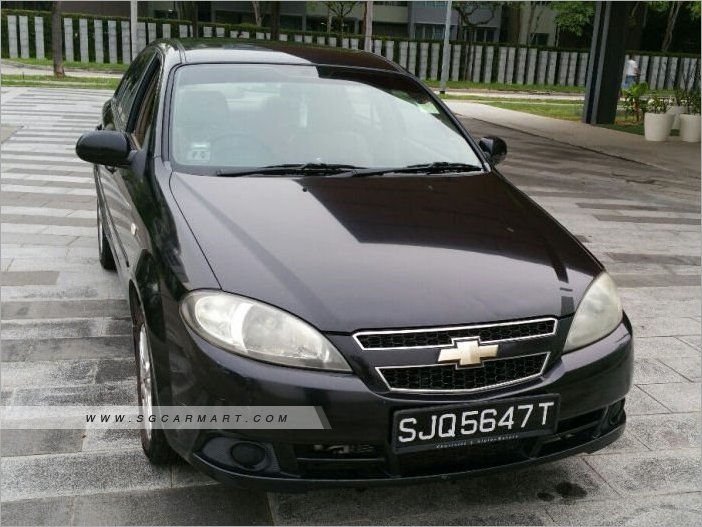
The beauty of car spotting on the road is that you never know what is going to appear next. I was just walking along the road when I spied a rather unique-looking grille on a car some distance away. Upon drawing closer, it suddenly hit me that I was laying my eyes on a relic that I didn't know still survived today, namely the pre-facelift 2003 Chevrolet Optra!
 
Originally sold as the Daewoo Lacetti in its native Korea, it was developed based on its predecessor Nubira before it was acquired by GM. GM Korea launched the car in 2002, with styling done by Pininfarina. Its name is derived from the Latin "lacertus", meaning "youthful". Subsequently, it began to be sold in worldwide markets, under various names like Buick Excelle in China, Holden Viva in Australia and Chevrolet Optra in the Americas, India and Southeast Asia. Cars in Southeast Asia are assembled in Thailand.
 
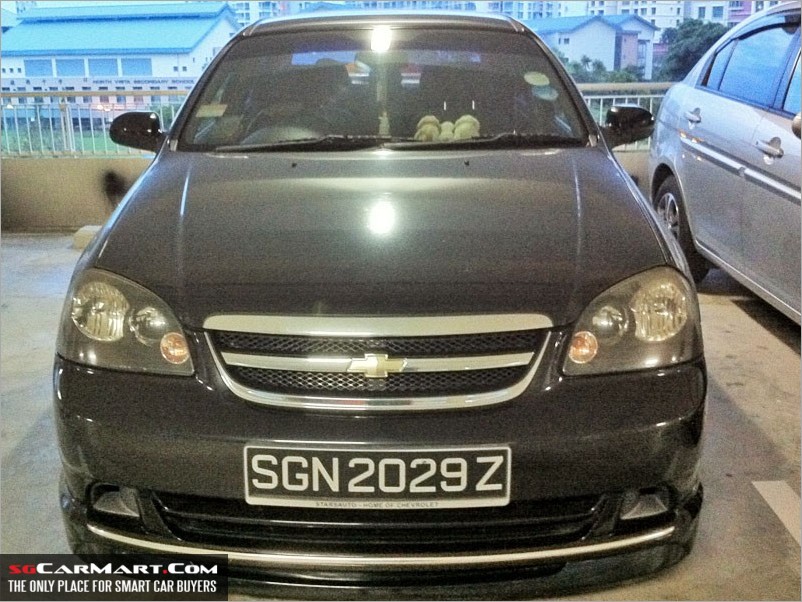
A hatchback and station wagon version were subsequently released in 2003 and 2004 respectively. There was also a facelift in 2004, where the three-slot grille was changed to a single grille featuring a horizontal bar. There was also another facelift in 2007 where the sedan received the same front end as the hatchback featured since its debut. The Optra was powered by a 1598cc GM E-TEC II inline-4 engine, allowing it to reach a top speed of 172 km/h with an acceleration of 12.5 seconds [0-100 km/h]. It was 4500 mm long and weighed 1,240 kg, with a fuel consumption of 15.8 km/litre.
 
 ...
... 
First and second facelift 
 
Production of the Optra ended around 2009 where it was replaced by the Cruze, though badge-engineered versions continued to be made up till 2024! Optras were first sold in Singapore in 2003 by Starsauto Pte Ltd, where it retailed for $74,988 with COE. Local reviews noted its relatively bigger size and thoughtful features like air-con glove compartment and front-seat shopping hooks, though it could get bouncy at low speeds. Interestingly, an Optra was won as a lucky draw prize as part of the Sentosa Island Mega Saver package in 2004!
 
While we still have quite a few of the facelifted Optras around, I had a soft spot for this pre-facelift model with the three grilles as my uncle used to own one. Seeing this survivor was surreal and naturally I made a run to the junction where it had mercifully stopped. Almost immediately, it drove away but I managed to preserve its existence in these two pictures. After researching a bit more, I realised that this manual pre-facelift unit is most likely the last one in the country; the vast majority were sold with automatic transmissions and other manual units in the market are the facelifted versions. 
 
I still cannot believe that my accidental sight of this car unlocked various childhood memories, and knowing that it was in the more rare manual transmission made it a lot special. It seems that this unit will be around for some time, hopefully you'll be able to catch a sight of it soon!  


16 January 2021

More than an old car #162: Chevrolet Bel Air


Car meetups have become a novelty event given that the pandemic still shows no sign of slowing down. However, I will still aim to catch up on the backlog and feature some eye-catching ones like this 1965 Chevrolet Bel Air here!

The 'Bel Air' name first appeared in 1950-1952 as the Bel Air Sport Coupe, which was only used for the 2-door hardtops in the Chevrolet model range. From 1953, the Bel Air became associated with a premium level of trim that was applied across different body styles. Early models of the Bel Air are highly-prized partly due to its association with Hollywood glamour such as Marilyn Monroe and Elvis Presley. 

The 6th generation of the Bel Air appeared in 1965, and it received an extensive styling change compared to the previous generation. Its overall length was increased, the grille became slightly veed, headlights were now round and window glass was curved. While all of the Bel Airs were either made in the US or Canada, a handful were shipped to Australia as complete knock-down units where they were converted to RHD specifications. The General Motors-Holden (GM-H) plant in Woodville, South Australia was one of the few places where the car interior, electrical wiring and glass were installed. Cars were assembled from a mixture of imported US-made components and locally-made parts, such as interior trim and tyres. 

This proved to be a sales and financial success for GM-H as people saw it as an economical car for working-class Australians. Furthermore, it was able to circumvent the high import duty by reducing the number of imported parts used for each vehicle. While these RHD Bel Airs had to be promoted as expensive high-end luxury cars, the high-quality Australian Howe leather and 100% Westminster wool helped to justify the high prices. These GM-H cars were more often than not used by wealthy directors and VIPs in the state and federal governments.

Australian-made Bel Airs featured Impala-style triple tailights instead of the usual double headlights due to safety regulations. This Bel Air was powered by a 283 cubic inch (4638 cc) small block V8, allowing it to reach a top speed of 170 km/h with an acceleration of 12.1 seconds (0-100 km/h). It was 5413 mm long and weighed 1640 kg, with a thirsty fuel consumption of 17.7 litres /100 km.

Production of the 6th-generation Bel Air ended in 1970 with more than 1 million made, of which around 163,600 were the V8 engine versions produced in 1965. It coincided with the end of Chevrolet manufacturing by GM-H, where it shifted to producing Holdens only. This particular unit had spent its whole life in a South Australian farm, before the first owner's son sold it to a collector who never got about trying to restore it. The current owner then took over the project, and has spent quite a fair bit in revamping the paintwork and interior upholstery. I had the chance to take a look inside and all I can say is that it is like a sofa on wheels.

Bel Airs were sold here back in 1957, and the 1961 models sold by Orchard Motors were retailing for $12,990, with an additional $650 for the 'Powerglide' automatic transmission. It seems that the 6th-generation models were not sold here, at least officially. Whatever it is, American barges are very rare here partly due to the lack of maintenance knowledge, spare parts and the restrictive RHD import regulations. You have to see one yourself to appreciate the classic American excess that is symbolic of the time period. I hope you will get to see this some day!


25 February 2019

More than an old car #96: Chevrolet Camaro Z28


Over the years in my spotting/documentation journey, I have come across cars of all makes and sizes. However, a notable absence are American cars for some reason: maybe people don't like huge cars or parts are hard to get, I don't know. Imagine my astonishment when I chanced upon this 1981 Chevrolet Camaro Z28 when I was out for a jog!

In April 1965, the renowned Ford Mustang had established itself as the go-to car for Americans, and Chevrolet was itching to grab a piece of the pie. It developed a project, code-named Panther, and informed automotive journalists to attend a meeting of the "Society for the Eradication of Panthers from the Automotive World" via a cryptic telegram. Notwithstanding the rather mysterious way the Camaro was revealed, the origin of its name is quite interesting.

In keeping with the tradition of naming Chevy cars starting with 'C', the general manager, Pete Estes, claimed that 'Camaro' suggested the comradeship of good friends as a personal car should be to its owner. Later on, Chevy managers simply said that it was a "small, vicious animal that eats Mustangs", a clear dig at their rival. Although it was later claimed that Estes saw the word in a French-English dictionary, the actual word is "camarade"; "camaro" is not a recognised word in French.
The Z28 is a performance package that was designed for the Camaro to enter in car racing events at that time. It name is derived from GM's own Regular Production Option (RPO) Z28, which was the code for the Special Performance Package. Such units were often distinguished by racing stripes and a 'Z28' logo on the cars.

The 2nd generation of the Camaro was introduced in 1970, and it went through a series of changes over the years. It performed better than its predecessor in terms of road handling and sound-proofing. For the 1981 model, it differed from the base model with a reverse hood scoop that could open to take in cooler air and a unique front end. The engine was also fitted with a Computer Command Control unit, which provided indicators about the engine status. It was powered by a 5001 cc (305 cubic inch) V8, allowing it to reach a top speed of 173 km/h, with an acceleration of 9.3 seconds [0-100 km/h]. It was 5019 mm long and weighed 1585 kg.

Production of the 2nd-generation Camaro also ended in 1981, with 20,253 Z28s made in 1981. This unit was recently imported from Australia; although GM only made LHD cars at that time, GM Australia did receive some complete-knock-down units where they were reassembled in RHD. Interestingly, Camaros were also sold in Singapore back in the 1980s, although there are none left currently.

I was really lucky to come across this gem: it had arrived just the day before before it was covered up even until today. Throughout the months, it has never moved, although I have heard that it is awaiting registration! Its VIN number indicates that it is made in USA, under GM (Chevrolet), has a non-passive restraint system, adopts a sports coupe style and made in the Van Nuys plant in California between May and June 1981. This unit looks pretty tidy despite the layer of dust, and I guess you have to wait for a while to see this American muscle tearing up our roads!

15 October 2018

More than an old car #84: Chevrolet Master 85


Chevrolet has been increasing in prominence, ever since our taxis have also begun to sport the familiar gold cross logo. As a predominantly American brand, the range of cars that we get are significantly less compared to Europe for example. Coupled with the LHD concession for cars older than 1940, it is a pity that we don't get to see American classics as well. Hence, imagine my surprise when I came across this 1939 Chevrolet Master 85 JB!

It all began in 1911 when Swiss race car driver and engineer, Louis Chevrolet founded the Chevrolet Motor Company in Detroit along with some partners. It adopted the 'bowtie' emblem which we know today in 1914, and various reasons have been suggested: from wallpaper seen in a hotel room, a logo from a coal company and even a stylised Swiss cross which paid homage to Chevrolet's ancestry. Chevrolet gradually became a force to be reckoned with in the American motor industry and was one of the Big 3 car companies after Ford and Dodge. It experienced great success in the 50s and 60s with the Impala, which became an icon in itself. Currently, Chevrolet is part of the GM group of companies and is well-positioned in the automobile world today, with growing sales in more than 100 countries.

The Chevy Master was a series of vehicles made between 1933 and 1942, and it was the most expensive in the lineup at that time. For the 1939 version [JB series], there were a variety of styles produced such as 2-door/4-door sedans and coupes. This coupe was powered by a 3548 cc straight-6 engine and only 41,770 were made. It weighed 1320 kg and was 4691 mm long.

This unit may seem just like any other classic car, but what is more amazing was that it had entered in the Road to Saigon rally organised by the Endurance Rally Association! It had undergone a huge makeover when I last saw it in 2015, and it was also christened "Caroline" by the joint owner-drivers. According to its Facebook page, it was an original RHD version from South Africa, and it had been out of action since 2007. The owners decided to give it a classic look and this cued a year-long restoration process. In 2017, they took it for a test drive to assess its road-worthiness for the upcoming rally. It entered the competition under the "Vintage" category for cars older than 1939 and was 1 of 2 cars that crossed the finish line in Vietnam. For a car that old, it had a pretty decent timing and even did better than some of the younger cars in the competition.


Rallying really is a test of ingenuity, determination and perseverance, and it demands 100% attention on the road. It is not for everyone and I was also rather surprised by their car choice--it would have looked more at home cruising down the road rather than roughing it out on rural lanes. Perhaps you may be able to find this rally legend one day!

27 June 2017

More than an old car #24: Chevrolet Corvette C3


American classics are even more rare than the usual Ferraris and Lamborghinis here, given that GM did not establish a presence in the Asian market. This 1977 Chevrolet Corvette C3 5.7L is a sight to behold even though it is not native to Singapore.

The Corvette C3 is the 3rd generation of Corvette cars made by Chevrolet from 1968-1982. Its name is derived from the smallest class of warships known as a 'corvette'. Designing started in 1964 with the release of the Mako Shark 2 concept, which was ironically leaked by Hot Wheels when they released a toy car model. It was powered by a 5733cc Chevrolet Small-Block 8-cylinder engine, allowing it to reach a top speed of 174km/h with an acceleration of 9.3 seconds (0-100km/h). For the 1977 model, it was 4.7m long and weighed 1605kg.

More than 540,000 C3s were produced, of which almost 50,000 were produced in 1977 alone. However, it is worth noting that all models were left-hand drive. This specimen was imported from Australia, where it underwent a right-hand drive conversion. There are currently 3 C3s in Singapore, one red and one blue in colour. Corvettes have become the icon of Chevrolet and it is heartening to know that there are people who are still passionate about these uncommon classics!