Showing posts with label more than an old car. Show all posts

5 September 2026

More than an old car #234: Fiat Strada/Ritmo

Back then, I had been reluctant to go down to this car meet in the IKEA Tampines car park, thinking that it would still be the usual attendees. However, some Instagram stories hinted of a wider variety than I thought, so I made my way down. I was quite surprised when I saw this 1983 Fiat Strada Cabriolet, as it was something which I had never seen before!

Fiat began the designing of the Ritmo hatchback as a replacement for the Fiat 128 sedan back in 1972. At that time, European manufacturers had started launching small family hatchbacks, notably the VW Golf in 1974. Styled by Sergio Sartorelli, the Ritmo was made using a 'robogate' system where the bodyshell assembly and welding were done by robots; this gave rise to its advertising slogan 'Handbuilt by robots'. Its named is derived from the Italian for 'rhythm' and was launched at the Turin Motor Show in 1978.

Initally, a variety of trim levels and engine types were available. In light of criticism for its basic interior trim (e.g. no fabric on door panels), Fiat added a higher-spec range with gold striping and accents on the wheels, foglights and interiors. The car was sold as the Strada in the UK and North America, deriving from the Italian for 'road'. In 1982, the Ritmo was reengineered and restyled, notably featuring twin circular headlights integrated in a separate grille, tailights fitted on the car body itself and the removal of the air scoop on the bonnet. Another facelift happened in 1985 with restyled bumpers and lower plastic panels on the doors.

The Ritmo cabriolet was originally displayed as a concept at the 1979 Frankfurt Motor Show but was sold in mainland Europe only in 1981. It was assembled by Bertone and, coinciding with the 1982 facelift, was badged as a Bertone instead of a Fiat. Before that, the last Fiat cabriolet was made back in 1954! RHD versions of the cabriolet appeared in 1983, where it was sold in the UK as a Superstrada. Bertone had to reinforce the body to compensate for the loss of structural strength. Additional strengthening around the sills and floor helped maintain rigidity, while the rear section was redesigned to accommodate the folding soft top.

The Strada/Ritmo cabriolet was powered by a 1499 cc i4 engine, allowing it to reach a top speed of 158 km/h with an acceleration of 11.9 seconds (0-100 km/h). It was 4014 mm long and weighed 920 kg, with a fuel consumption of 7.3 litres per 100 km

Production of the Ritmo ended in 1988 with more than 2 million made. Spanish car maker SEAT also made a derivative known as the SEAT Ritmo, with production between 1979 to 1982. Ritmos were sold in Singapore in 1980 first in 75CL 5-door hatchback version, where they retailed for S$24,000. Local reviews noted its functional design and luxurious seats, good handling and aerodynamics, though it was noted to have ill-fitted joints on the glove compartment and a confusing door lock mechanism. The top-tier Ritmo Abarth 130TC subsequently appeared in 1985, though the cabriolet did not appear to have been officially sold here.

This particular unit was registered on 1 Aug 1983, and appeared to be sold by Tony Brooks Ltd in Byfleet. It was unwittingly photographed in 1992 and by the time the car was imported into Singapore, it had covered more than 57,000 miles with a few teething problems. It was on display at a car meet in 2023 but has yet to appear in recent times.

It is quite amazing to come across a relatively unknown car with a rather interesting history: Fiats of the 1980s are not as well-kept or collectible compared to other European makes. Hopefully the car will be registered soon so that more of you can catch a sight of this rarity! 


18 July 2026

More than an old car #233: Mercedes W136 170

The beauty of car spotting is that nice cars can be literally anywhere, and it was one of the days where I came across this 1952 Mercedes W136 170 V by pure chance! 

The Mercedes Type 170 V was developed back in 1931, and made its debut at the International Automobile and Motorcycle Exhibition in 1936 at Berlin. It replaced the Type 170 (designation W15) and the V designation indicated the engine was in front, compared to the rear-engined 170 H (W28). Customers could choose from several body variants: 2 and 4-door sedans, a 4-door convertible sedan and a cabriolet. There was also delivery van and ambulance variants on top of that as well. Mercedes also explored a Kubelwagen/off-road military vehicle version which saw increased usage during the war.

Post-war production restarted in May 1946, where initially the panel vans and small flatbed trucks were built again. The civilian convertible versions were no longer available; sedans were made starting from 1947. In May 1950, the 170 V (petrol) and 170 D (diesel) received a power upgrade with a larger 1.8 litre engine, and safety was improved with the introduction of telescopic shock absorbers, a wider rear track and stronger brakes. The luggage compartment was finally accessible from outside and the passenger cabin was given wider seats. The naming convention was also changed to 170 Va and 170 Da.

A further upgrade happened in May 1952, accompanied by new suffixes for the name. The Mercedes-Benz 170 Vb and Mercedes-Benz 170 Db now featured new single piece bumpers. The two rows of vertical ventilation slats that were on the sides of the bonnet/hood were replaced by a pair of horizontal slats on each side, and the windscreen wipers which had hitherto been attached at the top of the windscreen frame were now attached at the bottom. In 1953, the Type 170 became quite outdated and sales started to decline, along with another rebranding to 170 S-V and 170 S-D.

The 170 Vb was powered by a 1767 cc M136 i4 engine, allowing it to reach a top speed of 116 km/h with an acceleration of 40.1 seconds [0-100 km/h]. It had dimensions of 4285 x 1630 x 1610 mm, with a weight of 1120 kg and a fuel consumption of 9.7 litres / 100 km.

Production of the W136 ended in 1955 where it was replaced by the Ponton-bodied Mercedes 180. About 200,000 were made, of which ~140,00 were the 170 V models produced after the war; this made the W136 the best-selling Mercedes model of its era. W136s were also sold in Singapore in 1951, where a newspaper article stated that a batch of six 170Ds were imported by Cycle & Carriage Co (which is still the Mercedes dealer today). 170 Vs retailed at $8,100, with the 170 D at $8,550 and 170 S at $9,875.

This unit was imported and registered in 2018, but I had not seen it until it randomly appeared in my school one day! I was rushing for class but was able to squeeze out a few minutes to hang around this relic, and managed to express my admiration to the owner who had just returned. While I have not seen it again, I believe it is still around even though the number plate is no longer registered. To the best of my knowledge, there are at least 3 units of the 170 here and hopefully, you'll get to catch a sight of them soon!


30 May 2026

More than an old car #232: Renault Fuego

It always gives me much pleasure to spot cars after a stressful week, especially when I see vehicles that I have never come across before like this 1981 Renault Fuego GTX: I had never heard of it before and it took a while to appreciate its uniqueness, especially when it is almost forgotten on the roads! 

Launched in 1980, the Renault Fuego arrived at a time when European manufacturers were experimenting with aerodynamic styling and front-wheel-drive practicality. Built as a sporty successor to the Renault 15 and 17, the Fuego was designed by Robert Opron, who was the same mind behind some of Citroën’s most distinctive shapes such as the SM. Fittingly, Fuego is the Spanish word for 'fire': the result was a sleek, wind-cheating coupe with a drag coefficient as low as 0.32 in certain variants which was impressive for its era. 

Unlike traditional rear-wheel-drive sports coupes of the time, the Fuego was based on the Renault 18’s platform, meaning it combined sporty looks with everyday usability. It featured a unique large glass hatch, folding rear seats, and a surprisingly airy cabin thanks to its expansive windows. Interestingly, it was the first car in the world to be equipped with remote central locking, which is something that we take for granted today. Higher trims came equipped with features that were ahead of their time such as steering wheel-mounted audio controls and even a trip computer in some markets.

The Fuego was offered in multiple engine configurations and trims over its production run, ranging from a modest 1.4-litre inline-4 to the more spirited Fuego Turbo and GTX. The GTX packed a 1,995 cc Douvrin Type 829 i4 engine, allowing it to reach a top speed of 192 km/h and a 0–100 km/h time of 11 seconds. It was 4365 mm long and weighed 1080 kg, with a fuel consumption of 8.2 litres / 100 km; this gave the sleek coupe genuine performance credentials to match its looks.

Production of the Fuego ended in Europe in 1986, though it continued in Argentina until 1992. In total, 265,367 units were produced -- healthy numbers at the time, yet sightings today are rare, especially in right-hand-drive markets. Rust, neglect, and the passage of time have quietly thinned the herd. Fuegos were sold in Singapore from 1981, where the GTX model retailed at S$41,400 by Exklusiv Auto Pte Ltd. Local reviews praised its sleek look, instrument panel display, spacious interior and suspension, though there were gripes about the rough gear change and slight sluggishness when accelerating.

This particular example was imported from the UK and appears to have been off the road since 1995; incidentally it is the only one here currently as no original Singapore units are left. Although Fuegos may not be as well-revered as Porsche's 944 nor Alfa Romeo's GTVs, they are a reminder of when Renault dared to mix sharp styling, practicality, and turbocharged flair in one affordable package. I hope you will be able to see it back on the road, because cars like these deserve to be seen, driven, and remembered!


20 April 2026

More than an old car #231: Audi A3 8L


Given the ever-growing number of old cars in Singapore, there are bound to be some that I have no idea of its existence, and one cannot help but marvel at these 2 surprisingly preserved 1998/2000 Audi A3 8L!

First introduced in 1996 at the Paris Motor Show, the A3 Typ 8L marked Audi's return to small cars after 19 years. As part of the Volkswagen Group, the A3 shared a platform and closely resembled the VW Golf Mk4. Initially, the A3 was only available as a 3-door hatchback: this was done to give the model a sportier image and differentiate it from the Golf. 4 different grades were offered with a few engine selections: the Attraction was the base model with 4-spoke steering wheel and aluminum wheels in a 10-hole design while the S-Line was top of the line with a 3-spoke leather steering wheel, lowered height and 9-spoke wheels.

A 5-door hatchback appeared in 1999 and the sportier S3 also made its debut, which was powered by a turbocharged engine. There was a facelift done in 2000, with changes to the headlights, taillights and addition of a head airbag system among other things.

These 2 units were powered by a 1595 cc EA827 series i4 engine, allowing it to reach a top speed of 183 km/h with an 0 to 100 km/h timing of 12.8 seconds. With dimensions of 4152 x 1735 x 1427 mm, weighing in at 1090 kg (for 3-door) and 1135 kg (for 5-door), and fuel consumption of 8.6 litres / 100 km, it had decent economical performance which would have been a good fit for a prospective owner looking for a premium compact hatchback. 

Production of the A3 8L ended in 2003 with about 913,000 sold, though it continued to be made in Brazil until 2006. The A3 8L was first sold in Singapore in 1997, where it retailed at S$123,000 by Motor Ultima, the former Audi dealer; the 5-door hatchback was sold later in 2000 by Premium Automobiles. It is believed that these 2 units are the last ones here: I have not come across pictures of other units on the road and none were also sold on online marketplaces. Amazingly both are still registered as of writing, though I cannot tell if they are on a 5 year or 10 year COE cycle. 

While Audi A3 may not have the cult following of a hot hatch icon or the visual drama of a sports car, it proved that luxury could be compact and performance could be practical. It paved the way through unchartered territory for numerous compact cars such as the Mercedes A-Class and BMW 1 Series. I hope you will have a chance to see these 2 humble icons some day!

11 April 2026

More than an old car #230: Mercedes Benz C215 CL55 AMG


Given the huge backlog of cars that I have, there may be a likelihood that some cars which I have seen before are no longer here, and this 2000 Mercedes Benz C215 CL55 AMG is unfortunately one of them...

Launched at the Geneva Motor Show in March 1999, the C215 was the second generation of Mercedes’ luxury coupe (CL comes from Coupe-Luxury). The CL name had appeared in June 1996 (1997 for the American market) on the W140 series on the CL 500 and CL 600 models. 

It was the first car in the world with Active Body Control active suspension, which minimises rolling, pitching, and squatting movements of the body. Designed by Bruno Sacco, it also featured a unique pillar-less design with no B-pillar. It was also the first car in the world with both low beam and high beam High Intensity Discharge headlamps. Various engine types were offered with the lowest capacity in the CL500; there was also exclusive versions such as an F1 Limited Edition of the CL55 AMG, featuring carbon-ceramic brake discs. The C215 had a facelift in 2002, featuring a revised grille and taillights, along with engine upgrades.

It was powered by a 5439 cc M115 V8 engine, allowing it to reach a top speed of 250 km/h with an acceleration of 6 seconds. It was 4993 mm long and weighed 1795 kg, with a fuel consumption of 13.4 litres / 100 km.

Production of the C215 ended in 2006 where it was replaced by the C216 generation; 47,984 were made of which 6,380 were the CL55 AMG. CL55 AMGs were brought in by the Mercedes dealer Cycle and Carriage, though it did not appear to be advertised openly. 

This unit is a pre-facelift model and was the last unit left here before it was most likely exported. C215s are considered rather obscure, especially so when they were also very expensive upon release: the open market value of a CL500 was S$123,617 in 2000, which was only overshadowed by the Ferrari 360, Porsche 911 and Aston Martin DB7 at that time. I last saw it in 2019 and it was one of the cars that I wanted to write about, just that I didn't have the time previously. While this car may not be here anymore, I hope that this will be a lasting snapshot of this unicorn that used to roam our shores!


21 March 2026

More than an old car #229: Daimler SP250 'Dart'

Even as we enter the new year, I am constantly grateful for your support and interest for old cars in Singapore, and I hope to continue sharing more unique models along the way. Naturally I was compelled to share this 1963 Daimler SP250, which was an entirely accidental spot!

In 1956, Edward Turner was appointed as the chief executive of BSA's (Daimler's parent company) automotive division. As part of his task to design a saloon car powered by a V8 engine in order for Daimler to become more appealing, a prototype known as the DN250 was created. Initially, it was supposed to be named as the Dart but Chrysler had a copyright claim on it; it was subsequently renamed as the SP250 (the official project number).

A few prototypes were designed before the first production unit was unveiled at the New York Motor Show in 1959. The original version, later known as 'A-spec', did not come with front bumpers. Instead they were fitted with chromium-plated 'whiskers' and two short rear bumpers. A-spec cars were noted to have excessive body flex when cornering, causing the doors to fly open. In 1960, this was addressed with a strengthening hoop between the A posts and an adjustable steering column, known as B-spec. C-spec cars appeared in 1963 and were fitted with a heater/demister and cigarette lighter as standard, though these were also optional extras prior to 1963.

The SP250 was also subject to various modifications by coach builders, such as a coupe and bodywork added on the front and rear. Furthermore, a prototype known as the SP252 was also made but Jaguar did not bring it to production fearing that it would overshadow it's E-Type. SP250s also saw much use in races and it's engine were also transplanted on other racing cars. Interestingly, around 26 were used by the Metropolitan Police in London, where they used by the Traffic Department to catch up with speeders.

The SP250 was powered by a 2548 cc V8 engine, allowing it to reach a top speed of 200 km/h with an acceleration of 8.8 seconds. It was 4077 mm long and weighed 1000 kg, with a fuel consumption of 13.7 litres / 100 km.

Production ended in 1964 with 2,654 made, of which about 1,453 were in RHD. This fell far short of Daimler's original forecast of 1,500 in the 1st year and 3,000 in each of the 2nd and 3rd years of production. An SP250 was tested in Singapore in 1961, where the reviewer was impressed by its acceleration, leather bucket seats and good visibility; it was also retailing for $11,640. 

This particular unit appears to have been imported before 2009 if the registration number is correct, and is also very rarely seen in public. Being able to see this car had always been on my bucket list ever since I knew of its existence, and I was fortunate to finally lay eyes on it when it was at a workshop. Although it may not have looked the best compared with other cars of its era, it represented a moment when Daimler dared to challenge convention by combining advanced engineering, bold performance, and unmistakable character. While it has disappeared again, I hope that you will be able to come across this rarity some day!


17 February 2026

More than an old car #228: Ferrari 412


Ferraris are generally famous for their sporting pedigree and have also made their way into the general consciousness as being a brand for the truly rich. However, Ferrari also catered to the family unit with their rather less famous range of cars with 2+2 seating, including this 1989 Ferrari 412

The genesis of the 412 began way back in 1972 with the introduction of the 365 GT4 2+2. Ferrari engaged its styling partner Leonardo Fioravanti at Pininfarina, whose three-box or sedan-style design differed from it's fastback predecessor, the 365 GTC/4. The bodies were steel with a fibreglass floor; they were manufactured by Pininfarina at Turin before being shipped to Modena for assembly. They could fit 4 adults comfortably and were geared for luxury with aircon, extensive wood trim and extensive wood trim.
 

Over the years, it evolved into the 400/400i and eventually the 412. The engine was bored 1 mm, increasing its displacement to 412 cubic centimetres for each cylinder hence leading to its name. The body was altered with a raised rear deck, increasing the boot space. Other modifications included body coloured bumpers , deeper spoiler at the front and window trim changed to black. Both manual and automatic versions were offered, though the transmission type was not labelled on the outside unlike the 400. 
 

The 412 was powered by a 4943 cc Colombo F101E V12 engine, allowing it to reach a top speed of 245 km/h with an acceleration of 8.3 seconds (0-100 km/h). It was 4810 mm long and weighed 1810 kg, with a fuel consumption of 18.2 litres / 100 km.

Production of the 412 ended in 1989 with 572 made, with an estimated 82 automatic units in RHD. This unit is an original Singapore unit and is understood to be the only one here currently; it was taken off the road many years ago and appears to be undergoing restoration. It was surreal for me to see it again after almost 10 years and part of me wonders if the 412 number plate it used to carry will still be used. While models like the 308 and Testarossa are more sought after, the 412 is now gaining recognition among collectors who appreciate its elegance, usability, and historical significance. Hopefully you will be able to catch this rarity on the road soon!


20 December 2025

More than an old car #227: Rover 9

Writing about really old cars pose a set of different challenges for me, as information is not readily available to source from. However, I was still excited to come across this 1925 Rover 9/20 HP in a random industrial estate!

The Rover 9 was introduced in 1924, as a replacement for the Rover 8. It was advertised by Rover as "The Nippy Nine" with emphasis on its water coolant circulated by pump, pressure lubricated engine, 3-speed gearbox and silent rear axle. It was powered by a 1074 cc straight-4 engine, producing 20 brake horsepower (hence its name). Different body styles were available, such as tourers, saloons and coupes with 2 and 4-seat options. There were also different wheelbases between the "Standard", "Deluxe" and "Super" versions; this unit appears to be a Deluxe with a wheelbase of 2515 mm, fitted with a dickey or "mother-in-law" seat at the back.

Production of the Rover 9 ended in 1927 with an estimated 13,000 made, where it was replaced by the Rover 10/25 hp. It is not clear where this car was originally from as it does not have any number plates. The "Four Wheel Brakes" sign is an interesting touch; some cars back then only had brakes on 2 wheels. Interestingly, the 9 was sold in Singapore back in 1925 by Central Motors Limited: a 2-seater tourer retailed at $1,925. 


This car appears to have been here for quite a long time and does not seem to be registered any time soon: most probably it will be for someone's private collection. I am not sure if it will ever go on the road again, but hopefully you will have a chance to see this 100-year old antique!


1 November 2025

More than an old car #226: Lotus Elite Type 83

The day started out like an ordinary car exhibition, promising a display of classic cars. It was only when I was there in person that this rather wedge-shaped car caught my eye, even more with its strange number plate unlike the typical UK-style format. After some research, I was pleasantly surprised to behold this 1980 Lotus Elite Type 83 - not quite a family van, but a sports-car with room, and serious character!

In the mid-1970s, Lotus was still best known for cars like the Elan and Europa - lightweight, razor-sharp in handling, but not exactly practical for four people and luggage. Enter the earlier Elite (Type 75) launched in 1974, as a replacement for the ageing Elan Plus 2. Its unique shooting brake body style with a glass rear hatch was the brainchild of the automotive designer Oliver Winterbottom, who took inspiration from the Lamborghini Espada. As a result of the high rear roof, there was space for rear seats.

The Type 75 Elite was available in 4 main variations (501 to 504), set apart by the progressive addition of air-conditioning, power steering and automatic transmission. While the Type 75 was praised for its superb handling and luxurious looks, it was let down by its high price (at one point it was the world's most expensive car with an inline-4 engine) and poor build quality. 

In 1980, the Type 83 was introduced; it was fitted with a larger engine and a galvanised steel chassis, which addressed many of the earlier car’s shortcomings. Its headlights were now electrically-operated compared to vacuum in the Type 75, along with a new rear bumper for a squarish number plate and lights.

The Elite Type 83 was powered by the 2,174 cc Lotus 912 inline-4 engine, allowing the car to reach a top speed of 198 km/h with an acceleration of 8.2 seconds [0-100 km/h]. It was 4458 mm long and 1207 mm high, weighing in at 1,200 kg with a fuel consumption of 11.7 litres / 100 km

Production of the Elite ended in 1982, with 2,535 made. Of which, only 133 were the Type 83 with 123 units in RHD. Elites existed in Singapore previously based on newspaper records, but none have remained till today. This particular unit curiously carries French number plates, although it is a RHD model made for the UK market. Decked out in classic British Racing Green, it is a throwback to a time where boundaries were pushed to the limits. Interestingly, an Elite concept was revealed in 2010 where the car was to feature a 5 litre V8 engine, but the project was scrapped in 2012 due to a change in ownership of Lotus's then-parent company Proton.

The Lotus Elite Type 83 might not grab headlines like a mid-80s supercar, and it is not mentioned in the same breath as Lotus' other renowned offerings. nor does it have the instantaneous halo effect of some exotic marques. What it does offer is something rarer: a genuine driver’s car with four seats, built by a marque that knew handling as well as anyone, and done in a body style that dared to be different. While this unit is currently unregistered, hopefully it will go on the roads soon so that you will be able to appreciate its unique beauty!


25 July 2025

More than an old car #225: Chevrolet Optra


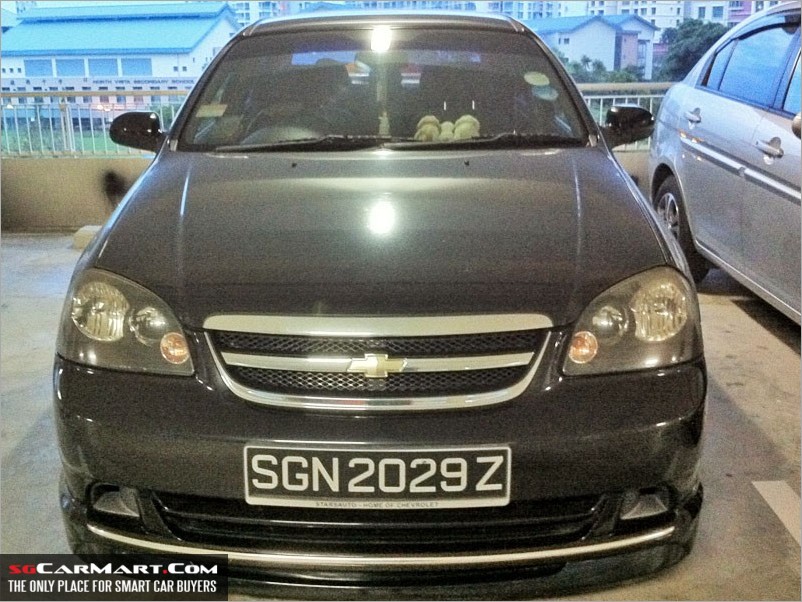
The beauty of car spotting on the road is that you never know what is going to appear next. I was just walking along the road when I spied a rather unique-looking grille on a car some distance away. Upon drawing closer, it suddenly hit me that I was laying my eyes on a relic that I didn't know still survived today, namely the pre-facelift 2003 Chevrolet Optra!
 
Originally sold as the Daewoo Lacetti in its native Korea, it was developed based on its predecessor Nubira before it was acquired by GM. GM Korea launched the car in 2002, with styling done by Pininfarina. Its name is derived from the Latin "lacertus", meaning "youthful". Subsequently, it began to be sold in worldwide markets, under various names like Buick Excelle in China, Holden Viva in Australia and Chevrolet Optra in the Americas, India and Southeast Asia. Cars in Southeast Asia are assembled in Thailand.
 
A hatchback and station wagon version were subsequently released in 2003 and 2004 respectively. There was also a facelift in 2004, where the three-slot grille was changed to a single grille featuring a horizontal bar. There was also another facelift in 2007 where the sedan received the same front end as the hatchback featured since its debut. The Optra was powered by a 1598cc GM E-TEC II inline-4 engine, allowing it to reach a top speed of 172 km/h with an acceleration of 12.5 seconds [0-100 km/h]. It was 4500 mm long and weighed 1,240 kg, with a fuel consumption of 15.8 km/litre.
 
 ...
... 
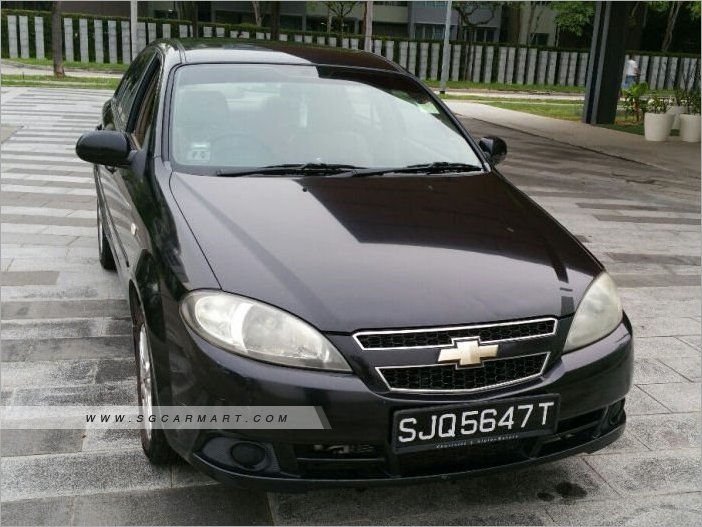
First and second facelift 
 
Production of the Optra ended around 2009 where it was replaced by the Cruze, though badge-engineered versions continued to be made up till 2024! Optras were first sold in Singapore in 2003 by Starsauto Pte Ltd, where it retailed for $74,988 with COE. Local reviews noted its relatively bigger size and thoughtful features like air-con glove compartment and front-seat shopping hooks, though it could get bouncy at low speeds. Interestingly, an Optra was won as a lucky draw prize as part of the Sentosa Island Mega Saver package in 2004!
 
While we still have quite a few of the facelifted Optras around, I had a soft spot for this pre-facelift model with the three grilles as my uncle used to own one. Seeing this survivor was surreal and naturally I made a run to the junction where it had mercifully stopped. Almost immediately, it drove away but I managed to preserve its existence in these two pictures. After researching a bit more, I realised that this manual pre-facelift unit is most likely the last one in the country; the vast majority were sold with automatic transmissions and other manual units in the market are the facelifted versions. 
 
I still cannot believe that my accidental sight of this car unlocked various childhood memories, and knowing that it was in the more rare manual transmission made it a lot special. It seems that this unit will be around for some time, hopefully you'll be able to catch a sight of it soon!  


20 July 2025

More than an old car #224: Mazda RX2


Back then when I had more time, I often went to various car workshops around the country to just see what cool cars were there (which also makes up the majority of my content). Some places are relatively far, so I would not specifically make my way down unless I felt like it. It was one of those random days where I just decided to pop by, when I saw this rather curious 1972 Mazda RX2 being worked on. Initially, I did not recognise what it was but after doing a quick check, I realised it was a unicorn finding!

First introduced as the Mazda Capella, the car was positioned as an intermediate alternative to the smaller Familia and the larger Luce. Its name was derived from the eponymous star, which is the brightest in the constellation Auriga. The Capella originally featured rectangular headlights while rotary-powered versions were fitted with twin headlamps from 1971; rotary cars were sold as Mazda RX2 for export markets. 


Interestingly, the Capella was also assembled in New Zealand and South Africa, where the rotary cars became more popular than its non-rotary siblings. It was also a major component of Mazda's US expansion in 1971, but only the rotary version remained federalised (i.e. made legal) for 1973.

The RX2 was powered by a 1146cc Wankel 12A rotary engine, allowing it to reach a top speed of 182 km/h with an acceleration of 9.4 seconds [0-100 km/h]. It was 4210 mm long and weighed 1015 kg, with a relatively thirsty fuel consumption of 15.9 litres / 100 km.

Production of the 1st-generation Capella ended in 1974 with about 116,000 made, where it was succeeded by the CB series. Certain literature consider the 1st-generation Capella to include the CB series, though other make a distinction. This particular unit was imported from the UK, where it was noted to be a barn find that had not moved since the 1980s. It was sold on eBay for 3500 pounds in 2012 and subsequently brought in, though it had not been seen in public until I came across it by chance! RX2s were not widely sold in the UK back then, making its existence really curious. Even in Singapore, they did not appear to have been brought in officially though a few were noted to have existed based on newspaper ads.

Cars back then were really made different, as seen in the level of details. I had not noticed the gold pinstripes only after I took the pictures, and it was a nice touch amidst the car's general run-down condition. The road tax disc was last updated in Oct 1977, which would mean this unit has been off the road for decades! The bigger mystery would be how this was found and brought into Singapore, especially when maintenance would not be straightforward. In any case, it has yet to be registered but I hope you may be able to see this rarity on the roads some day!