Showing posts with label toyota. Show all posts

4 July 2025

More than an old car #223: Toyota Prius (XW10)


Hybrid vehicles have become so mainstream today that it is hard to visualise how it stormed to the forefront. Over the course of automotive history, there were various attempts to create vehicles with hybrid technology, but ensuring it was mass market was a whole set of challenges. It was only until Toyota's brightest minds pooled together to create a revolutionary car, of which the 2003 Toyota Prius XW10 is a testimony!

The Prius began life as a concept vehicle, where it was first exhibited at the 1995 Tokyo Motor Show; it featured the Toyota EMS (Energy Management System) drivetrain for the purpose of fuel-efficient driving. Environmentally friendly features included electric power steering, low rolling resistance tires and side moldings made from coloured resin.

It was subsequently released in 1997 as the world's first mass-produced hybrid vehicle, under model code NHW10. The front grille and bonnet were seamlessly connected (a rare feature at the time), which helped to reduce air resistance. In addition, it was easy to get in and out of the car while making effective use of the interior space, which was an innovative package for a sedan at the time.

In 2001, it was upgraded with a more efficient hybrid engine and cosmetic additions for the export market such as a rear spoiler, along with a model redesignation to NHW11. NHW11 models were powered by a 1497 cc 1NZ-FXE i4 hybrid engine and fitted with the Toyota Hybrid System hybrid drivetrain technology (now known as Hybrid Synergy Drive). Essentially, an electric motor was mated to a conventional engine, which would kick in to provide more power when accelerating. This allowed the car to reach a top speed of 130 km/h with an acceleration of 13.4 seconds [0-100 km/h]. It was 4315 mm long and weighed 1265 kg, with a very good effective range of 18.5 km / litre.

Production of the 1st-generation Prius ended in 2003, where it was replaced by the more renowned XW20 series. The Prius XW10 was first unveiled in Singapore in 1999, and was officially sold here in 2001 by Toyota dealer Borneo Motors at a retail price of $128,988. Local reviews praised its fuel efficiency but noted that its prohibitively high price would only appeal to those who wished to make a statement. 

This unit is believed to be 1 of 2 remaining here, where the other one is actually used by our police force as a patrol car! It was most likely imported from the UK, due to the rear spoiler and chassis number designation. At some point in time, this Prius began to see usage as a private hire vehicle; I have seen it being used to drop off passengers. Although the Prius XW10 is not what people would imagine an iconic car to be like, it paved the way for others to fly. Who knows, perhaps you may be lucky to catch a ride in this unique piece of history one day!


10 July 2022

More than an old car #195: Toyota Corolla Spacio


Family-friendly cars have always been a top favourite among car owners, as circumstances dictate the need to transport children, pets and groceries alike. While multi-purpose vehicles (MPVs) remain firmly in the public consciousness, you would be forgiven for not knowing that this 1998 Toyota Corolla Spacio was an ancestor of your slick MPV today...

Introduced in 1997, the Spacio was a compact minivan version of the E110 Corolla. It stood out from the other Corolla variants because of its curved shape, and it was the only one fitted with a digital speedometer. Its name is a variation of the Italian word 'spazio', which means 'space'. 

Different seat layouts were available along with trims such as Standard, L Package, G Package and Black Sports Package. A facelift in 1999 saw changes such as a front spoiler and a separate tachometer, and an 'aero tourer' version fitted with an aero kit was also available.

The Spacio was powered by a 1587 cc 4A-FE i4 engine. With dimensions of 4135 x 1690 x 1620 mm and weighing in at 1190 kg, it was on the heavier side but it could sit up to 6 adults depending on the seat configuration.

Production of the 1st-generation Spacio ended in 2001 where it was replaced by the E120 version. Interestingly, this is 1 of 2 that still exists here (at the time of writing): it was not a popular car when new and it is amazing to know that 2 people have still decided to hold on to this relative obscurity. Spacios were sold here by Borneo Motors, the official Toyota dealer in 1998, and retailed for $97,998 for the 5-seater variant. 

This particular unit is noted to have a lifespan of up till 2023, where it has to be scrapped or exported after that. While it may have been pretty unknown even when it was around, I hope that this may be something new you have learnt today...hopefully you will be able to see it before it's gone!


21 January 2022

More than an old car #186: Toyota Land Cruiser J60


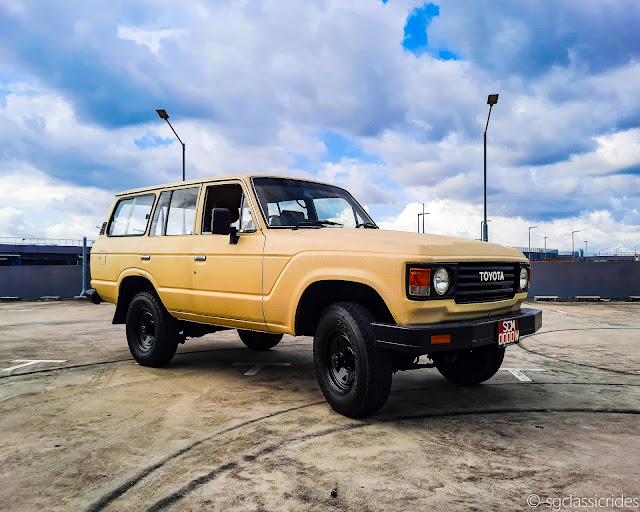
As you may be aware, I have always been enamoured by boxy designs and they sparked off my love of classic cars. Recently, I was given a wonderful opportunity to cover this immaculate 1986 Toyota Land Cruiser HJ60 (which is currently on sale!) and it was a really good experience...

The history of the Land Cruiser dates all the way back to 1936, with the Kurogane Type 95 scout car devised by the Japanese Imperial Army. During the Japanese occupation in Philippines, they found an American Willys Jeep and promptly sent it back, where it was used as a reference to build a similar vehicle under orders from the military authorities. This led to the development of the AK10 prototype: although it did not see much use in the field, lessons were learnt which were applied to the development of the first Land Cruiser. 

During the Korean War, Toyota was tasked by the US government to make 100 new vehicles with Willys Jeep specifications. The subsequent output, known as the Toyota BJ, was larger and more powerful than its US counterpart: as it was a Jeep-type car powered by the Toyota B engine, the model became 'Type BJ'. First appearing in 1951, the Toyota BJ was able to climb up to the 6th stage of Mt Fuji which was unprecedented at that time. Much impressed, the National Police Agency quickly placed orders. In 1952, the name "Land Cruiser" was coined by the technical director Hanji Umehara: it was likened to a cruiser with the enthusiasm to drive out 'rovers', as Land Rover was regarded as their competitor. 

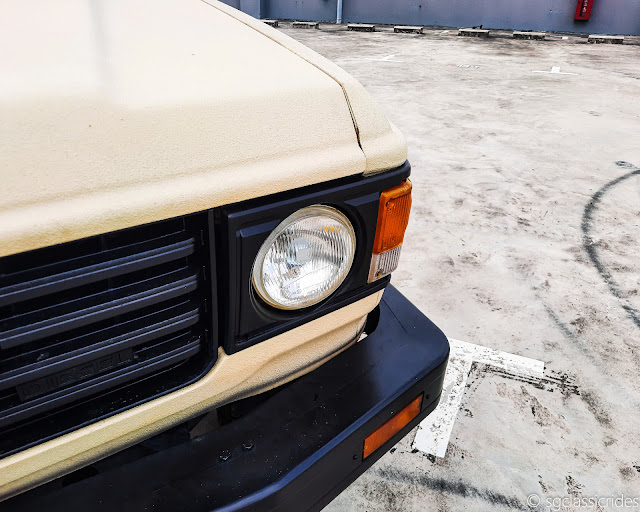
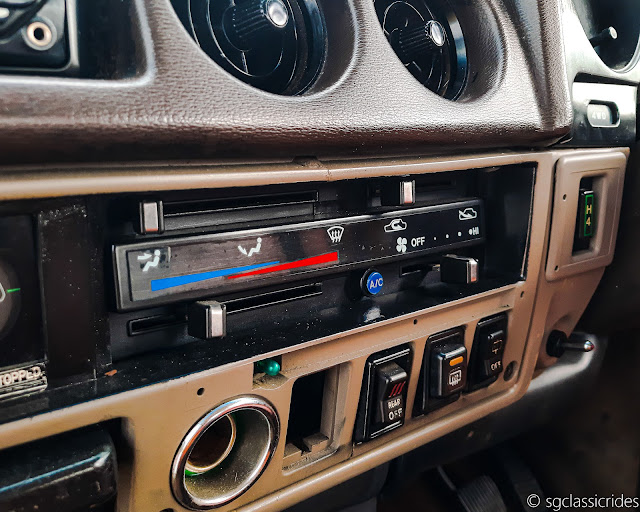
By 1980, passenger cars were changing and becoming more comfort-oriented than before. With the advent of SUVs in the US and the Range Rover, Toyota realised that they could build automobiles that would provide Range Rover comfort and versatility at a much lower price. The J60 was available only in 5-door wagon form but it was far more luxuriously appointed than its forebears. Comfort features included power steering, air conditioning and heated rear windows. Both petrol and diesel engines were available, and a facelift was carried out in 1987 with the round headlamps changed to 4 square ones.


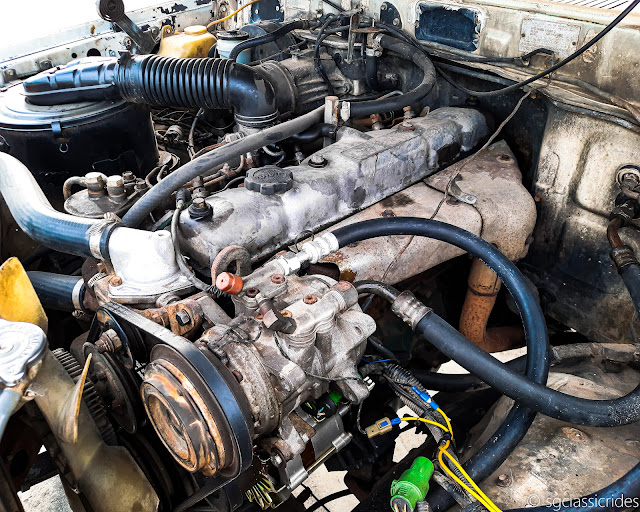
This unit is powered by a 3980 cc Toyota 2H inline-6 diesel engine mated to a 5-speed H55F manual transmission, allowing it to reach a top speed of 145 km/h with a maximum power output of 76kW at 3500 rpm. With dimensions of 4750 x 1800 x 1825 mm, it can easily ford the increasingly frequent floodwaters that has been affecting the country recently. The HJ60's fuel consumption of 12.9 litres / 100 km is reasonable given its heft of 2010 kg.

Production of the J60 series ended in 1990 where it was succeeded by the J80 range, though production in Venezuela continued until 1992. The first Land Cruisers were brought in by Asia Motor Co Ltd in 1957, and small numbers existed in Singapore including the J60s. None are known to be left, but recently a few Land Cruisers have been imported under the classic vehicle scheme.

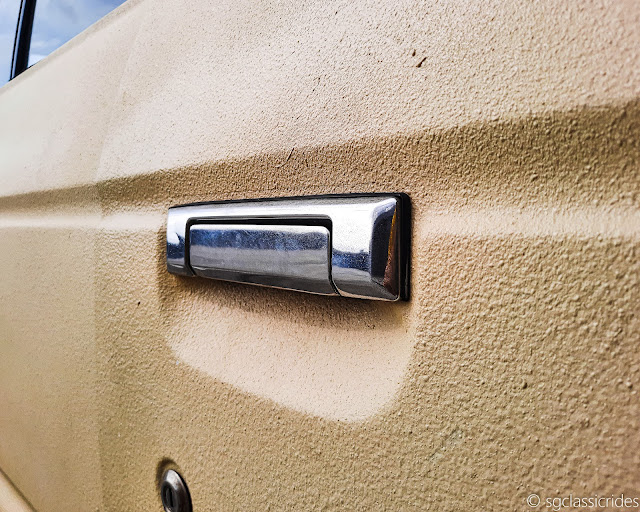
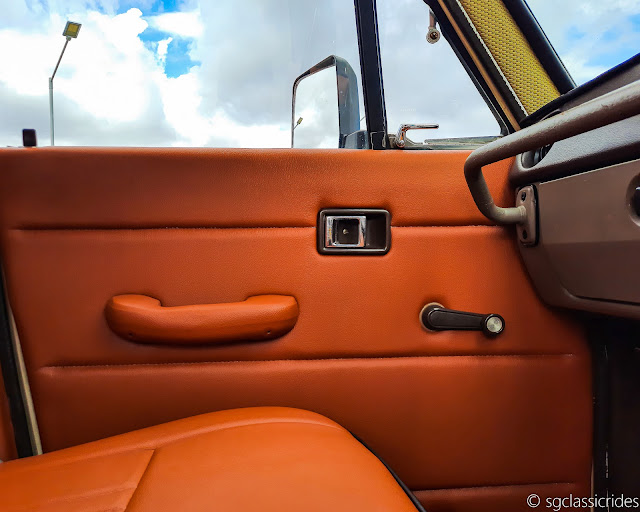
This particular unit, imported from Australia, was originally in Saint Moritz White (colour code 033) with an olive brown/light brown fabric interior (trim code FA42). It has been reupholstered lovingly, creating additional comfort and the exterior has been treated with the unique Raptor paint: its rough exterior pays homage to its rugged purpose and suitably protects the robust body from more scratches. 


If you are looking for a vehicle that can tackle roads, both on and off it while standing out from the crowd, this is the one for you! This urban warrior has had the following works done:

- Fully serviced brakes, aircon, engine and gearbox

- Full lubricant and coolant flush

- Full wiring repair

- Suspension repair

- Change of oil and fuel filter

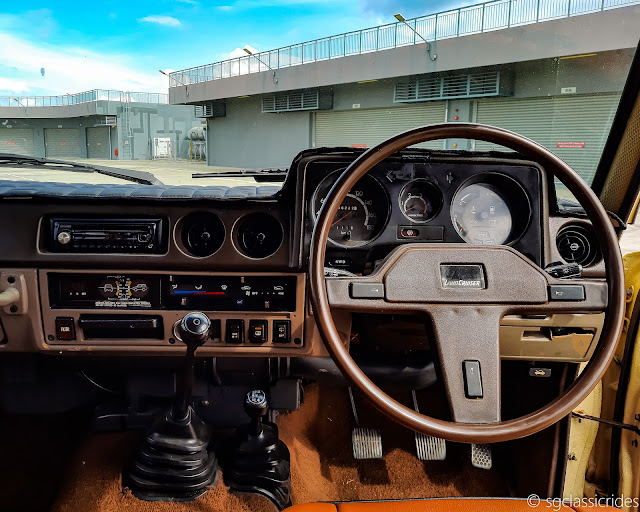
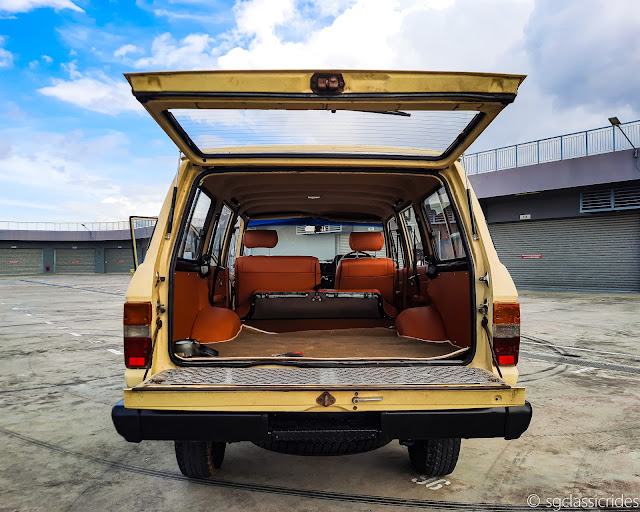
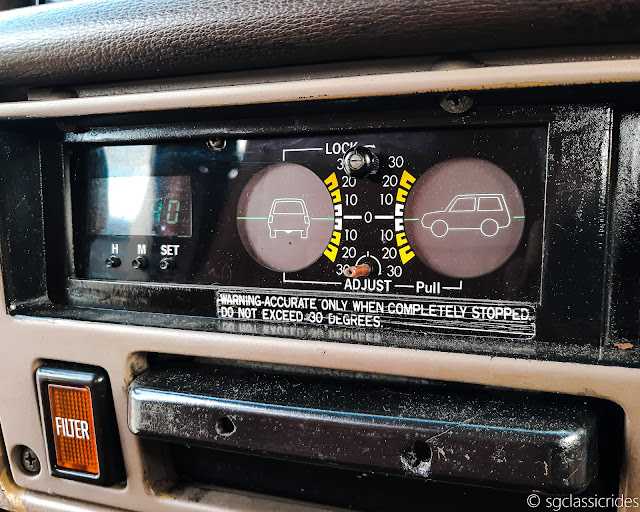
Having sat in it myself and marveled at all the details, it presents a good off-road challenge for the adventurous (once more suitable tyres are fitted) and yet offers humongous storage space when the seats are lowered. The diesel engine is potent and is able to generate much torque, which will come in handy when conquering uneven terrain. An interesting component would be the inclinometer: it was quite cool to see the little figure tilt around when going on slopes.


For more details and inquiries, please feel free to contact me or Classic Motorworks SG as they are the ones who imported it in. With Japanese reliability packed into a fun and tough SUV, it is really the best of both worlds. You can see for yourself that they do not make cars like they do today, with the multitude of hands-on gauges and spirited driving. Who knows, you may just be the lucky owner to turn heads on your next rip down our roads!


30 April 2021

More than an old car #170: Toyota Hilux Surf


Having left school for a while, I look back at schooling days with some nostalgia. Throughout my time, I have come across old cars of varying shapes and sizes, and this 1993 Toyota Hilux Surf SSR-X was one of the stand-outs just because it was so uncommon...

The Hilux Surf was first conceived of back in 1981 with a prototype conversion done to the Hilux truck known as the Trekker. It was done by the Winnebago company with approval from Toyota and assembled only in the US. In 1984, the Hilux Surf (or 4Runner for the export version) came into being by modifying the short-bed Hilux truck: as such all the Hilux Surfs for the 1st generation only had 2 doors. 

For the 2nd generation, the car featured a freshly designed body although it remained identical from the B-pillar onwards. Almost all units were now available in 4-door format, with very few 2-door units made. In 1991, it underwent a facelift featuring more irregularly-shaped headlights. There were also different special edition models released as well. Interestingly, opening the rear tailgate of the Hilux Surf required one to retract the glass window into the tailgate, then opening the tailgate just like a pickup truck. This differed from its competitors which had the tailgate open upwards along with the glass.

The car was available in various trims from the base 'SSR' through 'SSR Ltd', 'SSR-V' 'SSR-X' and 'SSR-X Ltd' to the range topping 'SSR-G'. Various engines were also offered for the car, but this unit was powered by a 2982 cc 1KZ-TE turbo i4 engine, allowing it to reach a top speed of 155 km/h with an acceleration of 16 seconds [0-100 km/h]. It was 4490 mm long and weighed 1880 kg, with a fuel consumption of 11.5 litres / 100 km.

Production of the 2nd generation Hilux Surf ended in 1995 with the arrival of the 3rd generation; about 308,549 units had been registered by then. This is a Malaysian unit as none are known to exist locally today, although small numbers were present back in the 90s where they were used as company vehicles. There has been an increasing number of Japanese SUVs being imported here over the past few years, as more people fall in love with its rugged nature. It is likely that similar units may end up here in the next few years (when they are able to get registered). Until then, you will be extremely lucky to see one before that!

30 October 2020

Historic classic rides #4: Toyota Mark II


I know that it has been a long time since I wrote about classics based off old pictures, so what better time to restart this with this 1971 Toyota Corona Mark II that I found from the archives!

The Corona Mark II, first introduced in 1968, was intended to fill the gap between the high-end Crown and the pedestrian Corolla. This was instrumental in allowing Toyota to establish itself as a mainstream international automaker and pursue new market opportunities. It was sold at Toyopet Store dealerships, alongside the Corona itself. The name "Mark II" indicated that it was a secondary model to the original Corona, and also created a connotation to the 'more classy' nature of the Jaguar Mark II. However, the Mark II still shared the same emblem as its less luxurious brother up till the end of production.

Initially available in a 4-door sedan (RT60) and 2-door hardtop form (RT70), station wagons (RT78/79) and coupe utility (RT69) forms were introduced some time later. The Mark II could be had in a myriad of engine types, based on the market and specific body styles. A facelift was carried out in 1970 along with the introduction of a 1.7 litre engine, and the 1971 facelift gave rise to the above unit known as the 'eagle mask'. This was powered by a 1707 cc 6R SOHC inline-4 engine, allowing it to reach a top speed of 160 km/h. It was 4295 mm long, 170 mm longer than the Corona and weighed 1000 kg.

Production of the T60 Mark II ended in 1972, where it was succeeded by the X10 series. Mark IIs were first sold here in 1969 by Borneo Motors, but none are known to exist here today. As with Japanese cars of the late 60s, they were vulnerable to rust and were not seen as valuable enough to maintain and keep on the roads. Strangely, even with the recent glut of imported classics, no one has brought in any of them. On the other hand, these are quite rare to find nowadays and even when they appear on the market, they are not going for cheap (around S$15,000). I hope this has been informative to show the cars that used to be here, and possibly owned by your parents/grandparents back then!

8 June 2020

More than an old car #146: Toyota Corolla E100


Cars come in all shapes and sizes, and some definitely stand out less than others. I was going out for lunch when I saw this seemingly boring old car about to drive off and didn't pay much attention to it. However, something just felt novel and I managed to snap a shot before it was gone. After some searching, I was pleasantly surprised to have caught this 1992 Toyota Corolla E100 liftback by pure chance!

The Corolla E100 was the 7th generation produced under the long-running name. It was larger, heavier and visually more aerodynamic than its predecessor, the E90, earning it the nickname 'big-body Toyota'. The design cues was supposed to emulate a 'mini Lexus', to build on the recent success of Toyota's flagship range. Produced during the time of Japan's bubble economy, it featured fewer body panels for increased strength, lower cost and fewer panel gaps. At the same time, Toyota aimed this Corolla at mostly first-time buyers: it received positive reviews for being reliable and sturdy. In 1993, it underwent a facelift with modifications done to the front fascia and interior trims.

A variety of body styles were produced, such as regular 4-door sedans, 5-door wagons and 5-door liftbacks like this unit here. Different engines were made available, but most units in Singapore were powered by a 1587 cc 4A-FE i4 engine, allowing it to reach a top speed of 195 km/h with an acceleration of 10 seconds [0-100 km/h]. It was 4210 mm long and weighed 1070 kg, with a good fuel consumption of 12.2 km/litre.

Production of the E100 ended in 1998, where it was replaced by the E110 series. There are still quite a handful of sedan versions on the road, but liftbacks like this are very rare: in fact, this should be one of the last ones standing! Till today, they remain quite popular with enthusiasts and I confess that it is one that I hope to own as my 1st car. While its rather frumpy shape belies its age, it still remains an affordable classic and I hope that it gets more love!

11 May 2020

More than an old car #142: Toyota Estima Emina


Recently, I got a request to write about old minivans in Singapore. This gave me some food for thought as I realised that I had not seen many of them around in the 1st place (not including the passenger versions of goods vans). However, after some sourcing from my old pictures, I managed to find this sole image of this 1998 Toyota Estima Emina!

The Estima (also known as the Previa/Tarago in overseas markets) was first introduced as a concept model at the 1989 Tokyo Motor Show. It attracted much attention, from its futuristic egg-shaped design to the front wheel located in front of the front seat which was unprecedented at that time. Owing to its shape, the engine had to be located almost flat underneath the front seats: one could access the spark plugs by removing the front passenger seat, the carpet and an access panel. As such, all engine-driven accessories such as the air-con compressor and radiator fan could be easily reached by opening the front hood, and this system was known as 'Supplemental Accessory Drive System', or 'SADS'.

At the same time, 2 smaller versions were introduced in the Japanese market, known as the Estima Emina and the Estima Lucida. They competed with the Nissan Serena as the parent Estima itself was deemed too big, and furthermore they were eligible for a lower tax band because of their smaller size. Its name is a combination and derivation of 'estimable' and 'eminent'. While it was produced for just 1 generation, it underwent 2 facelifts with notable changes to the grille design and headlights. This unit is the 2nd facelifted model, produced between 1996 to 1999. It was powered by a 2438 cc 2TZ-FE i4 engine with a fuel consumption of 8.6 km/litre. It was 4690 mm long and weighed 1660 kg.

Production of the Estima Emina ended in 2000 with around 12,000 units made. The Emina had come up short in its struggle with the Serena, and it reaped low profit margins despite the high developmental costs. With the introduction of more serious competition in the form of the Honda Odyssey, the Emina had to bow out. Eminas were sold in Singapore back in 1997, along with the parent Estima and only less than 5 still exist here! This particular unit has been off the road for quite some time, hopefully it's still kept somewhere.

There is something endearing about these quirky 'egg vans': its rounded shape provided maximum space for the occupants and it is quite rare to see an old minivan that has remained till today. Many were scrapped as owners progressed on to more comfortable and powerful options. I am not sure whether you will get to see this any time soon, but you could keep your eyes peeled for an egg on wheels the next time!

30 March 2020

More than an old car #138: Toyota Starlet


Regular cars haven't really made an appearance so far, so I figured that it was high time to include one. One of my favourite random spots would be this 1983 Toyota Starlet KP60, especially when this does not exist here any more...

The Starlet was a subcompact car made between 1973 to 1999, as the successor to the Publica. Initially made available as a coupe, sedan and station wagon, it became only available as a 3 or 5-door hatchback and wagon from the 2nd generation (P60) onwards. Its name also means "small star", reflecting Toyota's desire to shine with its small car. The P60 Starlet was the first car to be sold extensively outside of Japan, where it capitalised on the rising popularity of supermini cars.

Various grades were offered, from the luxurious SE with woodgrain interior to the base-model DX version. Its hatchback design was given a unique aerobox styling, providing efficient fuel consumption and the roominess of a big car. The rear seats could also be folded back to form an extra 630 litres worth of cargo space, although the rear-wheel-drive nature of the car made for cramped living quarters for anyone sitting at the back. The steering was noted to be quite precise compared to its competitors and the instrument panel was limited to the essentials: a speedometer, temperature and fuel gauge, and warning lights for unsecured doors. Overall, it was practical and served its purpose well enough. It was powered by a 993 cc Toyota 2K i4 engine, allwing it to reach a top speed of 150 km/h, with an acceleration of 16.5 seconds [0-100 km/h]. It was 3895 mm long and weighed 786 kg, with a fuel consumption of 7.6 litres/100 km.

Production of the P60 Starlet ended in 1984, where it was replaced by the P70 series. P60 Starlets were sold by Borneo Motors (our local Toyota dealer) in 1979, where it retailed for S$20,688 [S$46,153 in today's money]. This unit was the last one remaining when I saw it back in 2015, but it was unfortunately scrapped in 2016. Currently the number plate belongs on a Hyundai Getz--an interesting choice of replacement. I was quite amazed that the owner had kept this quaint little car for so long, although it was unfortunate that s/he had not kept it until now.

Finding these unassuming economy cars is more amazing than exotic classics: you could see how the owner really treasured the ride well enough to save it from the COE monster. While there are still a handful of later-generation Starlets still around, this unit in bone-stock condition was a nice sight to behold. I hope this was a nice trip down memory lane, to learn about a car that most people would not have given a second look!

13 January 2020

More than an old car #129: Toyota MR2


People may associate Japanese cars with boring family vehicles, and while true to a certain extent, there are exciting cars such as this 1986 Toyota MR2 AW11 that don't get the love they deserve!

The MR2 started out initially as a design project, with the goal of a car that would be enjoyable to drive and yet provide good economy. Much work was done to determine the location of the engine, which eventually ended up in a mid-transverse placement in the SA-X concept vehicle. At that time, it was the first mid-engined car made by Toyota. It was later designed to be a sports car, which eventually debuted at the 1983 Tokyo Motor Show. Its name stands for either 'mid-engine, rear-wheel-drive, 2-seater' or "mid-ship, run-about, 2-seater'. Even the logo used was a bird of prey that formed the words 'AW'.

The suspension and handling of the car was designed by Toyota, with the help of Lotus engineering. As a result, the final product was easy to drive and provided much fun, thanks to the high-revving engine. Although the styling was somewhat bulky and abrupt, the good handling and smooth transmission made up for the shortcomings.

The W10 generation underwent 2 facelifts for both interior and exterior, such as including full-length side skirts and an additional brake light. It was available in 2 engine types, but units in Singapore were powered by a 1587 cc 4A-GE i4 engine, allowing it to reach a top speed of 200 km/h with an acceleration of 8.1 seconds [0-100 km/h]. It was 3950 mm long and weighed 1035 kg.

Production of the AW10 generation ended in 1989 with 163,845 units made, where it was succeeded by the SW20 generation. The AW11 model was first sold in Singapore in 1985 by Borneo Motors, where it retailed for S$52,521 [S$97,236 in today's money]. This is one of less than 5 units remaining here surprisingly, even though it may not look like a 'rare' car at first glance. There is a certain character around this car: despite its blocky understated look, it is still capable of providing sheer driving pleasure for the driver. One is more likely to find them at events, and it is still nice to know that such classics are still around!

23 December 2019

More than an old car #127: Toyota Supra A70


Walking around private estates can be rewarding even though there may be a lot of area to cover: I had no idea what this was previously, but after some checking, it turned out to be a very rare 1989 Toyota Supra A70!

The Supra is a sports car and grand tourer made by Toyota starting from 1978, where it was based off the Celica liftback: as such, the first 2 generations were known as the Celica Supra. Its name is Latin for 'supreme', which incidentally was the idea that Toyota wanted to promote to buyers. Interestingly, the Supra name was resurrected recently since 2002, with the current J29/DB model based off the BMW Z4. While it is still a far cry from its predecessors, the J29 Supra has received much positive reviews and I understand that there are at least 5 on the road now.

In 1986, the Celica and Supra became 2 different models: the A70 Supra maintained its rear-wheel drive layout while the Celica was now a front-wheel drive car. Notable features included an electrically-controlled suspension system known as TEMS and an anti-lock braking system (ABS). Export markets were given the larger 3 litre engine, while the Japanese market had smaller capacities in order to qualify for tax exemptions. The engines were also available in turbocharged form, and features such as an integrated spoiler were unique to these cars.

It underwent a facelift in 1989, with numerous changes made to the interior. This unit was powered by a 2954 cc 7M-GTE turbo inline-6 engine, allowing it to reach a top speed of 224 km/h with an acceleration of 7.7 seconds [0-100 km/h]. It was 4630 mm long and weighed 1583 kg.

Production of the A70 Supra ended in 1993 with about 241,471 units made. This unit is the last one remaining in Singapore, and it was also rare even back in 1987 when it was first released by Borneo Motors. It has been recently given a new lease of life with the extension of its COE, although it does not come out very often. While its successor (the A80 Supra) is more desirable due to its appearance in the Fast and Furious movies, this unicorn also deserves recognition for being able to survive for so long.

It is natural for people to gravitate towards a favorite car, though I feel some regular-looking models are equally desirable as well. The body style is certainly unique among cars of today, and the BBS wheels give it a nice classic touch. And who doesn't love some pop-up headlights? It would be better if you could see it for yourself and marvel at this timeless classic some day!


28 November 2019

Special feature #2: SG's Toyota Corona


It has been a while since I did a special feature as I did not have the chance to talk to owners previously. I hope to do this once a while, now that I have content. Let me introduce you to this humble 1991 Toyota Corona T170 CD that does not exist anymore...

The Toyota Corona was first introduced way back in 1957, where it was first used as taxis in Japan. Over the years, it evolved gradually to become a popular people's car, including Singapore which received the 3rd-generation model in 1964. Its name is derived from the corona (the scattered light around the sun during a solar eclipse), and it was supposed to signify a 'bright and friendly family car'.

The Corona T170 was the 8th generation model, first released in 1987. It was available in a 4-door sedan and 5-door liftback version and featured a variety of engines. For the Singapore market, we primarily received units powered by a 1587 cc 4A-FE i4 engine, with a choice of automatic or manual gear transmission. The Corona of this generation was larger than its predecessors, up to the 1700 mm maximum width that made it eligible for lower taxes in Japan. It had a facelift in 1989, where the horizontal grille bars became vertical. The T170 Corona was 4480 mm long and weighed 1210 kg.

Production of the T170 Corona ended in 1992, where it was replaced by the T190 model. Borneo Motors, our local Toyota dealer, first sold them in 1988: apparently the managing director sent out video-cassette tapes to 2,000 owners of the Honda Accord, detailing the rally success and improved features of the Corona. Honda got so concerned that they sent 2 executives from Japan to take a look at Borneo Motors's facilities!

This particular unit was owned by a member of the motoring club in my school for a few months: he had recently bought it from a car dealer when he wanted a cheap and economical car to work on. As with a car that old, it broke down a few times and repair costs was dear on a student budget. Coincidentally, I had seen the exact unit 2 years ago (when it was with the previous owners), and SG graciously took a few of us for a short ride around school. It reminded me of the older taxis of the past, especially in a less-common manual transmission. The cloth seats and the audible rumble of the engine was pretty iconic, and the drive was smooth and efficient.

Unfortunately, I forgot to take more pictures even when I saw it around school: it did not occur to me at that time. SG decided to sell it due to a limited budget, even though he had driven it across to Malaysia to display it at a retro car show, among other adventures. However, no one bought it despite the discounts he gave, and it was sadly scrapped back in May when its lifespan was up.

The Corona T170 is quite iconic for me, since it was the bread-and-butter car that most people would recall driving back then. Not many Coronas are left in Singapore as people upgraded to better and safer cars, although I managed to see another manual unit a few weeks ago! It is always nice to see such regular cars on the road: they are a part of our motoring heritage even though they are overshadowed by many exotic favourites. Maybe you'll be able to see one of them some day and I hope you'll appreciate it for what it's worth!


SG kindly provided some of his pictures, featuring close-up shots!


15 August 2019

More than an old car #114: Toyota Echo


For every exotic/striking old car out there, there are a lot more workhorses that don't get the love it deserves. Such an example would be this 1999 Toyota Echo that may not have struck you as a classic car...

The Toyota Echo, or more commonly known as the Vitz/Yaris, was first conceived in 1998 by Toyota in Europe, and unveiled at the Tokyo Auto Show in 1999. "Vitz" is a coined word that combines "vivid" and "Witz" ('witness' in German) and "Yaris" was derived from Charis, the Greek god of beauty. JDM versions were called Vitz as it was easier to pronounce compared to Yaris, and units sold in the Australasia region were branded as an Echo.

Its main selling point was its cost and appeal as a small family car, and innovative features such as decent interior space and collision safety performance greatly appealed to customers. This sparked off a boom in 5-door compact cars such as the perennial Honda Fit/Jazz and Nissan March for instance. Some time in 2001, the Echo received a facelift where the black rubber bumper was noticeably removed. It was powered by a 998 cc 1SZ-FE i4 engine, allowing it to reach a top speed of 155 km/h, with an acceleration of 13.6 seconds. It was 3609 mm long and weighed only 855 kg, with a decent fuel consumption of 6.9 litres per 100 km.

Production of the Echo ended in 2005, where all the subsequent 2nd-generation units were renamed to Yaris. This unit still sports its original registration number and I believe the owner has intention to keep it for the long run. The Echo was first sold in Singapore in 1999 by Borneo Motors, our local Toyota dealer at a rather pricey S$90,000 inclusive of COE [S$120,202 in today's money]. However, not many still remain as owners proceeded to upgrade to better cars over the years. I found it by accident when passing by; it's definitely a car that is unlikely to attract any attention because of how ordinary it looks. However, now that you've known about this, maybe you'll get to see others on the road too!

10 June 2019

More than an old car #105: Toyota Crown Comfort taxi


Taxis are an ubiquitous part of our public transport system and we rely on them to bring us wherever we want to go. Before the advent of ride-hailing services, the taxi was the only way one could travel to more inaccessible places, although one may have to endure the exasperated glare from the driver. I believe this particular taxi is easily recognizable to all Singaporeans: pretty sure most of us have sat in one before when one could not afford to waste any time travelling on buses and the MRT. It was a part of my childhood and I had fond memories of travelling in this 2006 Toyota Crown Comfort taxi!

The Crown Comfort was based off the Toyota Crown S150 and the Mark II X80, and it was designed in an effort to return to the original purpose of the Crown, which was to serve as a taxi. To increase interior space and reduce unnecessary costs, the dashboard fitments and seats were replaced with cheaper plastic-based versions. At the same time, its sister model the Toyota Comfort was also made but it was available only in Japan: it was the shorter version at 4590 mm long.

Comfort taxis in Singapore were powered by a Toyota 5L 2986 cc i4 engine, allowing it to reach a theoretical top speed of 140 km/h. It was 4695 mm long and weighed 1310 kg. The boot space was enormous, even when compared with the current taxis today.

Production of the Crown Comfort ended in 2018 and you could still see them in Japan and Hong Kong. However, all units in Singapore were phased out in 2014 as they were unable to meet the new Euro 4 diesel emissions standards. Since taxis here have a lifespan of 8 years, the 2006 model year cabs were the last survivors. A few units ended up in hospitals like this one here, where they were used for rehabilitation purposes. Certain features were removed such as the engine and the gear-stick. It carries a brown plate, which is a special seal fixed on by our motoring authority for vehicles to be put on display. For some reason, this scheme is not listed officially on the website and it entails a rather troublesome process.
This article covered this particular unit in more detail, including interior shots which I was not able to get. I was also aware of another unit that was scrapped recently and the article is attached below:


Apparently, this was the last unit that was on public display here, a far cry from its heyday in 2006 where it made up 80% (19,000 units) of the taxi population. I understand that this one has been scrapped very recently and it has been replaced by a Hyundai Sonata. There are still a few units but under private collections.

Some of you may have fond memories travelling in one of them: for me it was the anticipation of travelling to and fro my grandfather's house loaded with many goods. I still miss the boxy shape and how spacious it was compared to the newer Hyundai Sonatas and i40s today, especially the unique smell of polyester seats combined with the air freshener. Through this article, I aim to preserve a piece of heritage that may become intangible in the near future; I hope that this is a good trip down memory lane!

18 March 2019

More than an old car #98: Toyota Crown Coupe S70


A number of you may be familiar with the Toyota Crown--they are more commonly associated with people who are somewhat more wealthy and yet prefer something Japanese. I had no idea that this 1972 Toyota Crown S70 existed until I saw it at a car meet!

The Toyota Crown is a series of large executive cars which first appeared in 1955, and it is the longest-running passenger car nameplate under Toyota; the Corolla only appeared in 1966! Its name is a reference to a king's crown, which emphasized a state of luxury. Also, it is one of the few Toyota models to feature its own logo; other examples include the Alphard and Vellfire MPVs. The 4th generation of Crowns ie S60/S70 was launched in 1971 and was available in coupe, sedan, wagon and van variants. For the hardtop coupe, its styling strongly resembled those of contemporary American cars of its day such as the Ford Thunderbird and Ford Torino. Uniquely, it also has a vent on the top of the hood and the steeply-angled chin of the car gave rise to the "kujira" nickname (Japanese for 'whale').

Export models all featured the quad round headlights, while Japanese-market models had rectangular ones. There was a facelift in 1973 with the change to a chrome bumper, compared to the previous body-coloured ones. It was powered by a 1988 cc M i6 engine, allowing it to reach a top speed of 165 km/h. It was 4680 mm long and weighed 1310 kg, clearly befitting of its nickname.

Production of the 4th-generation Crown ended in 1974 with the introduction of the 5th generation model. This particular unit is currently the last one left in Singapore, and it still carries its original registration number. It was on sale back then before residing with its current owner, who has swapped the wheels with 'deep lip' rims. I really love how immaculate this rarity gleams, and the addition of the fender mirrors also lend a retro touch. According to newspaper clippings, advertisements for them appeared some time in 1973; evidently they were sold here previously. Old Crowns have all but died out due to exorbitant road taxes and lack of spare parts--it is impressive how this unit is the last man standing. If you are lucky, you may be able to see this whale ruling the roads just like yesteryear!

14 January 2019

More than an old car #90: Toyota Cressida X80


Classic Japanese luxury cars are not that common here, partly due to the high road tax one had to pay. To find one that still looks pristine is a big surprise, such as this 1990 Toyota Cressida MX83 here!

The Cressida, or more commonly known as the Mark II, was initially positioned between the more luxurious Crown and the lower-end Corona. It was introduced to the Japanese public in 1968: the naming convention was derived from Jaguar with its "Mark __" series of cars, and was supposed to project it as a luxurious model. The Cressida was formally introduced in 1976 as the model name for export versions: its name comes from the lead character in William Shakespeare's play Troilus and Cressida.

The X80 series Cressida was introduced in 1988. It was well-known for being reliable, good gas mileage and cheap spare parts. However, it began to find fame among drifting enthusiasts, who enjoyed its rear-wheel drive capability. Partly because of its sleek classy style, many were heavily modified by stancing and converting into the outlandish "bosozoku" style. It was powered by a 2366 cc 22R i4 engine, allowing it to reach a top speed of 164 km/h, with an acceleration of 13.7 seconds [0-100 km/h]. It was 4690 mm long and weighed 1279 kg.

Production of the MX83 Cressida stopped in 1995. There are still a handful of units left on our roads, making them a dying breed. Interestingly, our late Minister Mentor Lee Kuan Yew was driven around in a Cressida, and he is also credited for allowing Toyota to establish itself in Singapore. This unit is a pre-facelift version due to the more fanciful logo on the grille. It's quite heartening to see these non-flashy old cars that are still plodding on here, much respect goes out to them for going against the odds!

29 October 2018

More than an old car #86: Toyota Corolla Trueno AE86


Out of the many old Japanese cars that are on the road, I believe many people would recognise this particular one from "Initial D" even though they may not know what exactly it is. Known affectionately as the "Panda", it is desired by many across the world and I was similarly awestruck by this 1983 Toyota Corolla Trueno AE86, especially when it was my first time seeing it!

The AE86 was based off the E80 Corolla series and was made between 1983 to 1987. It was developed with the intention of producing a car that could perform well in racing. With that in mind, it featured a front-engine, rear-wheel drive layout [ie the engine at the front powers the wheels at the back primarily]. Two variants were made: Levin, (Middle English for "lightning") and Trueno (Spanish for "thunder"). The Levin had fixed headlights while the Trueno had pop-up headlights. A coupe and hatchback style were then produced from these 2 variants. The "6" represents the 4A-GE i4 engine, with a capacity of 1.6 litres/1587 cc--this is because an AE85 variant was also manufactured that had the 1.5 litre engine. As a result, it is also known as the hachi-roku ["eight-six" in Japanese].

This unit here is the GT-V trim level, which had less accessories compared to the top-grade GT-Apex trim such as the rear wiper and a stereo set. Weighing in at only 940 kg and a length of 4205 mm, it became a hot favourite among racers, especially in the then-novel niche of drifting, which is taking a car on a set of controlled slides through corners. The renowned drifter Keiichi Tsuchiya, otherwise known as the "Drift King", made drifting a popular genre of motorsports with his preferred AE86. In 1994, Initial D was released, first in manga form and from then on it captured the imaginations of many adolescents worldwide. In fact, prices for AE86s have been inflated so much that the difference is referred to as the "Takumi tax", after the tofu-delivering main character in the series. 

This is one of the few vehicles that have entered pop culture and also easily recognizable even if you are not a car person, especially when Jay Chou acted in the film version. The last I heard of this particular car was that it was stripped down for parts unfortunately...

There are currently about 6 remaining in Singapore, with a mix of both Levins and Truenos. I believe they were originally sold here by the local dealer, and they have survived the merciless COE system unlike a few others. This is not just an ordinary Toyota, but a cult classic that still earns much adulation. Maybe you could look out for a flash of white and black--you may see one of them too!

24 September 2018

More than an old car #81: Toyota Sera


Back in the 90s, Toyota was the most common car on the roads, not less due to the ever-faithful Corolla and its many variants. However, many great cars of that era have been left forgotten, and I had never heard of this 1990 Toyota Sera until I saw it for myself.

The Sera was unveiled to the public in 1988 as the AXV-II concept car, and it was noted for its unique butterfly wing doors and its glass canopy. Its name is French for "will" [recall 'que sera, sera']. The butterfly doors was used to promote Toyota's corporate image by implementing it on a small, low-production car, although such style was associated with high-end models such as the Mercedes 300 SL. Even the technology behind these doors was quite high-level, as the viscosity of the damper fluid required to operate the door had to be regulated according to the seasons.
It was powered by a 1497cc 5E-FHE i4 engine, allowing it to reach a top speed of 195 km/h. It was 3860 mm long and weighed 930 kg.

Production ended in 1995 with only 15,941 made. They have become very rare here as well: I am aware of around 5 units only! It is noted that they were not sold here originally by the local Toyota dealer, thus they could have been parallel-imported. They represent the quirkiness of 90s Japanese designs--it has become a cult classic as people begin to appreciate their uniqueness. I don't know whether you will be able to find one on the road, but you won't be able to miss it when you see it!