Showing posts with label porsche. Show all posts

14 May 2022

More than an old car #191: Porsche 924 Carrera GT

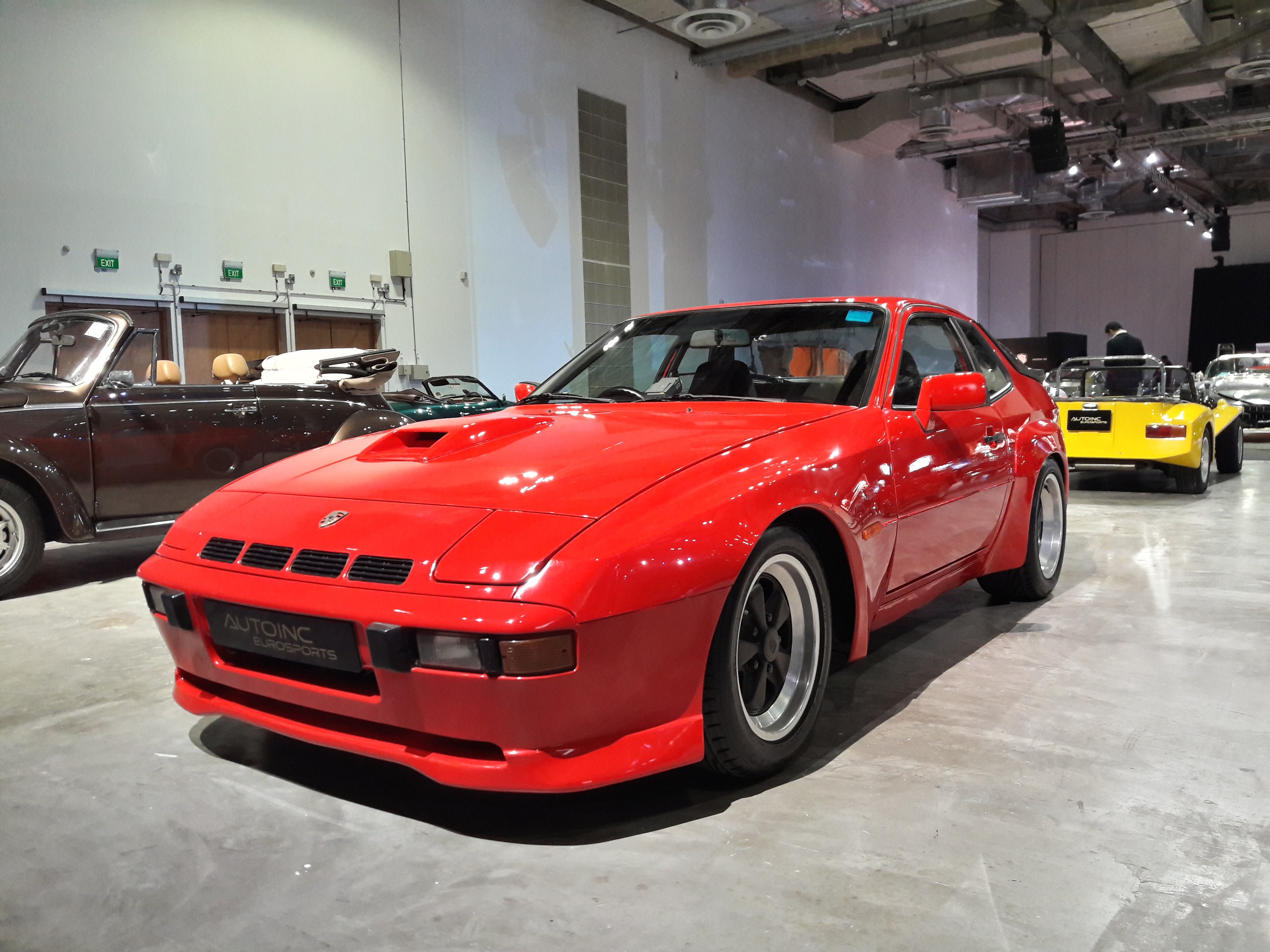
Does anyone feel that as you grow older, time flows even faster? It's already quite a distance into 2022 and I still can't believe that we are getting older at a faster rate. However, this lovely 1981 Porsche 924 Carrera GT in stunning Guards Red still looks timeless today even among its admittedly more powerful descendants.

Originally conceived as a joint project between Volkswagen and Porsche, 'Project 425' was intended to be VW's flagship coupe sports car and Porsche's replacement for the 914. VW had no experience in developing sporty cars and Porsche had been doing this all the while: per a deal that went back to the 1940s, Porsche was contracted to develop a new sporty vehicle with the condition that the vehicle must work with an existing VW / Audi inline-4 engine. 

The 1973 oil crisis and various automobile-related regulatory changes led to the scrapping of the project by VW, but Porsche made a deal to buy it back. It already had a rear-wheel drive layout and a rear-mounted transaxle to help provide 48/52 front/rear weight distribution. Under the aforementioned deal, the car was to be made at the ex-NSU factory at Neckarsulm: Porsche would own the design while VW employees would do the actual production line work. The car was mated to VW's EA831 2-litre engine, variants of which were used in the VW Transporter van; many other parts such as the gearbox and strut arms came from the VW / Audi parts bin, leading to lower costs of production.

Designed by Harm Lagaay, it was fundamentally different from previous Porsche models since the engine was now installed at the front. It was described as designed by someone 'who dreamed of a Ferrari all his life but never got one'. The front end was long and sloped steeply with pop-up headlights, contributing to its relatively low Cd of 0.34. As a 2+2 coupe, the rear seats was only suitable for children or small people due to limited space (which was partly taken up by the large trunk capacity of 370 litres). It adopted various styling elements from other cars, such as its rear window from the Jensen Interceptor and the rear quarter windows from the Honda Civic.

Porsche recognised a need for a higher-performance version of the 924 as the base model was noted to be underpowered. This led to the introduction of the 924 Turbo in 1978, which had a turbocharged engine, a NACA duct and 4 slotted air vents on the badge panel. Just one year later, a concept 924 was submitted at the Frankfurt Motor Show to introduce ideas for the upcoming 944. In 1980, the 924 Carrera GT was released: visual differences included a polyurethane plastic front and rear flared guards, a polyurethane front spoiler, a large top-mounted air scoop for the intercooler and a flush mounted front windscreen. There was also more aggressive versions known as the GTS and the GTR, which had further weight-saving features.

The Carrera GT was powered by a 1984 cc turbocharged VW EA831 inline-4 engine, allowing it to reach a top speed of 240 km/h with an acceleration of 6.9 seconds [0-100 km/h]. Its power output of 210 bhp due to the additional intercooler was the critical difference that set it apart from its regular siblings. With dimensions of 4200 x 1685 x 1270 mm and weighing in at 1180 kg, it was small yet potent in performance. Its fuel consumption of 9.1 litres / 100 km is representative of its high performance.

Production of the 924 ended in 1988 with more than 150,000 made. Just 406 of them were the Carrera GT, of which 75 were in RHD. It is estimated that only about 42 still remain worldwide and this unit is believed to be 1 of 2 that still exists here: it has been here since 1981 (when it was sold by Ngo Hock Auto Spares Co Pte Ltd, the local Porsche dealer back then) and still carries normal registration! 

924s are increasingly finding favour among enthusiasts and some have been imported recently. However, Carrera GTs remain ultra-exclusive and finding one on the market at a reasonable price is a tall order. Its continued existence is a testament to the past owners' undying passion (and funds spent) to keep this ultimate driving machine on the roads today. With its splendid Guards Red exterior paint, it is an eye-turner despite its age. From my understanding, this unit has been put up for sale: if you are looking for something powerful yet extraordinary, this could be the one for you!


16 March 2020

More than an old car #136: Porsche 911


Mention the numbers "911" and other than the US hotline number for the police, one would also be reminded of the car as well. 911s have always remained popular in Singapore, with an estimated 40% of all Porsche cars being this model across all generations. Old 911s still retain their old-school charm and inside their shell lies power and enjoyment, ready to be tapped by the intrepid driver. I was thus pleasantly surprised to come across this 1979 Porsche 911 SC just chilling out near my house!

The 911 traces its roots to sketches drawn by Ferdinand Alexander 'Butzi' Porsche (the founder's grandson) back in 1959. At that time, the 356 had been released to much critical acclaim and helped to make Porsche an established brand. However, it was also recognised that the 356 was becoming outdated and the engine was becoming more costly to make. With that in mind, Butzi ordered a new design to be conceived while meeting certain criteria, such as being able to fit at least 1 set of golf clubs in the car boot, still resemble the 356 in shape and having the engine at the rear. Together with Erwin Komenda, the lead designer for Porsche at that time, both men came up with the timeless fastback styling that continues to be recognised all over the world.

The prototype, known as the Porsche 901, was unveiled to the public at the Frankfurt Motor Show in 1963. However, Peugeot subsequently filed a complaint on the basis that in France, it had exclusive rights to name its cars using the "_0_" format (where the blanks are numbers). In order to avoid re-branding its cars in the French market, it was renamed to 911. 82 units of 901s were already made by 1964 before the name changed went into effect, making them extremely valuable today.

Cars considered as a "classic 911" were made up till 1989, with many generations in between. In 1978, a new version of the 911 was introduced, known as the '911 SC (Super Carrera)'. Up till this time, it had undergone a major facelift, with the addition of front and rear bumpers and was known as the G-series. Originally, Porsche intended the 911 SC to be the last 911 model, and were touting its 928 model as its flagship. However, due to strong sales of the 911, it was decided to inject new life in subsequent 911 cars, which turned out to be the right decision. It was powered by a 2993 cc 6-cylinder boxer engine, allowing it to reach a top speed of 225 km/h with an acceleration of 7 seconds [0-100 km/h]. It was 4291 mm long and weighed 1160 kg, with a fuel consumption of 17 litres/100 km.

Around 58,914 units of the 911 SC were made and this is one of the few units that still remain, more remarkably on normal plates! 911 SCs were first sold in Singapore in 1981 by Ngo Hock Auto Spares Co. Pte Ltd, our first distributor of Porsche vehicles here. It retailed for S$146,557 [S$267,707 in today's money], which was quite a fair sum back then. Singapore units were equipped with air-con, headlight washers and power windows. Reviews back then praised its superb driving capabilities, although it cautioned about the possibility of oversteer for less experienced drivers. This unit has been "backdated", meaning that it has been modified extensively to look like a late 1960s 911. The centrally-located exhaust is a big giveaway: actual 911s have the exhaust pipe coming out from either the left or the right.

I last saw this unit 5 years ago at the same place, and it is nice to know that it is still around. The difference is that I was able to take a better shot with my camera, I hope it looks nicer now...! 911s have always remained legendary status in the classic car world and seeing one in the wild near my area was an added bonus. Even till today, the modern 911s still pay homage to its ancestors by adopting the well-known shape, matched with superior performance and sheer driving pleasure. There are a handful of old 911s still around and they appear once a while, do catch them if you can!


21 May 2018

More than an old car #66: Porsche 930 Flachbau


Previously, I wrote about the Porsche 356, which was the car that made the Stuttgart-based company so popular today. It has always captured the imaginations of many a young child, and some even go on to fulfill their dreams. However, for mere mortals like me, I am happy enough to be able to spot not just an old car, but a unique 1982 Porsche 930 Flachbau!

The Porsche 930 (also known as the 911 Turbo) was technically part of the classic 911 range that took the world by storm. Porsche experimented with turbocharging technology in the 1960s before implementing it on the 930 in 1975. Turbocharged engines essentially force more air into the engine, allowing it to generate more output. A huge 'whale tail' was installed to vent in more air and the tyre fenders were widened to provide more stability.

What made this vehicle more special was that it had been modified by Porsche itself under its "Sonderwunschprogramm" [Special Wishes Program]. This was started in 1981 at its Werk Zuffenhausen assembly plant, otherwise known as "Werk 1". However, it only became an official option by Porsche from 1987-1989. Each vehicle was handcrafted by modifying the front fenders to resemble that of the 935, a famous rally car developed by the company as well. Visible differences include the installation of pop-up headlights compared to the rounded fixed ones that you may see, air vents on the rear tyre fenders and the obvious 'slant-nose'/flachbau treatment. There is also evidence that initially, quad headlights were installed into the bumpers before the design was changed. Such cars commanded a high premium, not less due to the customised nature of the work done.
It was powered by a 3299 cc flat-six engine, allowing it to reach a top speed of 270 km/h, with an acceleration of 5.1 seconds [0-100 km/h]. It was 4290 mm long and weighed 1419 kg.

Production of the 930 ended in 1989, and only about 58 were made in this particular early configuration! As shared on this forum, the car was originally converted in 1982 and registered here in Singapore in late November. It has gone through a few colour changes: from Zinn metallic [gray], to white, black, a rather bright yellow and back to white again. Thanks to the insights of some older folk on Facebook, I was able to find out a lot more information when I posted this picture online. What is more amazing is that we have 2 such Flachbaus including this one here! I have actually seen all of them and you could really appreciate the uniqueness of these beauties. I don't know whether you can find them, but hopefully with this information you'll be able to recognise a rare piece of automotive history!

19 March 2018

More than an old car #59: Porsche 944


Porsche has always remained a fan favourite among many of us here due to the runaway success of the 911. It is also seen as a luxury symbol that has attracted the young and old. Here, I want to recognise a lesser-known product from the Stuttgart factory: this 1985 Porsche 944.

The 944 was based off its predecessor, the 924 and it was supposedly an upgrade from the teething problems the 924 experienced. Introduced in 1982, it featured better handling due to the strategic transaxle placement. Furthermore, it was faster and had a front/rear weight distribution. The rear spoiler at the back added a nice styling touch. It was powered by a 2749cc i4 engine, allowing it to reach a top speed of 220 km/h, with an acceleration of 8.4 seconds [0-100km/h]. It was 4200 mm long and weighed 1180 kg.

Over its lifetime, different versions were made including a Turbo and a cabriolet version. Production ended in 1991 with 111,500 made for the base 944. I am aware of at least 5 units on our roads, but as with old cars, it has many issues that would keep the owners busy for a while. It is cars like these that provide a refreshing view from the more numerous 911s. I believe you would not be able to miss its subtle boxiness, do keep a lookout for them!

31 July 2017

More than an old car #29: Porsche 356


Porsches are a common sight on our roads despite the rather expensive price tags, and most of you may have heard of the famous 911 that comes in many forms. The brand name is also associated with flashy sports cars driven by rich people. However, it all began with the humble Porsche 356, which many consider to be the first car made by Porsche.

Porsche, or more formally known as "Dr. Ing. h.c. F. Porsche Gesellschaft mit beschränkter Haftung", was founded by Ferdinand Porsche himself in 1931. In case you are wondering why the name is so long, it stands for "Doktor Ingenieur honoris causa Ferdinand Porsche". 'Doktor Ingenieur' refers to 'Doctor of Engineering', 'honoris causa' means 'honorary degree' and the latter part in German is the equivalent of a 'Limited Liability Company'. It is a mouthful to say it, but I'm sure none of you were aware of this until a few minutes ago!

The design of the 356 began in 1948, where the founders envisioned a powerful yet light small car. It had a unibody construction, where the entire car body is manufactured rather than welded together like modern vehicles. It became popular in the 1950s when enthusiasts noted its aerodynamics, handling and beautiful aesthetics. Throughout its production span, there were 4 distinct series, namely the 356, 356A, 356B and 356C. The cars in the pictures are the A, B and C series in order. As seen here, there are not much visual differences between the 3 of them. 

The green 1959 356A was powered by a 1582cc 4-cylinder engine, allowing it to reach a top speed of 177km/h with an acceleration of 13.5 seconds [0-60mph]. It was 3.95m long and weighed 820kg. 
The blue 1961 356B was powered by a 1600cc 4-cylinder engine, allowing it to reach a top speed of 163km/h with an acceleration of 13.9 seconds [0-100km/h]. It was 4.01m long and weighed 838kg.
The red 1965 356C was powered by a 1600cc 4-cylinder engine, allowing it to reach a top speed of 185km/h with an acceleration of 11.8 seconds [0-100km/h]. It was 4.01m long and weighed 935kg.

Production ended in 1965 with around 76,000 made, of which 21,045 were 356As, 30,963 were 356Bs and 16,678 were 356Cs. About half are known to survive today and there are 6/7 of them on our roads, including the ones in the picture! The Porsche 356 is a popular collector car and it really takes pure dedication to keep the tradition alive. I am really drawn to its elegant curves and its aura of grandness. If you get to see one in person, you would know what I mean!

PS: Shoutout to Luxglove and Robb Report Singapore for organising this Classic Car Exhibition! More photos will be up soon, please stay tuned!