Showing posts with label ferrari. Show all posts

10 September 2022

More than an old car #199: Ferrari 365GTB/4 'Daytona'

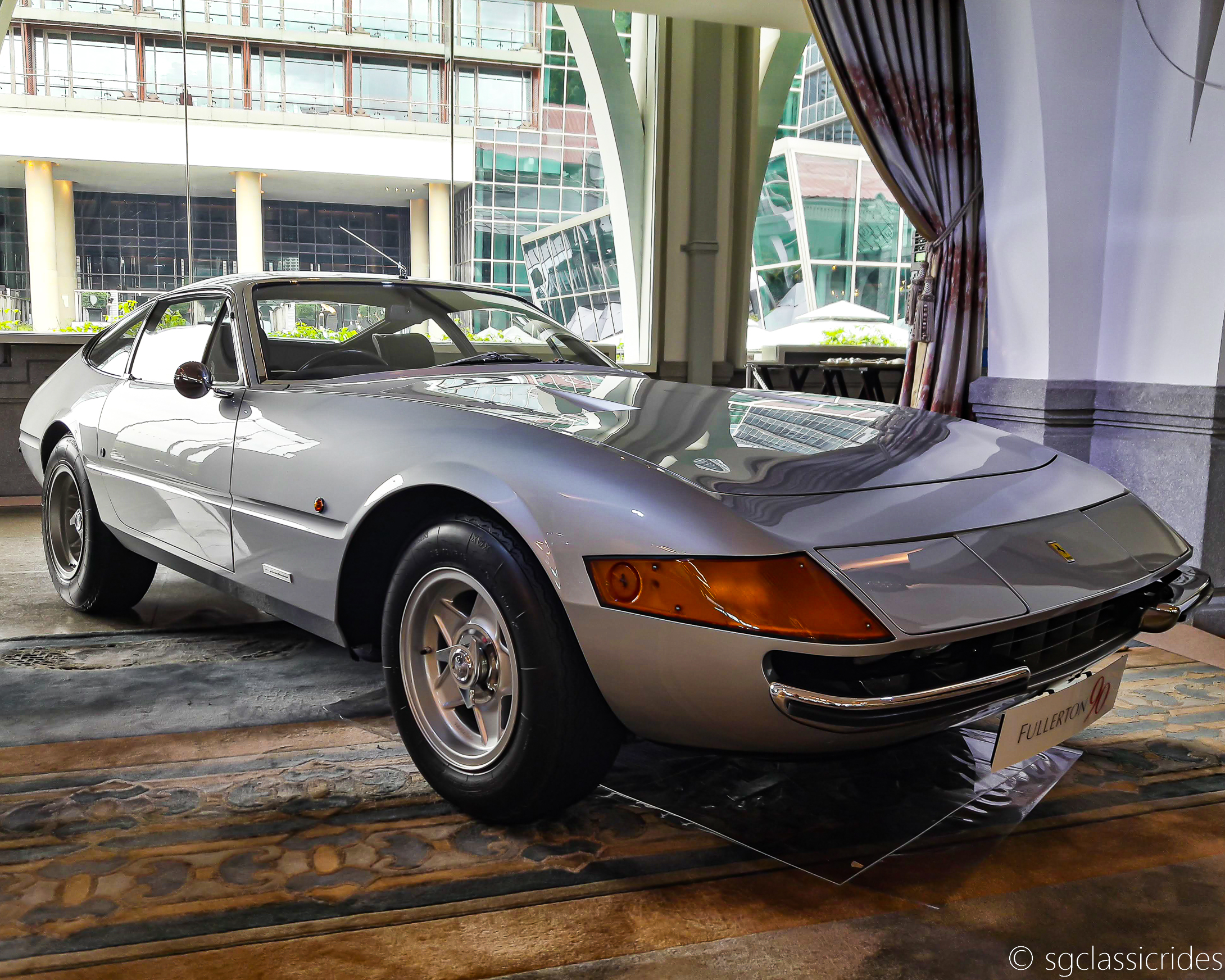
As our country slowly opens up its measures, it has been really great to see car meets back in full force. I have also known of others who have travelled overseas for car shows and a apart of me feels envious that I may not have a chance to see them. This also reminded me of a car show that I attended back in 2018, where I was able to see this lovely 1972 Ferrari 365 GTB/4 'Daytona'!

By the time Ferrari introduced the traditional front-engined 275 GTB/4 in 1966, its competitors were already releasing cars with larger engines and a mid-engine layout: Ford with its GT40 and Lamborghini with its Miura. The Miura was more of a threat to Ferrari as it was a genuine series production also in Italy. Aware that it was lagging behind, the 365 GTB/4 was conceived and subsequently unveiled at the Paris Motor Show in 1968. The new car was unofficially dubbed Daytona, in recognition of Ferrari's podium finishes at the 1967 24 Hours race.

The bodywork was designed by Pininfarina and made at the Scaglietti works in Modena. Featuring a chiselled nose, rakish cabin and muscular tail, Pininfarina was able to blend the curves with flat pointy surfaces that would characterise the wedge era of the 1970s. Apart from a pair of discreet vents on the hood, there were no ducts nor spoilers (other than a set of quarter bumpers), giving the car a very clean design. More uniquely, the headlights were covered by a Plexiglas panel, giving it a distinctive look. 

As expected of a Ferrari, the interior was upholstered with luxurious leather and alcantara. Cockpit visibility was extremely good compared to the GT40 and Miura, and gauges were all contained within an oval binnacle. Additional options could be had, such as head rests, air-conditioning and wire wheels instead of the star-shaped Cromodoras. 

Ferrari was unable to sell the 365 GTB/4 in the US as the covered headlights were deemed illegal; this led to a revamp in 1971 when pop-up headlights were introduced. Additional marker lights and installation of an ignition system were some of the numerous changes introduced. It was also around this time that a convertible version known as the 365 GTS/4 was released as well, even though a prototype had been exhibited in 1969. The steering wheel was further changed to a smaller leather one compared to wood rim previously.

The 365 GTB/4 was powered by a 4390 cc Tipo 251 Colombo V12 engine, allowing it to reach a top speed of 280 km/h with an acceleration of 5.7 seconds [0-100 km/h]. It had dimensions of 4425 x 1760 x 1245 mm, weighed in at 1600 kg and had a whopping fuel consumption of 25 litres / 100 km.

Production of the 365 GTB/4 ended in 1973 with 1,284 made, of which only 149 were in RHD. The Daytona gained fame for featuring in the inaugural Cannonball Run in 1971, where it made the journey from New York to Los Angeles in slightly less than 36 hours (with an average speed of 129 km/h). It also appeared in the sitcom Miami Vice (though the actual car used was a Corvette C3 chassis). 

This particular unit is currently owned by the Sultan of Johor, and it was exhibited 4 years ago as part of a classic car show. Interestingly, at least 1 existed in Singapore back in the 1980s before it was exported to the UK. While there is none currently here to the best of my knowledge, it is not everyday that you get to see this rarity up close...perhaps you may be able to see one overseas!

24 October 2020

More than an old car #157: Ferrari Dino 246


It has been a while since I wrote on luxury classics, and what better car to focus on than these exquisite legends from the Ferrari line, the Dino 246

The 206 GT under the Dino marque was the predecessor to the 246, and was first introduced in 1967. The small-engined Ferrari came about due to regulations in Formula 2 racing, where the engines used had to be production-based and produced in quantities of less than 500 per year. At that time, Ferrari had to enter into an alliance with Fiat as it was unable to meet that figure. While initially shunned by purists, it gradually won over the target audience. 

The 246 GT, introduced in 1969 at the Turin Show, was almost identical to the 206 GT except with a longer wheelbase, increased engine size, a change in location for the fuel filler cap on the left sail panel and a wider diameter for the exhaust pipes. There were 3 iterations of the 246, known as the 'L' series (1969-1970), 'M' series (1971 only) and 'E' series (1971-1974). 'E' series cars had its quarter bumpers that finished short of the grille opening, circular cooling ducts and the rear number plate light was now a rectangular unit mounted on the boot lid. Initially available in coupe form only, a targa top version known as the GTS was introduced in 1972, where it can be easily distinguished by a black removable roof panel and lack of rear quarter windows. 

Both the 246 GT and GTS were powered by a 2418 cc Dino V6 engine, allowing them to reach a top speed of 235 km/h with an acceleration of 6.2 seconds [0-100 km/h]. While both were 4235 mm long and were very thirsty with a fuel consumption of 15.5 litres / 100 km, the GT was 1080 kg while the GTS was 1100 kg

Production of the 246 ended in 1974 with 3,761 made, of which only 488 GTs and 235 GTSs were in RHD. I understand that there are at least 3 units here, all in Rosso Chiaro and 1 of them is still on regular plates! The GT is from 1973 while the GTS is a 1974 unit. While both units in the pictures are imports, a small number of them were brought in back in the 1970s by Hong Seh Motors and I am sure prices must have been out of reach for the common man. Prices for the 246 have been steadily appreciating as more people have recognised its beauty and heritage. 

The rough burbling of the potent V6, packaged within smooth flowing lines that pays homage to the original Ferrari line is not something you come across everyday. Coupled with the fact that they can be counted with just one hand here, the coolness factor inevitably shoots through the roof. I really hope that you can see this stylish beauty yourself some day, for to be honest, words cannot adequately describe what I actually feel!

14 December 2019

More than an old car #125: Ferrari 348


Walking around office carparks in our financial district has its perks even though it may seem like an unusual place to spot cars. I have seen quite a few high-end models out and about, but never expected to see this 1992 Ferrari 348 TS just parked so casually!

The Ferrari 348 was introduced in 1989 at the Frankfurt Auto Show, where it succeeded the popular 328. As with its predecessors, its name is derived from the engine capacity (3.4 litres) and the number of cylinders (8). It was available in coupe and targa versions, although convertibles were introduced later. The engine was mounted longitudinally and it was coupled to a transverse manual gearbox, giving rise to the TS (transversale spider) designation. As a nod to the classic Testarossa, it featured the iconic straked side intakes and rectangular headlights.

Other features of the 348 included a computer-controlled engine management system, anti-lock brakes and self-diagnosing air-con and heating systems. Initial reception was positive as people praised its revolutionary looks and its nice steering. However, it quickly drew criticism due to its heavy gearbox (where one needed a 'shot-putter's arm' to shift to 2nd gear), catastrophic engine failures and numerous leaks. It was powered by a 3408 cc Tipo F119 V8 engine, allowing it to reach a top speed of 275 km/h, with an acceleration of 5.6 seconds [0-100 km/h]. It was 4230 mm long and weighed 1440 kg.

Production of the 348 ended in 1995 with 4,228 TS models made. This unit is one of about 10 left in Singapore, and it was repainted to this striking purple colour from its original yellow. I was aware of its existence previously, and it was a surprise to see that it was still regularly driven in the CBD area. They were sold by the original Ferrari dealer Hong Seh Motors back in 1991, at a rather princely price of S$535,000 [S$795,468 in today's money].

348s are known to be the cheapest Ferraris that one could buy, partly because it was unloved by many critics. It was not particularly quick nor impressive in any sense, and the gearbox made it more suitable for a weekend ride. Yet, it is still nice to see that the owner loves his/her car by driving it to work, perhaps you may see this some day!


29 July 2019

More than an old car #112: Ferrari Mondial QV


Out of the 600+ Ferraris here, I estimate about 150 are the older models. Although the Testarossa is the most recognizable model, there are also a couple that fly below the radar, such as these Ferrari Mondial Quattrovalvoles!

The Mondial was designed by Pininfarina and unveiled to the public in 1980, firstly as the Mondial 8. Its name, which is French for 'global' or 'world', originated from Ferrari's racing history in the 500 Mondial Monza, and also to commemorate winning the F1 World Constructors Championship multiple times in the past 5 years. The body panels were fitted onto a unique space-frame chassis and additional louvers at the side provided crucial air flow to the engine and oil cooler, which were near the back of the car. Surprisingly, it featured ample boot space to fit in a few large bags; the Mondial was intended to be a practical 4-seater Ferrari and as such it was quite spacious. It also featured pop-up headlights and a black plastic bumper as seen above.

The Mondial 8 was followed by the QV, where it featured a more powerful engine. A rare convertible variant was also introduced, leading to increased market demand for consumers in the US. Later on, the Mondial 3.2 and Mondial t [both sporting larger engines] also appeared. The Mondial QV was powered by a 2927 cc Tipo F105 32V V8 engine, allowing it to reach a top speed of 240 km/h with an acceleration of 7.4 seconds [0-100 km/h]. It was 4580 mm long; the coupe weighed 1490 kg while the cabriolet weighed 1500 kg due to the added reinforcements required in the open-top system.

Production of the Mondial ended in 1993, where it was not replaced by any new models. Of the 1,145 coupes and 629 cabriolets made, only 152 and 24 respectively were made in RHD! The MY 1984 cabriolet, which is also the rarest out of all Mondial models, is most likely the only one in Singapore and there should be around 4 coupes that still exist here. According to their VIN records, the MY 1983 coupe featured 3-point seatbelts for the front and back seats, while the cabriolet featured 2-point seatbelts for the rear occupants.

They were brought in by Hong Seh Motors (our former Ferrari dealer) back in 1983, where they faced strong demand from those wealthy enough to own a supercar. At that time, a Mondial coupe cost S$234,300 while the cabriolet cost S$259,000. Today, they would be worth S$477,047 and S$527,338 respectively! It is always a pleasure to come across such rarities that people do not normally talk about, and maybe you'll get to see them someday!


5 February 2019

More than an old car #93: Ferrari F40


Back in 2017, I had the chance to go for a classic car exhibition held at Marina Bay Sands: I had chanced upon it by accident and naturally, I was compelled to go for it. It was a sight to behold when I arrived, but nothing prepared me for the moment when I saw this 1989 Ferrari F40 in the flesh! Over the years I had heard of this legend, and that day, I was struck dumb at this living, breathing creature in front of me...

The F40 was first produced in 1987 and it was to commemorate the 40th anniversary of Ferrari. Enzo Ferrari, then the chairman of his namesake company, desired to create a performance car amidst customers' complaints that Ferrari models were getting too comfortable (seriously?). As a result, intensive research was done to devise a road-legal racing machine, to add on to the fame generated by the 288 GTO that was designed previously.

The body was made of a combination of Kevlar, carbon fibre and aluminum which provided strength and low weight. It took its styling cues from the renowned Lamborghini Countach, and the final result featured a lowered front end, air ducts at the side to boost airflow, and its distinctive spoiler which kept the car straight at high speeds. Personally, it looks so pleasing from all angles: I am a sucker for wedge-shaped cars and there is this feeling that the F40 is barely containing its aggressiveness...and the headlights look so natural!

With the mid-engine layout, the rear of the car would open like a shell and the transparent Plexiglas cover enable one to admire the intricacies of the engine. To lighten up the car further, various accessories such as door handles, radio and sound system were stripped. Air-con was still included to combat the intense heat from the engine right behind the driver. Extensive road and track tests were carried out from 1985 until it was unveiled to the public.

Initial reviews were mixed: it looked great but it was not a very nice vehicle to drive around in. The F40 was described as a 'go-kart with a plastic body', having poor rear-view visibility and being mechanically unreliable. It was powered by a 2936 cc Tipo F120 V8 engine, allowing it to reach a top speed of 324 km/h with an acceleration of 4.1 seconds [0-100 km/h]. It was 4358 mm long, 1123 mm high and weighed 1100 kg.

Initially, Ferrari planned to make only 400 units, with a selling price of $400,000. Due to the death of Enzo in 1989, the resulting speculations drove up the price into the millions. Thus, Ferrari capitalised on the increased perceived value and proceeded to make 1337 cars in total, which was considered common by supercar standards. All were in LHD and as a result, cannot be registered in Singapore. There is another unit here, as a garage queen of course, but you can see it near the Tanglin area.

The F40 has become the benchmark of Ferrari performance and due to the fact that it appeared in many racing games in the 1990s, it was a fantasy of many impressionable children. It often occupied a prime spot in many bedrooms and is an integral part of the Prancing Horse's identity today. It is not everyday that you get to see such a famous icon, so do check it out if you are able to!

2 July 2018

More than an old car #74: Ferrari Dino 308 GT4


Many of you by now would be familiar with the Ferrari brand as a representation of luxury. However, did you know that not all cars by Ferrari was called as such back then? This 1974 Dino 308 GT4 2+2 is an example of a non-Ferrari Ferrari, so to speak! 

The Dino brand was a marque for Ferrari cars that had fewer than 12 cylinders. Since Enzo Ferrari had built his reputation on the premium V12 models, he did not want to diminish the exclusive branding on a cheaper car. Its name is derived from Enzo's son and heir Alfredo "Dino" Ferrari, who had died of muscular dystrophy in 1956. First introduced in 1968, it lasted until 1976 when all models received Ferrari badging. 

The Dino 308 GT4 was the first mid-engine Ferrari, which subsequently contributed to its success in the next few decades. First introduced in 1973, it caught many observers by surprise with its angular outline and the fact that it was not badged as a Ferrari. Although the badging returned in 1976, it put off many potential buyers who were not sure about the significance of the Dino brand. Furthermore, it was a huge departure from the sleekness of the previous model, the 206/246 GT. The 2+2 refers to the extra 2 seats that were squeezed in at the back, making it rather practical for daily usage. Ferrari engineers created a mock-up whose dimensions could be adjusted by a hydraulic pump, as Enzo himself would test the visibility and comfort from the driver's seat. 

It was powered by a 2927 cc Dino V8 engine, allowing it to reach a top speed of 250 km/h, with an acceleration of 5.6 seconds [0-100km/h]. Owing to its rather short height of 1210 mm, the driver could only see the road from where he sat. It was 4320 mm long and weighed 1300 kg

Production of the Dino 308 ended in 1980: out of the 2826 made, only 547 were in RHD. I am aware of another one in red and an unregistered one in blue here. This unit has apparently been off the road since 2017 as its road tax has already expired. For years, it has been scoffed by Ferrari purists, but appreciation of this unassuming classic has increased over time. After all, it is still a Ferrari despite the brand. If you are lucky enough, you may see the other 2 that are here--it's pretty amazing that there are people here who still recognise a car for what's it worth!

25 August 2017

More than an old car #33: Ferrari 308 GTB


With the recent celebration of Ferrari's 70th anniversary in, there was a record-breaking convoy of 157 stallions which traveled 70km around Singapore. Only around 5 were old horses, including the Ferrari 308 GTBs in the pictures.

The 308 GTB was first produced in 1975, as a successor to the Dino-badged 206/246 GT. It took its distinctive wedge shape from cars back in the 1970s, which could be seen as a blessing even until today as many people recognise it as a Ferrari icon. Initially, the car body was made of fibreglass but it was changed to steel some time later, thus increasing the weight of the car by 150kg. There were unofficially 2 generations of the 308: the first generation was simply called the 308 GTS/GTB while the second generation was called the 308 'quattrovalvole' [4 valves in Italian]. GTS versions had a removable targa top unlike the GTB versions. The generations can be differentiated by the horizontal louvers on the car hood for the 308 quattrovalvole.

The 308 was one of a few Ferraris to feature an 8-cylinder engine compared to the usual 12 cylinders. The specimen in the first picture was powered by a 2927cc Tipo F106 V8, allowing it to reach a top speed of 252km/h with an acceleration of 6 seconds [0-100km/h]. It was 4.23m long and weighed 1300kg.
The 308 quattrovalvole was powered by a 2927cc Tipo F105 V8, allowing it to reach a top speed of 255km/h with an acceleration of 6.5 seconds [0-100km/h]. It was 4.23m long and weighed 1330kg.

Production of the 308 stopped in 1985, with 2897 1st-gen GTBs and 748 2nd-gen GTBs made. Older Ferraris do have a strong following, but they are vulnerable to issues relating to such old cars. Throughout Ferrari's 70 years of existence, they have designed masterpieces like yours truly. Having said that, there are quite a number of them on our roads--do keep your eyes open! In a land where luxury cars abound, it really shows one's dedication to maintain these antiques for us to see.

6 August 2017

More than an old car #30: Ferrari Testarossa F512M


Mention Ferrari and practically everyone can think of a red sports car with the prancing horse logo. This is due to society's perceptions of the brand name and that there are quite a lot of them galloping on our roads, thus it is more obvious for the public. Although we tend to associate Ferrari cars with newer models, its older marques are as equally stunning as well such as this 1995 Testarossa F512M.

Ferrari first started out as Scuderia Ferrari ["Ferrari Stable"/"Team Ferrari"], founded by Enzo Ferrari himself in 1929. Fiat SpA bought 50% of the company in 1969 and currently it is spun off from the Fiat Chrysler Automobiles conglomerate since 2016. For a brand with a relatively short history, it is the world's most powerful brand where it is recognised even in "areas without paved roads".

The Testarossa was first introduced in 1984, where it served to fix the problems associated with the 512i BB. It had a longer length in order to accommodate luggage space and the distinctive side intakes or "cheese graters" were also designed to cool down the engine more efficiently. Its name, which literally means "red head" in Italian, refers to the red valve covers on the car engine. The F512M was the final generation of the Testarossa and there were quite a number of changes. Its headlights were now fixed, the grille design changed and there were twin ducts on the bonnet. It was powered by a 4943cc 12-cylinder engines, allowing it to reach a top speed of 315km/h with an acceleration of 4.7 seconds [0-100km/h]. It was 4.48m long and weighed 1455kg.

Production of the Testarossa ended with the F512M in 1996, where only 75 were made in right-hand drive. Although it may not be very old, it has a distinctly classic look that makes it stand out from other models. This specimen is the only one here and I expect it to make an appearance during the Ferrari showcase!