18 November 2022

More than an old car #203: Fiat 125

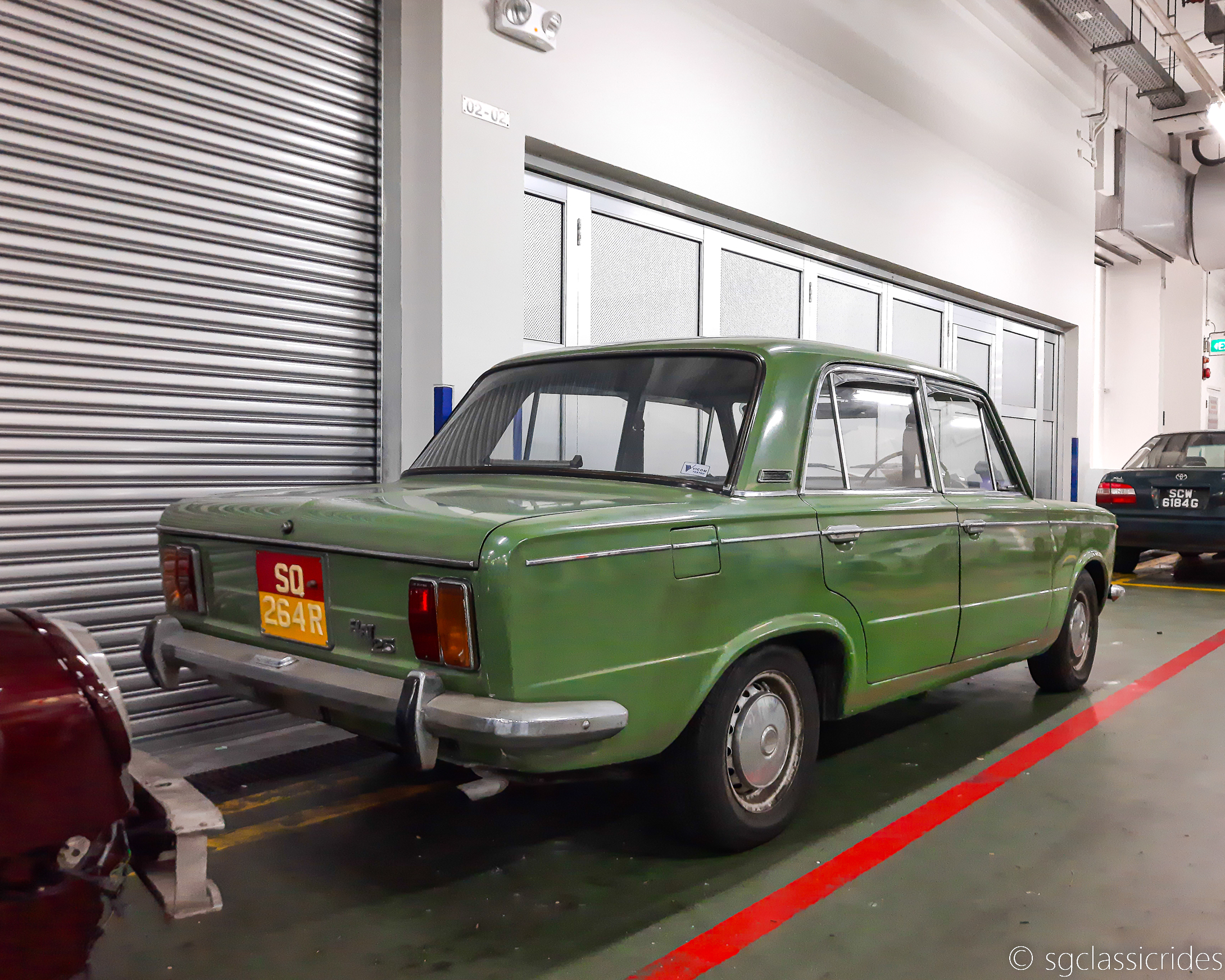
There is always something appealing about boxy cars and especially one that has survived the test of time, just like this 1971 Fiat 125!

First released in 1967, the 125 was initially intended to be a filler model between the ageing 1500 and the then-nascent 132 project. The appeal of Fiat cars was quickly waning, and the responsibility of coming up with a new model in just 18 months without the need to set up new plants fell on Dante Giacosa. The new car body was derived from the successful 124 model but was a good 18 cm longer. There were also aesthetic adjustments such as a chrome grille with 4 square headlights and redesigned tail-lamps. In order to better adapt the new car to the needs of a sedan, the engine was also upgraded in size: maximum power remained unchanged but engine torque was improved, leading to a smoother delivery.

The interior composition of the 125 also set it apart from the competition: it featured reclining seats, a central armrest for the back seat, a reversing light and even an intermittent-interval windscreen wiper (a first for an European car). Added options such as heated rear windows, air conditioning and a steel sliding roof were also available for a fee. The dashboard was also user-friendly and one could have a clear view of the surroundings from the driver's seat, thanks to the large and steep windows and relatively high driver position. It was no wonder that the 125 was warmly received by the public and critics alike.

In 1968, a more powerful version known as the 125S/125 Special was made available. Externally, Special models had chromed wheel arches and the door handles were place above the coachline (compared to being in line for the normal model). In 1971, there was a facelift on Special models, featuring a different front end and larger tail lamps.

The Fiat 125 was also produced under licence in a few countries, most notably in Poland where it was sold as the Polski Fiat 125p. The Polish version was a simplified version of its Italian counterpart, featuring rounded headlamps, simpler front grille and rather outdated mechanicals from the Fiat 1500. Despite being objectively inferior to the Italian 125, almost 1.5 million 125ps were made and they have become a unique Eastern European icon. The Fiat 125 was only available in sedan form, but these foreign licensed versions had additional body styles such as wagon and pickup truck form.   

The 125 was powered by a 1608 cc Fiat Twin-Cam i4 engine, allowing it to reach a top speed of 160 km/h with an acceleration of 12.7 seconds [0-100 km/h]. It had dimension of 4223 x 1611 x 1440 mm and weighed in at a respectable 1000 kg, with a fuel consumption of 9.9 litres/100 km.

Production of the 125 ended in 1972 with more than 603,000 made, where it was succeeded by the 132. 125s were sold in Singapore in 1968 by Syarikat Fiat Distributors (M) Sdn Bhd: despite gaining independence 3 years ago, many Malayan businesses continued to operate here until the 1970s. This particular unit is an original Singapore car down to its license plates and it has seen better days. I had always wanted to see it again ever since I caught a glimpse many years back. Seeing it just there was pretty much a "I finally found you" moment...

I am not aware of any newly imported 125s recently; it makes you wonder just how this lone survivor has persisted even as its counterparts disappeared from the roads. It is not often that you come across "last-man-standing" cars and I hope you will have the chance to see it some day!


30 October 2022

More than an old car #202: Mitsubishi Minicab

Scrolling through my archives does throw up some interesting pictures I never knew I had taken. More often than not, they don't exist here anymore just like this 2001 Mitsubishi Minicab!

First released in 1966 to replace the Mitsubishi 360, it was initially available only as a pickup truck. A van version came in 1968 and has been produced till this day. The 'minicab' name refers to a cabover truck with a small body and wide cargo bed. For the 6th generation Minicab, it appeared in 1999 with unevenly-shaped headlights and 2 round taillamps. In 2004, vans were equipped with front and passenger airbags as standard. There was a facelift in 2007 with a redesigned front grille and headlights. An electric version known as the Minicab MiEV was launched in 2011 and remains in production.

The Minicab was powered by a 657 cc Mitsubishi 3G83 engine, though as a commercial vehicle its speed was limited to 60 km/h. Its dimensions of 3395 x 1475 x 1940 mm puts its firmly as a kei car, and its fuel consumption of 4.3 litres / 100 km made it an economical commercial vehicle. 

Production of the 6th generation Minicab ended in 2014 (for the gasoline version) with more than 419,000 made. Minicabs were sold in Singapore between 2000 to 2006, though it is noted that some vans were recalled in Taiwan and Malaysia over a defective transmission part. None of the pre-facelift vans still exist as all have passed the 20-year mandatory lifespan. When I saw it back in 2019, it never occurred to me that I would not have the chance to see it here again. At least, you still have this blog post as proof that it existed!


9 October 2022

More than an old car #201: Range Rover Classic


Sometimes I just happen to stumble across older cars by accident (and that is the beauty of cars compared to other modes of transport like planes and trains). Coming across this 1985 Range Rover Classic was a bonus as I had been in the area for some errands, and I was quite wowed by its road presence...

The advent of the iconic Land Rover was hailed by many for its utilitarian hardiness when it was released in 1948. The Rover group then realised that a market existed for an off-road capable vehicle with more amenities and this culminated in the short-lived Tickford estate. Later in 1954, the 4-door version of the Land Rover was designed to accomodate more people, but apart from a few upgrades it remained spartan.

Recognising that more people wanted a comfortable 4x4 vehicle in the rough terrains of Africa and Australia, Rover began work on a 'Road Rover' that combined a Land Rover chassis with the comfort of a standard Rover car. The 1960s saw the rise of the sport utility vehicle (SUV) such as the Ford Bronco, which had both off-road capability and comfort for private users. Rover began work on the '100-inch station wagon' project to develop a proper competitor.

Introduced to the public in 1970, it received critical acclaim for being capable both on and off-road. The clean, square-cut design was appealing and the aluminum body panels was more resistant to corrosion. The panels were hung over a steel frame, allowing it to carry much structural strength. Furthermore, a 'symmetric dashboard' was also designed to cater to each side of the steering: the gauges could be simply installed on the correct side. 

Up till 1981, the Range Rover was available only in a 2-door version for the sake of body strength; this was disliked by rich customers in the Middle East who usually had chauffeurs as it was hard to access the rear seats. 4-door conversions were offered in the 1970s by many companies: Switzerland-based Monteverdi was even approved by Land Rover to retain warranty. The 4-door version proved to be popular, leading to the phasing-out of the 2-door one in the UK market in 1984. There was a distinct change to the front end in 1986 with the introduction of pedestrian-friendly horizontal slats; later on, the fuel filler cap was hidden behind a flap and door hinges gradually evolved out of sight.  

Many changes occurred in the Range Rover throughout its lifespan, both interior and exterior. For the 1985 model year, the dashboard design was revamped with a grab handrail fitted on the passenger side, seats could be reclined and 1-piece side windows were fitted on the 4-door models (the 2-piece side windows still remained for the 2-door). The top-of-the-range Vogue trim had electric windows, heated mirrors and a body tape across the car.

The 1985 4-door Range Rover was powered by a 3532 cc Rover V8 engine, allowing it to reach a top speed of 155 km/h with an acceleration of 15.1 seconds [0-100 km/h]. Its dimensions of 4475 x 1800 x 1785 mm, heft of 1900 kg and a rather thirsty fuel consumption of 14.8 litres / 100 km would have been out of the question for the frugal family man.

Production of the Range Rover ended in 1996 with more than 326,000 made, although its successor known as the LP/New Range Rover/P38 had been launched in 1994. It was also at this point that the 1st generation Range Rovers were rebranded as the 'Classic' to distinguish from its successor. Range Rovers had existed in small numbers back in the 1980s, and they were officially brought in by Regent Motors (currently our local Ford dealer) in 1987, although in Vogue trim. A 5-speed manual unit was S$205,587 while the 4-speed automatic would set you back by S$215,506. None of the original Range Rovers still remain, though a handful have been imported over the years.

More people are beginning to appreciate the classic Range Rovers, with its luxurious comforts (for its time at least) and superb off-road capabilities. 2-door versions are quite popular than the 4-door ones: this unit was only the 2nd one that I have seen currently. With more appearing on our roads, don't miss the chance to admire this off-road luxury when you have the chance!


18 September 2022

More than an old car #200: Nissan Cedric H31

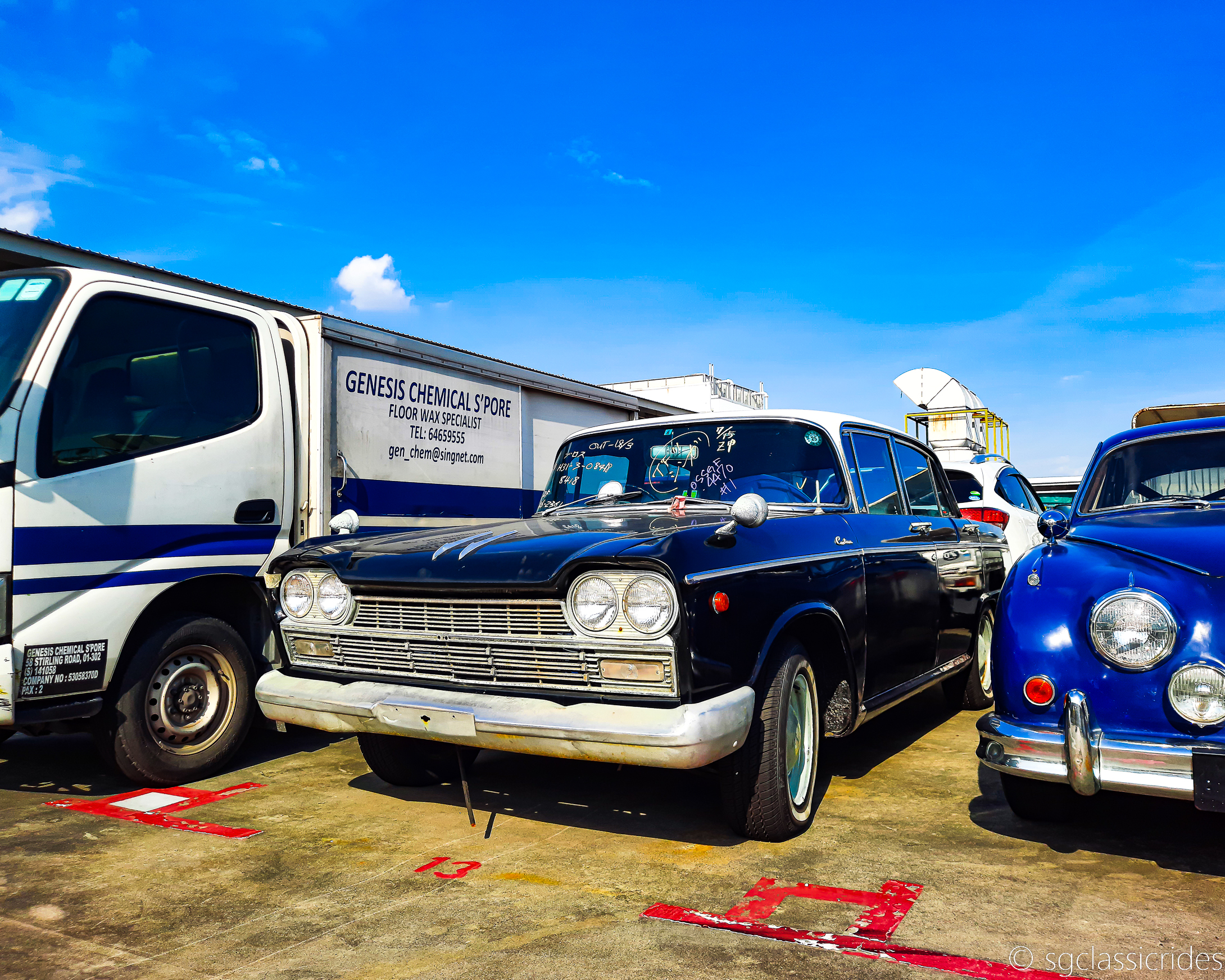
Many people tend to associate Japanese cars with high performance, being small-sized or quirky. However, they are more than just that, just like this 1964 Nissan Cedric Custom H31!

First introduced in 1960, the Cedric was developed as a purely domestic medium-size passenger car to replace the Austin A50 Cambridge, which Nissan had obtained licence to manufacture previously. It featured a style strongly influenced by American cars, such as a wraparound windscreen, forward-leaning A-pillar, vertical dual headlamps and tail fins.

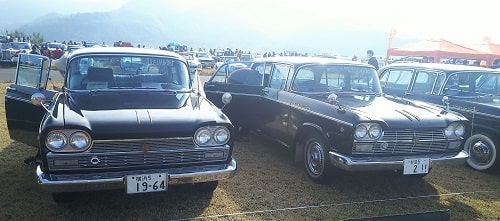
Initially, it was only available with a 1500 cc engine and came in either 4-door sedan or wagon version. A 1900 cc engine was later introduced: 2 separate trims were available, namely the 1900 DX and Custom. The Custom model was 1000 mm longer than the 1500 and 1900 DX. In October 1962, the vertical headlamps were now horizontal and the grille design was changed to a 1-piece version. The model number was also changed to H31 during this time. September 1963 saw a revised grille design: it was now split into 2 parts and the lower half had 7 vertical lines.


(Picture credits to: https://www.cutlass70.com/entry/2021/11/30_31Cedric)

The final facelift in September 1964 had the lower half with 4 vertical lines (i.e. this particular unit in the blog post). Furthermore, the taillights was also changed from 3 segments to 2 segments for the final facelift. A luxurious version known as the Cedric Special (type 50) was fitted with a 2800 cc engine, along with a number plate recess on the bumper. It was also longer than other Cedrics, coming in at 4850 mm.

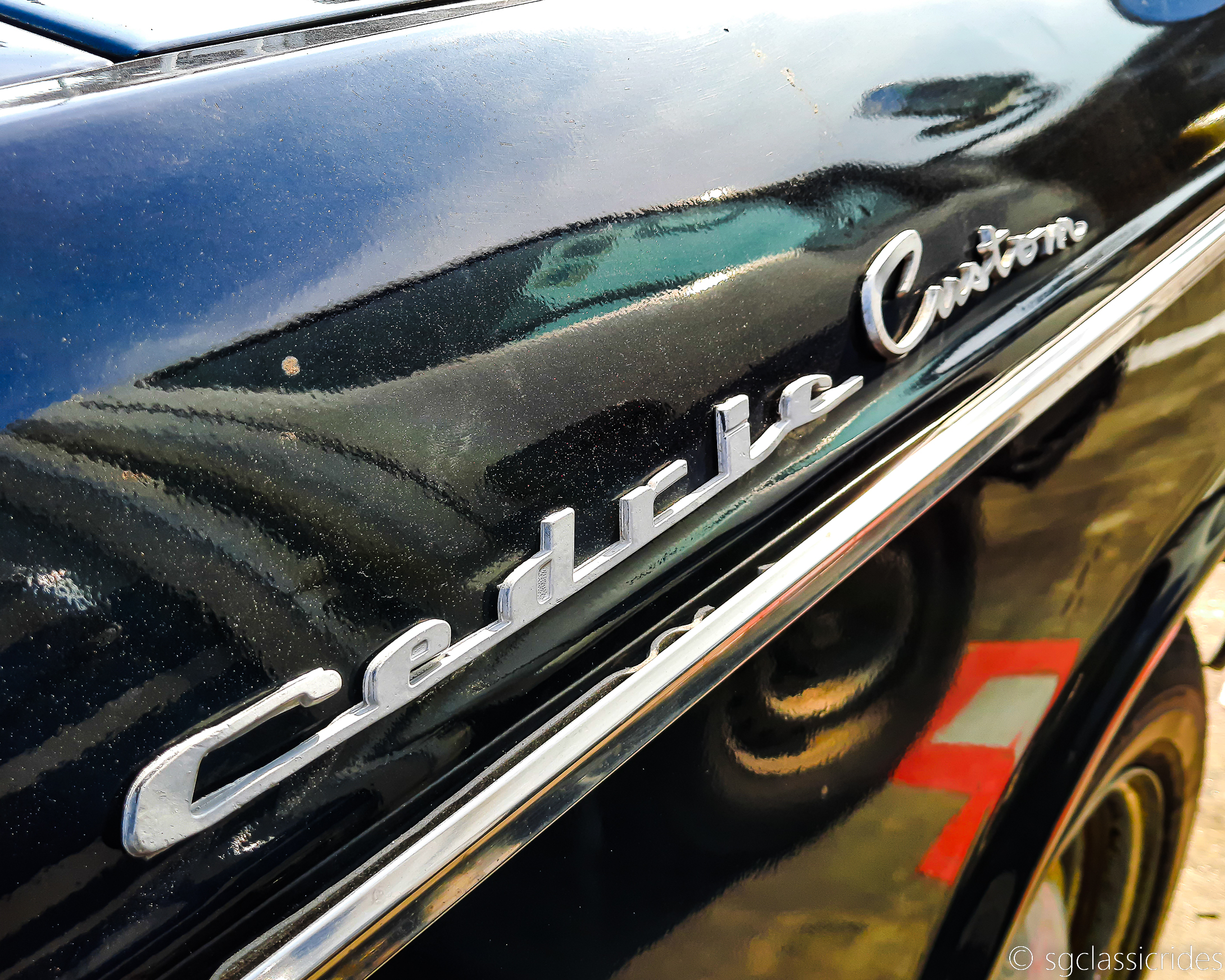
Strictly speaking, the 'H31 Cedric' refers only to the Custom model but it has become a catch-all for the 1st-generation model. The H31 Cedric was powered by a 1883 cc Nissan H straight-4 engine, allowing it to reach a top speed of 140 km/h with an acceleration of 16.4 seconds [0-100 km/h]. and had dimensions of 4650 x 1690 x 1505 mm. It weighed 1260 kg and had a fuel consumption of 13.4 litres / 100 km.

Production of the 30/31 series ended in 1965, where it was succeeded by the 130 series. The H31 Cedric was first sold here in 1963 by Tan Chong & Sons Motor Co where it was retailing for $8,450. However, no original cars here have survived: this unit was imported from Japan a few years ago. It is noted that H31 Cedrics still have a large number that exist: even though Japanese cars from the 60s are not deemed collectible, it is a pleasant surprise to know that someone actually knew about this model's existence and decided to bring it here. While it is currently unregistered, I hope that someday you can get to see this rarity out and about on our roads!


10 September 2022

More than an old car #199: Ferrari 365GTB/4 'Daytona'

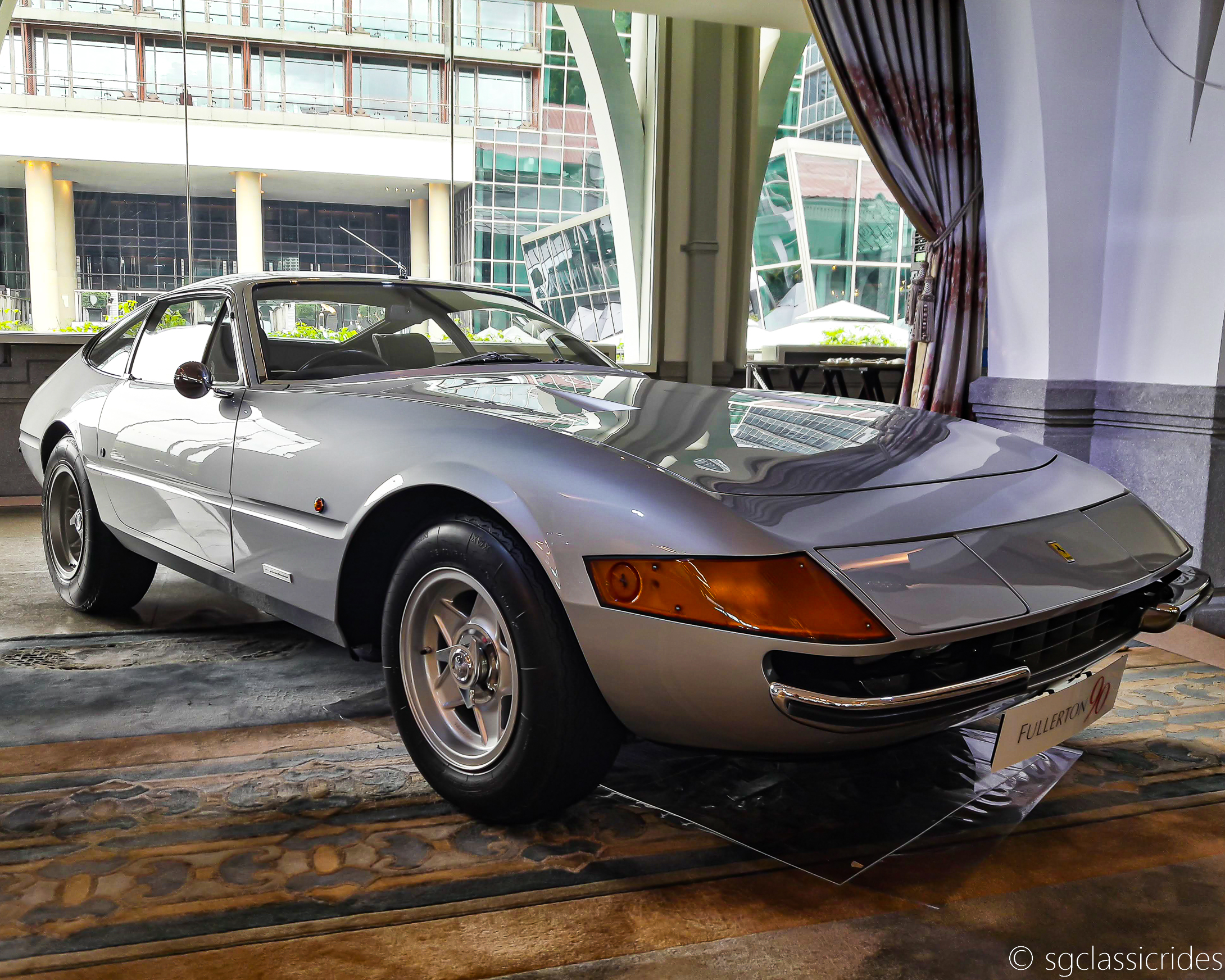
As our country slowly opens up its measures, it has been really great to see car meets back in full force. I have also known of others who have travelled overseas for car shows and a apart of me feels envious that I may not have a chance to see them. This also reminded me of a car show that I attended back in 2018, where I was able to see this lovely 1972 Ferrari 365 GTB/4 'Daytona'!

By the time Ferrari introduced the traditional front-engined 275 GTB/4 in 1966, its competitors were already releasing cars with larger engines and a mid-engine layout: Ford with its GT40 and Lamborghini with its Miura. The Miura was more of a threat to Ferrari as it was a genuine series production also in Italy. Aware that it was lagging behind, the 365 GTB/4 was conceived and subsequently unveiled at the Paris Motor Show in 1968. The new car was unofficially dubbed Daytona, in recognition of Ferrari's podium finishes at the 1967 24 Hours race.

The bodywork was designed by Pininfarina and made at the Scaglietti works in Modena. Featuring a chiselled nose, rakish cabin and muscular tail, Pininfarina was able to blend the curves with flat pointy surfaces that would characterise the wedge era of the 1970s. Apart from a pair of discreet vents on the hood, there were no ducts nor spoilers (other than a set of quarter bumpers), giving the car a very clean design. More uniquely, the headlights were covered by a Plexiglas panel, giving it a distinctive look. 

As expected of a Ferrari, the interior was upholstered with luxurious leather and alcantara. Cockpit visibility was extremely good compared to the GT40 and Miura, and gauges were all contained within an oval binnacle. Additional options could be had, such as head rests, air-conditioning and wire wheels instead of the star-shaped Cromodoras. 

Ferrari was unable to sell the 365 GTB/4 in the US as the covered headlights were deemed illegal; this led to a revamp in 1971 when pop-up headlights were introduced. Additional marker lights and installation of an ignition system were some of the numerous changes introduced. It was also around this time that a convertible version known as the 365 GTS/4 was released as well, even though a prototype had been exhibited in 1969. The steering wheel was further changed to a smaller leather one compared to wood rim previously.

The 365 GTB/4 was powered by a 4390 cc Tipo 251 Colombo V12 engine, allowing it to reach a top speed of 280 km/h with an acceleration of 5.7 seconds [0-100 km/h]. It had dimensions of 4425 x 1760 x 1245 mm, weighed in at 1600 kg and had a whopping fuel consumption of 25 litres / 100 km.

Production of the 365 GTB/4 ended in 1973 with 1,284 made, of which only 149 were in RHD. The Daytona gained fame for featuring in the inaugural Cannonball Run in 1971, where it made the journey from New York to Los Angeles in slightly less than 36 hours (with an average speed of 129 km/h). It also appeared in the sitcom Miami Vice (though the actual car used was a Corvette C3 chassis). 

This particular unit is currently owned by the Sultan of Johor, and it was exhibited 4 years ago as part of a classic car show. Interestingly, at least 1 existed in Singapore back in the 1980s before it was exported to the UK. While there is none currently here to the best of my knowledge, it is not everyday that you get to see this rarity up close...perhaps you may be able to see one overseas!

26 August 2022

More than an old car #198: Ford Capri SC

Have you ever wondered how some cars continue to eke out their existence here despite being unpopular or even hated? It is interesting in fact, to see what exactly compels the owner to hold on to these unconventional classics such as this 1992 Ford Capri (SC) XR2!

Back in the 1980s, Ford was a major shareholder in Mazda and had known that the revolutionary MX-5 was coming. In Ford's attempt to reduce the impact of the MX-5, it independently developed a rival model using Mazda mechanicals based off a mundane Mazda 323/Ford Laser. First released as a concept in 1988, the exterior was designed by Ghia and the interior by Giugario. On the face of it, the Capri combined sexy Italian design, reliable Japanese powertrains and Australian engineering in a convertible package. 

Assembled by Ford Australia, the Capri was primarily designed for export to the US where it was sold as the Mercury Capri. It was a 2+2 seater and not a pure 2-seater like the MX-5, making it possible to carry friends or kids. Ford was desperate to release the Capri before the MX-5, but various issues in production led to the launch date being postponed till the end of 1989, by which time the MX-5 had already appeared in Australia. The Capri had a massive price advantage over the MX-5 however, and it targeted people who did not care about its overall performance.

Upon release, the car received favourable reviews in the US: at one point in time demand outstripped expectations and dealers were over-pricing it. At this point, complaints arose from its leaking roof and cheap interior and the Australian Broadcasting Corporation essentially declared the Capri as a lemon. Furthermore, Ford was struggling to meet production targets and the future of Ford Australia as a manufacturer was cast into doubt by warnings from the head office.

Throughout its existence, the Capri was inevitably compared to the MX-5, somewhat unfairly. Whereas the Mazda was developed as a pure sports car, the Capri had more emphasis on cruise comfort and safety. In 1992, the Capri was updated and given the codename SC; the 'XR2' trim was first applied to both turbo and non-turbo versions though later on, the non-turbo was renamed as 'Barchetta' and the turbo 'Clubsprint'. The Clubsprint turbo had a restyled front and rear along with a body kit. In 1993, the Capri was facelifted and given the codename SE, with a restyled front and rear end along with different lights.

This 5-speed manual Capri SC was powered by a 1597 cc Mazda B6-2E inline-4 engine, allowing it to reach a top speed of 182 km/h with and acceleration of 12.4 seconds [0-100 km/h]. It had dimensions of 4219 x 1640 x 1280 mm, weighed in at 1055 kg and had a fuel consumption of 8.5 litres / 100 km. 

Production of the Capri ended in 1994 with 66,279 made: interestingly, only 10,347 were in RHD and the rest were exported to the US. It is estimated that just 120 were exported to Singapore, Hong Kong and Thailand: this unit is understood to be the only one remaining here ever since it was brought in some time in 1992! Despite its reputation as a lemon, many Capris still remain because of the reliable Mazda mechanical package.

It is impressive that this Capri still remains, especially when parts for it are relatively scarce in this part of the world compared to the MX-5. Despite failing to stand against its Japanese cousin, it is still a part of our motoring heritage and I hope that you can see it for yourself (especially since its lifespan is up to 2030 currently)!

7 August 2022

More than an old car #197: Mitsubishi FTO

Sports cars are not for everyone but they have always remained in the public consciousness, for good or bad. In times like this, the appearance of this 1998 Mitsubishi FTO GPX is a reminder that they are not necessarily flashy or be a nuisance to others...

First released in 1994, the car inherited its name from the Galant GTO that appeared in 1971 and it stands for 'Fresh Touring Origination', which was supposed to be a nod towards its 'freshness, youthfulness and originality'. Only available in a 2-door coupe and front-wheel drive arrangement, 3 different engine types were first offered though there were a handful of sub-models. The GPX version was offered with a rear spoiler and side air dams as standard. Other options such as a passenger air bag and traction controls could be had as well.

The FTO was awarded the Car of the Year Japan award in 1994, and as such, Mitsubishi released a limited edition model of the GPX with all cars in yellow and award badging. The MIVEC engine was the most desirable as it led to greater power and performance output compared to the non-MIVEC versions. In 1997, a facelift was carried out: the air intake was now a single piece, the foglights and indicator units became 4 separate circular units and the headlamp internals were also changed. Despite the front wheel drive layout, it had high tuning performance and a relatively high body rigidity. 

The automatic transmission FTO GPX was powered by a 1999 cc Mitsubishi 6A12 24-valve MIVEC V6 engine, allowing it to reach a maximum of 180 km/h (as its top speed was being limited), with an acceleration of 9.1 seconds [0-100 km/h]. Weighing in at 1210 kg with dimensions of 4365 x 1735 x 1300, it was nimble enough for a sporty performance and the fuel consumption of 9.6 litres / 100 km was somewhat respectable.

Production of the FTO ended in 2000 with 36,805 units made, of which 13,083 were the most common GPX variant. It was exclusively sold for the Japanese market, though many gray imports have made their way to the main RHD countries including Singapore. This particular unit has changed hands multiple times along with its exterior colour: at some point in time it was wrapped in orange (ie this picture) and now it is wrapped in blue. It is believed that this is 1 of 4 FTOs that still exist in Singapore, making this an unlikely rarity. 

FTOs were deemed too expensive to revise in light of new side-protection impact rules in Japan, so it was discontinued along with the GTO. It also fell out of fashion as servicing was not the cheapest out there. In light of the current market of 90s Japanese cars, the FTO is slowly making a comeback as a sought-after classic as the number of decent examples have dwindled. Hopefully you will be able to catch a sight of this rare gem the next time you see it!