23 July 2022

More than an old car #196: Audi TT


Through my time in spotting old cars, I have noted that Audis tend not to be that popular among classic car enthusiasts. I am not privy to the opinions of why this is so, and thus being able to see this 2000 Audi TT Roadster (8N) was a really nice treat!

Development of the TT began back in 1994 at the VW Group Design Centre in California, helmed by Peter Schreyer. Inspired by the Bauhaus design philosophy of 'form follows function', it featured simple geometric shapes without elaborate decorations and a minimalist interior. The overall product was something simple yet pleasing to the eye, and it was even recognised as one of the most influential automotive designs in recent times. 

A prototype coupe was exhibited at the International Motor Show at Frankurt in 1995, followed by a roadster variant. The positive reception from the public led Audi to develop the prototype with only minor changes. It used the VW Golf Mark IV platform as a cost-saving measure and was officially launched in 1998, with the roadster appearing a year later. Its name is taken from the successful motor racing tradition of NSU in the British Isle of Man TT (Tourist Trophy) motorcycle race: NSU was merged into the company known as Audi today. Another interpretation of TT was proposed to stand for 'Technology and Tradition'.

Despite the relatively small size of the car, the cockpit was comfortable enough for the front passengers. All the TTs were made in the Gyor plant in Hungary: its chassis number begins with T instead of W (for Germany). Early TT models received much press coverage following a series of high-speed accidents during abrupt lane changes or sharp turns. Furthermore, there was a tendency for the rear wishbones to break and this led Audi to recall all units in 1999. They were subsequently fitted with a rear spoiler, electronic stability program and a better suspension system which was made standard for future units. 

The TT was facelifted in 2000 with changes such as a different bumper. A larger 3.2 litre engine was also available in 2003 and power outputs were also increased for the existing ones. Initially available only in manual transmission, an automatic version was made available in 2003. In 2005, a limited-edition model known as the TT quattro Sport with a two-tone colour scheme and weight-saving measures was also released.

The TT Roadster was powered by a 1781 cc 20-valve turbocharged i4 engine, allowing it to reach a top speed of 214 km/h with an acceleration of 8.9 seconds [0-100 km/h]. With dimensions of 4041 x 1764 x 1349 mm and weighing in at 1335 kg, it could still pack a punch despite being on the heavier side. Its fuel consumption of 8.2 litres / 100 km was a respectable figure among its competitors.

Production of the first-generation TT ended in 2006 where it was replaced by the 8J generation. TTs were first sold here by Premium Automobiles in 2000, retailing at a rather steep S$200,000 with COE included. About 5 units still remain on the road and this roadster is believed to be the only one left. Despite its age, it retains a modern look with its curves. While it may not be easy to identify it as a classic car, there is something about its design that establishes its age. 

As of the time of writing, this car is currently for sale at S$83,000 with about 8 years left to its current lifespan. This would be an interesting choice to stand out from the usual classics on the road, and perhaps you may be the lucky owner to preserve a piece of our automotive heritage for others!


10 July 2022

More than an old car #195: Toyota Corolla Spacio


Family-friendly cars have always been a top favourite among car owners, as circumstances dictate the need to transport children, pets and groceries alike. While multi-purpose vehicles (MPVs) remain firmly in the public consciousness, you would be forgiven for not knowing that this 1998 Toyota Corolla Spacio was an ancestor of your slick MPV today...

Introduced in 1997, the Spacio was a compact minivan version of the E110 Corolla. It stood out from the other Corolla variants because of its curved shape, and it was the only one fitted with a digital speedometer. Its name is a variation of the Italian word 'spazio', which means 'space'. 

Different seat layouts were available along with trims such as Standard, L Package, G Package and Black Sports Package. A facelift in 1999 saw changes such as a front spoiler and a separate tachometer, and an 'aero tourer' version fitted with an aero kit was also available.

The Spacio was powered by a 1587 cc 4A-FE i4 engine. With dimensions of 4135 x 1690 x 1620 mm and weighing in at 1190 kg, it was on the heavier side but it could sit up to 6 adults depending on the seat configuration.

Production of the 1st-generation Spacio ended in 2001 where it was replaced by the E120 version. Interestingly, this is 1 of 2 that still exists here (at the time of writing): it was not a popular car when new and it is amazing to know that 2 people have still decided to hold on to this relative obscurity. Spacios were sold here by Borneo Motors, the official Toyota dealer in 1998, and retailed for $97,998 for the 5-seater variant. 

This particular unit is noted to have a lifespan of up till 2023, where it has to be scrapped or exported after that. While it may have been pretty unknown even when it was around, I hope that this may be something new you have learnt today...hopefully you will be able to see it before it's gone!


25 June 2022

More than an old car #194: MG F

The MG brand is most often associated with eye-catching classic and vintage cars, which is no surprise since it has made its way into the public consciousness for a long while. More recently though, there has been an influx of MG EVs, which is a clear sign of the future of cars. However, I would think many people would be unaware of this 1998 MG F, since it is such a far cry from what people are familiar with...

By the 1980s, MG was in decline as it had stopped producing sports cars (although the MG badge was still used on badge-engineered vehicles during that time. However, MG had been working on prototypes as it still intended to announce its sporting heritage. This began in 1984 with the EX-E, followed by the F-16 concept. A pivotal moment came in 1989 with the release of the Mazda MX-5: this reminded MG of what could have been if it had pushed out the F-16 earlier. Now that the MX-5 had captured the public's attention, there was pressure to produce an MG that could compete in the same market.

In 1992, MG, under the ownership of the Rover group, restarted production of the classic MGB as the limited edition RV8. The subsequent positive reaction encouraged the company to continue development of the 'Phoenix Revival' prototypes, known as PR1/2/3. Outside contractors were engaged to keep costs down and each of the 3 parties were given an F-16 prototype to work on. Road tests between the prototypes led to PR3 winning out with its mid-engine layout.

After the PR3 was given the green light, it was time for final adjustments made to its design. Many changes were made such as a lowered windscreen, rounder headlights and a traditional MG grille arrangement. Furthermore, the car was intended to be as British as possible: practically every part of the car came from the Rover parts bin, except for the Pininfarina-designed canvas top. Even the K-series engine used in the car was a Rover invention despite drawing inspiration from the similar Honda engines.

When the MG F was launched in 1995, it enjoyed a positive reaction from the press: many people praised its British heritage, exemplary handling and cuddly looks. In 1999, it underwent a mild facelift with a revised interior and a new 1.6 litre engine was released as well. The car continued to sell well despite Rover Group being sold to BMW. This unit was powered by a 1796 cc K-series i4 engine, allowing it to reach a top speed of 193 km/h with an acceleration of 9.2 seconds [0-100 km/h]. With dimensions of 3913 x 1628 x 1264 mm, it was relatively tiny. It weighed 1060 kg with a fuel consumption of 7.4 litres / 100 km.

Production ended in 2002 where it was succeeded by the TF, which was a heavily redesigned version of the F. Sales of the TF could have been decent but for the collapse of the MG Rover group in 2005. In 2007, the TF LE500 was released by Nanjing Automotive, which owned the right to the MG nameplate. However, only 906 were made under Chinese ownership when production officially ended in 2011. 

A total of 77,269 units were made while under British ownership, and this unit is believed to be the last one remaining here! MGFs were sold here in 1996 by Intra Motors (S) Pte Ltd (which no longer exists): current MG cars sold here by Eurokars are all electric vehicles, a far cry from its sporting heritage. As of the time of writing, it is up for sale: who knows, perhaps you could be inspired to pull the trigger and acquire this rarity here! Its lifespan is still extended for the time being so it won't be gone anytime soon hopefully...I hope you'll be lucky to catch this some day!


12 June 2022

More than an old car #193: Citroen Berlingo

Having spotted cars for quite a long time, I have seen my fair share of weird and wacky vehicles. Along this vein, passenger vans are a curious oddity since they get ignored by enthusiasts and the uninitiated alike. As such, it was a pleasant surprise to know that this 2001 Citroen Berlingo Multispace still exists somehow!

First introduced in 1996, the Berlingo replaced the aging C15 van which had been produced since 1984. Along with its sister model the Peugeot Partner, the utility (van) model was launched, followed by a passenger version known as the Multispace. Interestingly, the vehicle did not have sliding doors at first. Renault had launched the Kangoo shortly in 1997, and it came with sliding doors: sales of the Kangoo was good and PSA (the holding company of Citroen and Peugeot) had to respond. 

In 1999, the Berlingo came with a sliding door on the opposite side of the steering wheel for safety reasons. New engines were introduced in 2000 and the Berlingo underwent a facelift featuring larger headlights and a front end. The Kangoo now featured sliding doors on both sides and the Berlingo followed suit, first as an option for the van but standard for the passenger Multispace. The Multispace was also available with a canvas top that could be unrolled, much like a sunroof.

The Berlingo Multispace was powered by a 1360 cc i4 engine, allowing it to reach a top speed of 150 km/h with an acceleration of 17.2 seconds [0-100 km/h]: definitely not meant for hard driving. With dimensions of 4108 x 1719 x 1802 mm, it does not necessarily stand out much from the cars around it. It weighed 1125 kg and had a fuel consumption rate of 7.1 litres / 100 km.

Production of the 1st-generation Berlingo ended in 2008, although local assembly still continues today in Argentina by Stellantis of Bueno Aires: for instance, the local version of the Multispace features double rear doors (like the van version) instead of the hatch version imported from Europe. In Singapore, both van and passenger models were sold back in 1998. While Berlingos are still out and about till this day, this unit is the last 1st-generation version that still exists on the road!

Apparently, its lifespan has been extended by another 10 years so you should still be able to find this on the road. While no one may lament at its absence, the fact that the owner still holds on to it is a testament to its uniqueness in our motoring landscape and I hope you'll be able to recognise it some day!


27 May 2022

More than an old car #192: Honda Civic (SB)

I can't believe that it's been almost 3 years since I followed along for a drive: so many things have changed since then and I hope that we have rounded a corner currently. What caught my attention was this lovely 1979 Honda Civic SB: this unit is currently the only 1st-generation Civic that exists here, though who knows there could be more brought in soon...

Designed by Shinya Iwakura, the Civic was largely developed as a new platform: it was the result of taking the previous Honda N600 by making it larger, along with the doubling of the engine capacity. Its smaller size allowed it to outperform American competitors, especially when the 1973 oil crisis hit. The good fuel mileage and compact design attracted many peopled away from large cars such as the Toyota Crown. Originally available in fastback sedan and hatchback form, a wagon version was introduced in 1974. Fastback sedans (like this unit) can be distinguished from the hatchback based on whether the rear portion could be opened fully. 

In 1975, a revised engine with CVCC (Compound Vortex Controlled Combustion) was released. It had a head design that promoted cleaner, more efficient combustion: this eliminated the need for catalytic converters or unleaded fuel to meet changing emissions standards. Civics had a sales advantage because the buyer could choose any type of fuel or gasoline products available, making it even more popular in the aftermath of the oil crisis. Despite it, Civics were prone to rust especially during winter: nearly a million cars were recalled by the NHTSA and owners had the right to receive replacements or cash reimbursements.

Civics were also assembled in New Zealand and Indonesia with only certain ranges available. A sportier model known as the Civic RS was released for the Japanese market only with a more powerful engine and increased performance parts. It received a facelift in 1978, featuring a black grille, 1/2 amber signals (from 1/3 amber signals) and reverse lights mounted on the bumper.

This unit was powered by a 1238 cc EB2 inline-4 engine, allowing it to reach a top speed of 147 km/h with an acceleration of 13.7 seconds [0-100 km/h]. With dimensions of 3560 x 1505 x 1330 mm and weighing in at just 670 kg, it was deft enough to navigate the relatively small streets of Japan. The fuel consumption of 8.6 litres / 100 km was the answer to concerns of thirstiness in view of the oil crisis.

Production of the first-generation Civic ended in 1979, where it was succeeded by the second-generation model. Civics were sold here in 1973 where the 2-door hatchback retailed for S$9,400. Local reviews praised its comfort level despite its small size, along with precise steering and excellent al-round visibility. None of the original Civics in Singapore still exist: this 2-door sedan was imported from Malaysia in 2018. As of the time of writing, it is up for sale at $29,888 which I feel is a reasonable price given that demand for old Japanese cars will continue to rise across the board. 

The Civic name is quintessentially Honda, and the juxtaposition between the grandfather of economy cars and its modern-day descendants is eye-boggling to say the least. It kept Honda in business and paved the way for the company to go from strength to strength: subsequent Civics remain much loved, or at the least acknowledged for its reliability and affordability. Here's to the 'car of the people' and I hope you will see this old beauty one day! 


14 May 2022

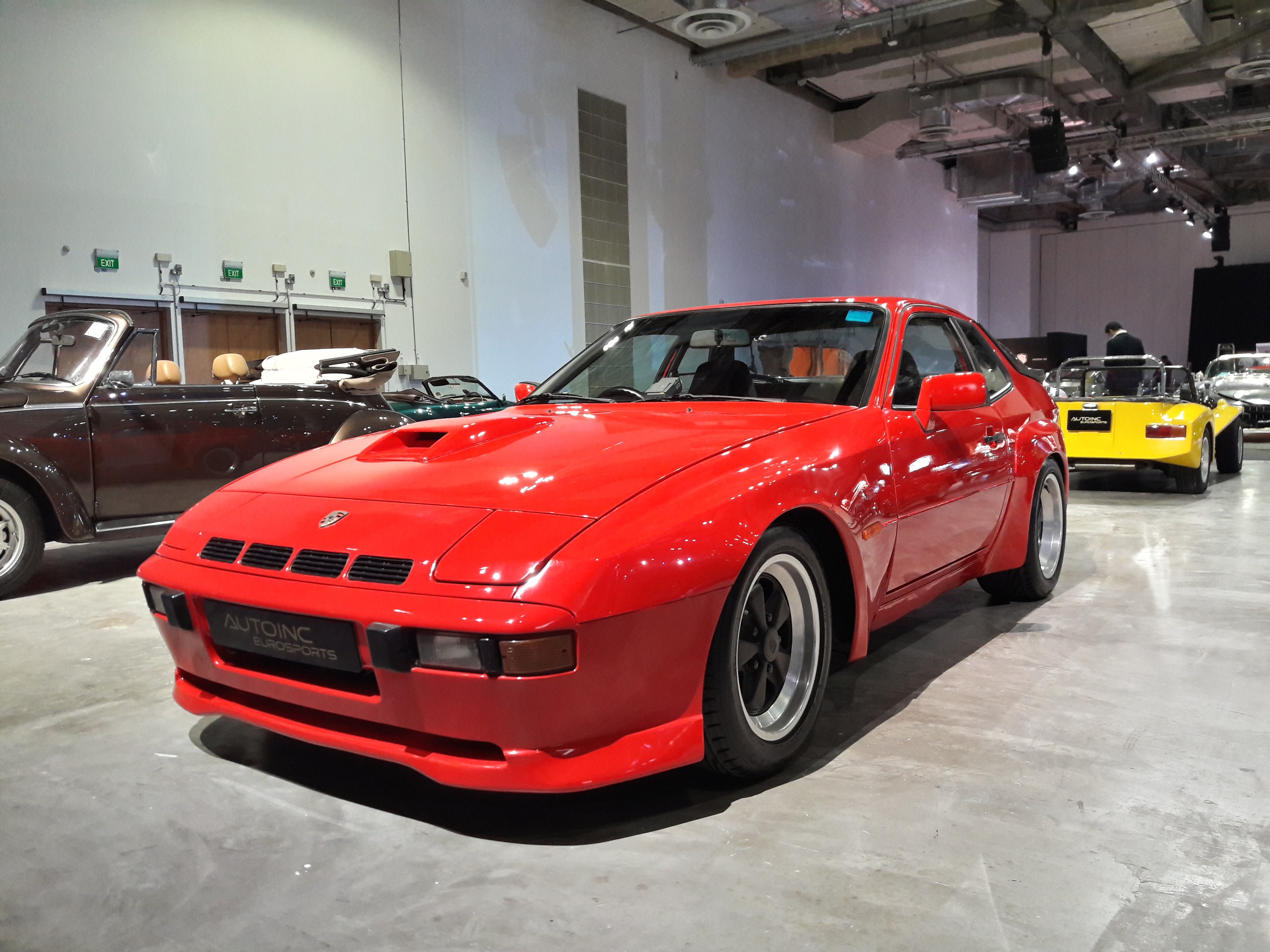
More than an old car #191: Porsche 924 Carrera GT

Does anyone feel that as you grow older, time flows even faster? It's already quite a distance into 2022 and I still can't believe that we are getting older at a faster rate. However, this lovely 1981 Porsche 924 Carrera GT in stunning Guards Red still looks timeless today even among its admittedly more powerful descendants.

Originally conceived as a joint project between Volkswagen and Porsche, 'Project 425' was intended to be VW's flagship coupe sports car and Porsche's replacement for the 914. VW had no experience in developing sporty cars and Porsche had been doing this all the while: per a deal that went back to the 1940s, Porsche was contracted to develop a new sporty vehicle with the condition that the vehicle must work with an existing VW / Audi inline-4 engine. 

The 1973 oil crisis and various automobile-related regulatory changes led to the scrapping of the project by VW, but Porsche made a deal to buy it back. It already had a rear-wheel drive layout and a rear-mounted transaxle to help provide 48/52 front/rear weight distribution. Under the aforementioned deal, the car was to be made at the ex-NSU factory at Neckarsulm: Porsche would own the design while VW employees would do the actual production line work. The car was mated to VW's EA831 2-litre engine, variants of which were used in the VW Transporter van; many other parts such as the gearbox and strut arms came from the VW / Audi parts bin, leading to lower costs of production.

Designed by Harm Lagaay, it was fundamentally different from previous Porsche models since the engine was now installed at the front. It was described as designed by someone 'who dreamed of a Ferrari all his life but never got one'. The front end was long and sloped steeply with pop-up headlights, contributing to its relatively low Cd of 0.34. As a 2+2 coupe, the rear seats was only suitable for children or small people due to limited space (which was partly taken up by the large trunk capacity of 370 litres). It adopted various styling elements from other cars, such as its rear window from the Jensen Interceptor and the rear quarter windows from the Honda Civic.

Porsche recognised a need for a higher-performance version of the 924 as the base model was noted to be underpowered. This led to the introduction of the 924 Turbo in 1978, which had a turbocharged engine, a NACA duct and 4 slotted air vents on the badge panel. Just one year later, a concept 924 was submitted at the Frankfurt Motor Show to introduce ideas for the upcoming 944. In 1980, the 924 Carrera GT was released: visual differences included a polyurethane plastic front and rear flared guards, a polyurethane front spoiler, a large top-mounted air scoop for the intercooler and a flush mounted front windscreen. There was also more aggressive versions known as the GTS and the GTR, which had further weight-saving features.

The Carrera GT was powered by a 1984 cc turbocharged VW EA831 inline-4 engine, allowing it to reach a top speed of 240 km/h with an acceleration of 6.9 seconds [0-100 km/h]. Its power output of 210 bhp due to the additional intercooler was the critical difference that set it apart from its regular siblings. With dimensions of 4200 x 1685 x 1270 mm and weighing in at 1180 kg, it was small yet potent in performance. Its fuel consumption of 9.1 litres / 100 km is representative of its high performance.

Production of the 924 ended in 1988 with more than 150,000 made. Just 406 of them were the Carrera GT, of which 75 were in RHD. It is estimated that only about 42 still remain worldwide and this unit is believed to be 1 of 2 that still exists here: it has been here since 1981 (when it was sold by Ngo Hock Auto Spares Co Pte Ltd, the local Porsche dealer back then) and still carries normal registration! 

924s are increasingly finding favour among enthusiasts and some have been imported recently. However, Carrera GTs remain ultra-exclusive and finding one on the market at a reasonable price is a tall order. Its continued existence is a testament to the past owners' undying passion (and funds spent) to keep this ultimate driving machine on the roads today. With its splendid Guards Red exterior paint, it is an eye-turner despite its age. From my understanding, this unit has been put up for sale: if you are looking for something powerful yet extraordinary, this could be the one for you!


6 May 2022

Miscellaneous classics #9: Daihatsu Delta

It has been a while since I wrote about non-car vehicles. Being enamoured with all things angular/squarish, I had always wanted to write about this 1985 Daihatsu Delta V78 ever since I saw it!

The Daihatsu Delta was a rebodied version of the U10 Toyota Dyna and was first introduced in 1970. Daihatsu had previously entered into a business alliance with Toyota Motor Corporation in 1967 and naturally, the Delta shared many parts with its brother car Dyna. The 3rd generation Delta appeared in 1984: it differed from the Y50 Dynas by its 4 rectangular headlights compared to round headlights, although the Dynas received quad rectangular headlights in 1989. Interestingly, there was also a van version of the Delta: it was essentially a truck chassis fused with a typical van.

Various versions with different cab sizes and functions were released. This unit, known as the V78 Delta was powered by a 3431 cc Toyota 3B i4 engine. It had dimensions of 4695 x 1695 x 1995 mm with a weight of 2360 kg.

Production of the 3rd-generation Delta ended in 1995, though it was continued to be made exclusively for export markets with a facelift to the grille. It was only in 2010 that production stopped entirely. A small handful of Deltas still remain here, with some still seeing usage as tow trucks. This particular unit has an interesting history: it was previously owned by a Hindu temple services company specifically to tow a silver chariot during certain Hindu festivals. Despite sporting an early 90s number plate, it is noted that the original registration was in 1986: it is likely that it could have towed cars before being converted.

While old trucks do not get the same amount of love and affection from many others, I have tried to bring a spotlight on them all this while. I hope that next time, you might be able to recognise them for their role in our motoring heritage!